

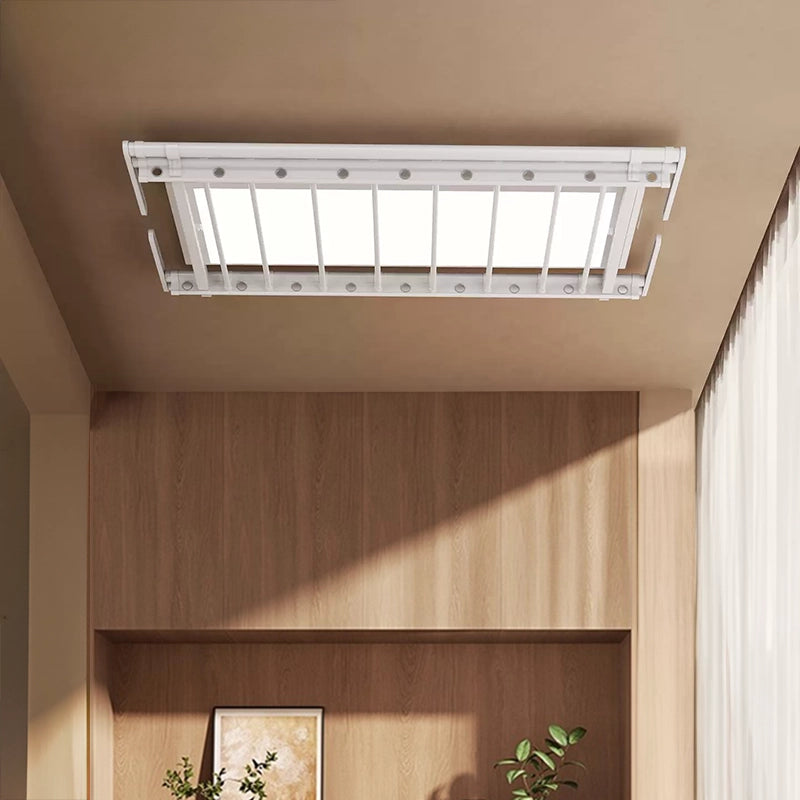
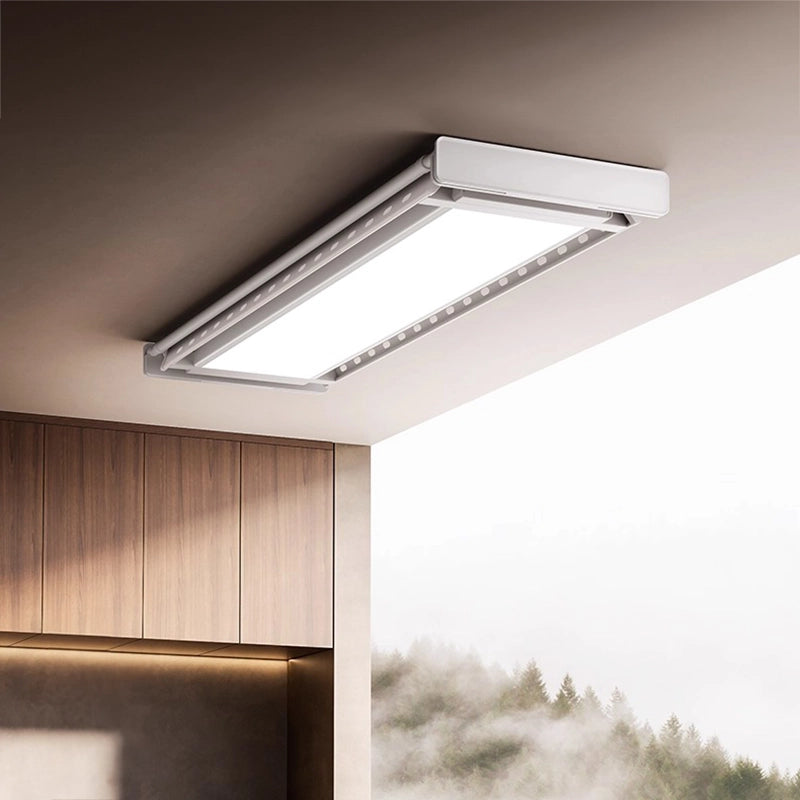


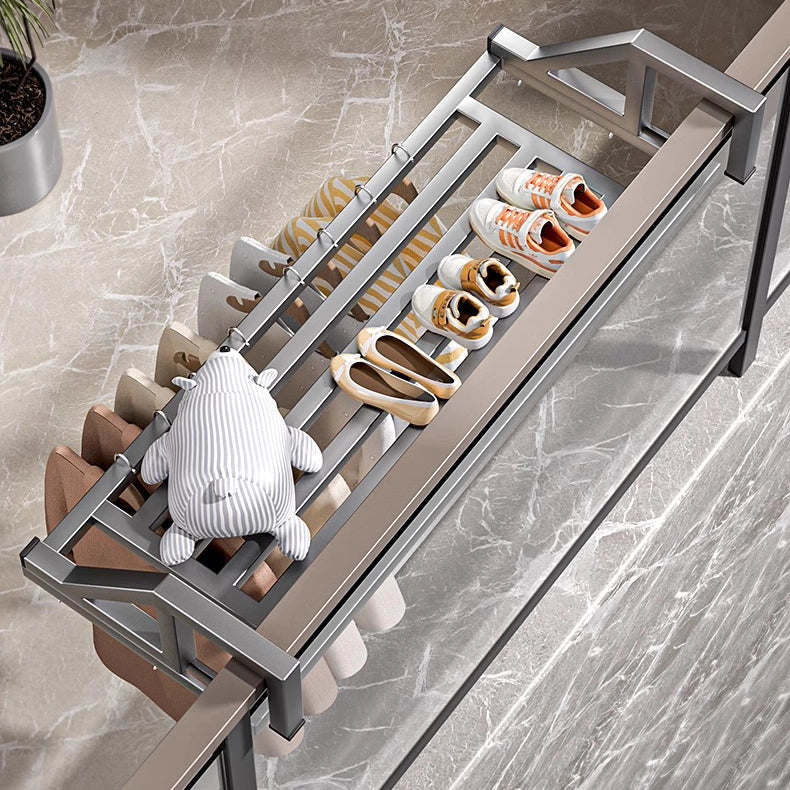
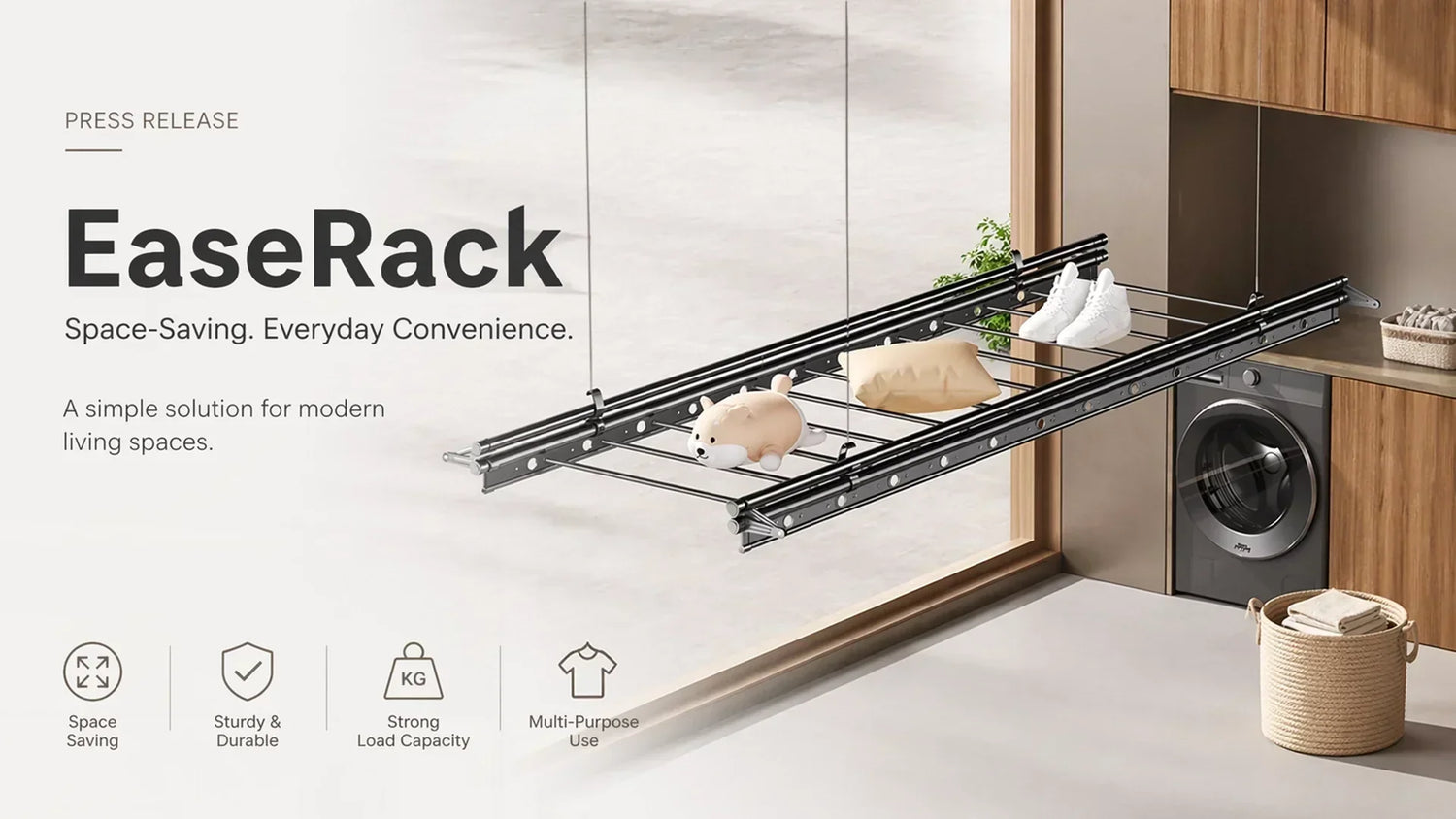
If you live in a flat, apartment, or compact European home, drying laundry can quickly become a daily space problem. A traditional floor airer may block your hallway, take over the living room, or make a narrow balcony impossible to use. Furthermore, a tumble dryer is not always a viable option, especially when appliance floor space is limited or you want to actively reduce household energy bills.
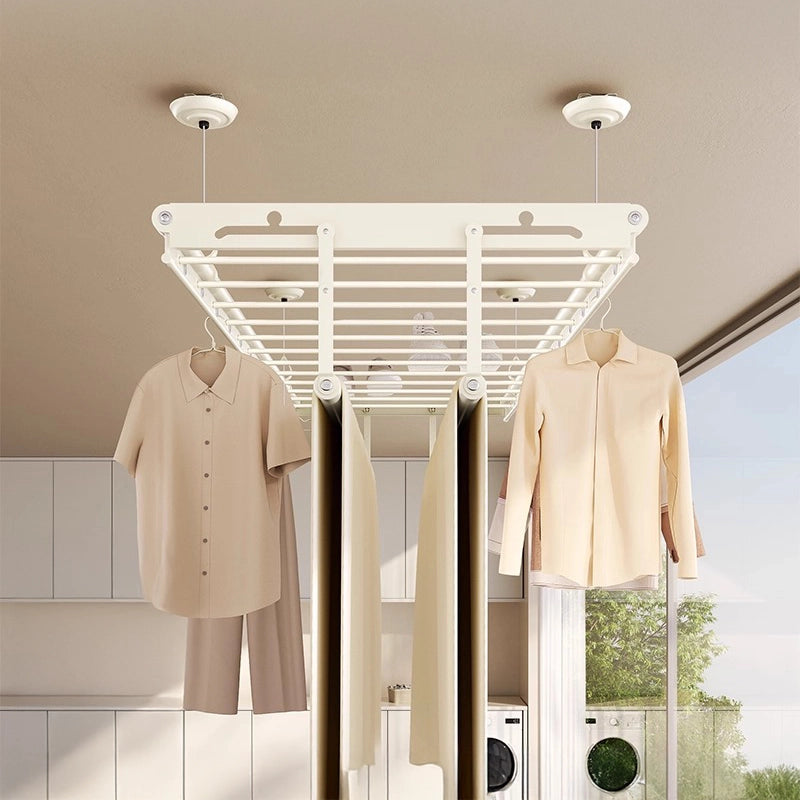
A premium pulley clothes airer offers a highly practical way to dry clothes indoors without a tumble dryer by utilizing unused ceiling space instead of your valuable floor area. Typically mounted above a covered balcony, utility room, bathroom, or dedicated laundry corner, this system allows you to lower the drying rack to hang your washing easily, then raise it effortlessly back up to dry completely out of the way.
For many UK and European apartment dwellers, a dynamic ceiling clothes airer serves as the ultimate alternative to cluttered floor horses—provided your home layout meets basic ventilation, safety installation, and clearance requirements.
What Is a Pulley Clothes Airer and How Does It Work?
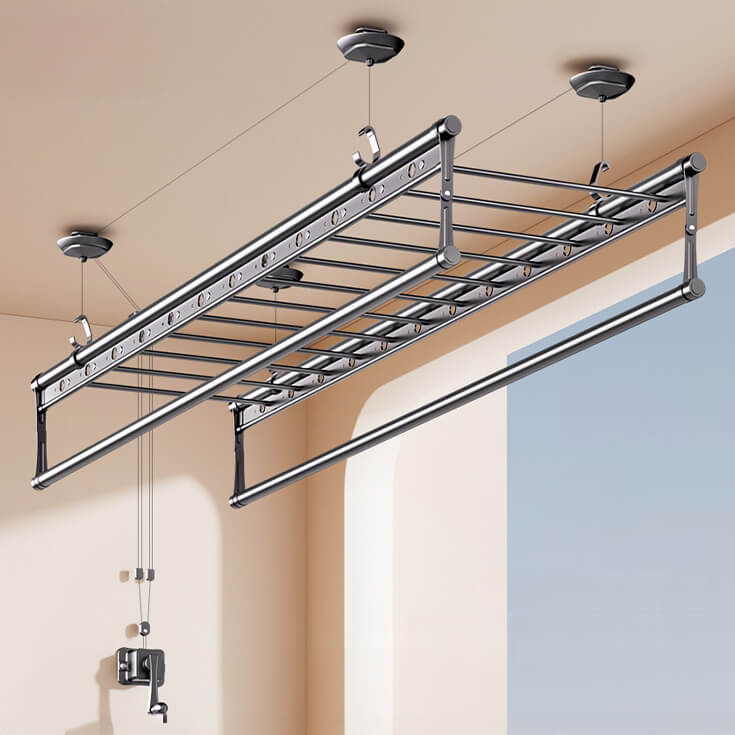
A pulley clothes airer is an architectural, ceiling-mounted indoor drying system that utilizes a cord, heavy-duty winch, or manual hand crank mechanism to lift and lower wet laundry vertically.
Instead of occupying precious floor real estate, wet garments are suspended horizontally directly beneath the ceiling where warm air naturally accumulates. Many modern high-end pulley airers replace traditional loose ropes with a precise manual winch or crank system. This engineering upgrade provides controlled, smooth lifting and lowering, making it substantially easier to manage heavy, wet everyday textiles like bath towels, denim, and bedding.
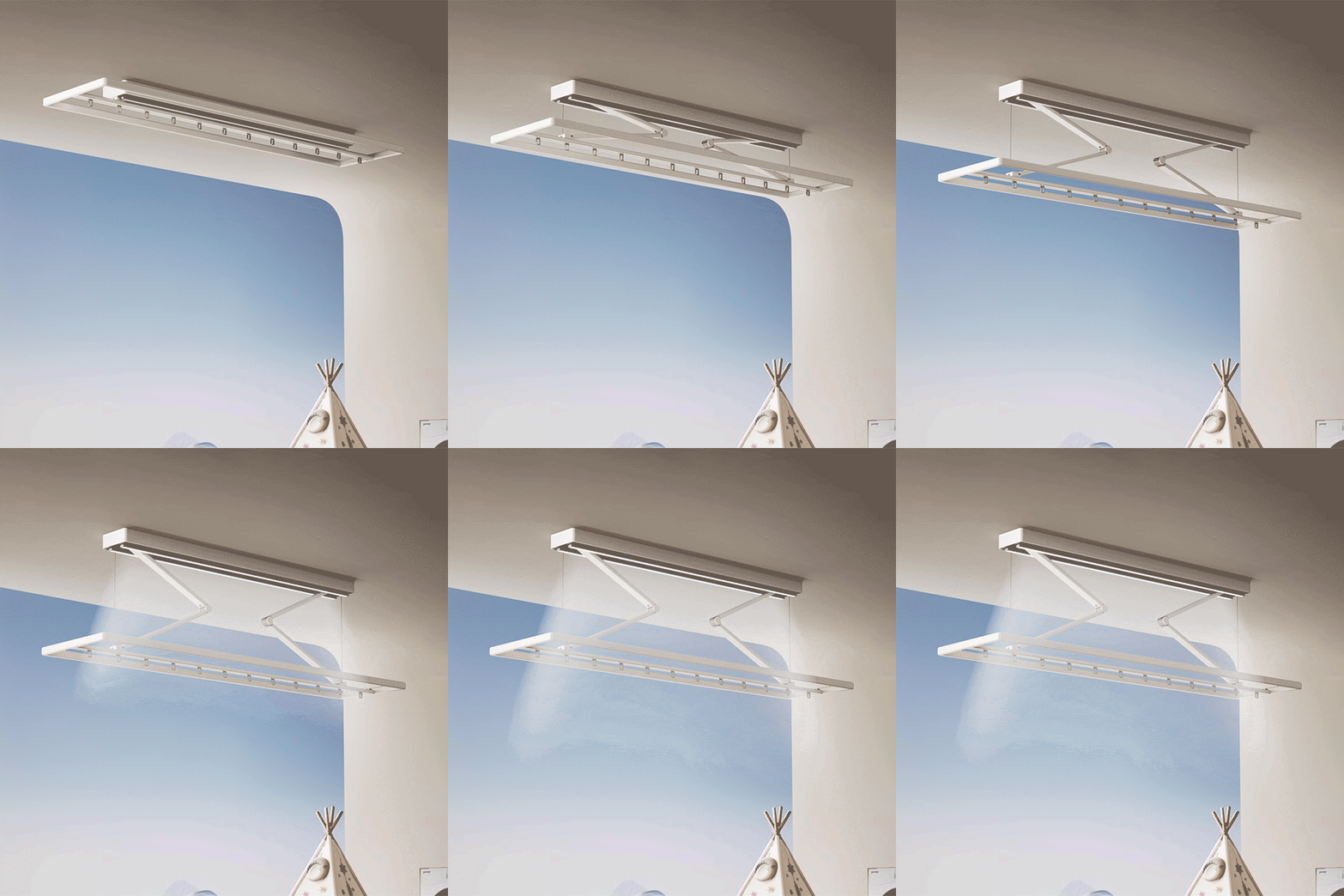
How It Operates: When loading or unloading your laundry, the user drops the internal frame down to a comfortable chest-height. Once loaded evenly, the integrated lifting gear hoists the entire setup close to the ceiling ceiling plane, completely freeing up the living space below.
If you are exploring premium, non-powered options, explore EaseRack’s specialized range of manual ceiling clothes airers designed specifically for smooth, dependable operation without consuming a single watt of electricity.
Why Small Apartments Need Floor-Free Laundry Solutions
The consumer search for practical ways to dry clothes indoors without a tumble dryer stems from real spatial constraints in urban architecture. High-density flats rarely feature private gardens, and local building bylaws often restrict hanging unsightly clothes lines across exterior balconies.
While folding floor horses are cheap, they create major daily bottlenecks. In a compact flat or student studio, an open laundry horse forces you to walk around it for 24 to 48 hours. Moving your laundry routine overhead works with the one asset small flats always have in abundance: vertical height clearance.
Key benefits of transitioning to a ceiling-mounted system:
- Absolute Floor Preservation: Keeps vital traffic corridors, kitchens, and balcony entryways 100% unobstructed.
- Centralized Organization: Conflates your drying routine into one dedicated structural footprint rather than scattering wet clothes across multiple rooms.
- Maximizing Semi-Outdoor Assets: Perfectly optimizes covered balconies and loggias, capturing natural outside cross-breezes while protecting fabrics from overhead rain.
Discover how the flagship EaseRack ceiling clothes airer collection can transform your overhead space into an efficient, out-of-sight drying hub.
Indoor Drying Without Damp: The Crucial Checklist
While a pulley clothes airer solves your immediate space dilemma, it does not magically eliminate moisture. Wet clothes release liters of evaporated water into the surrounding air. If this water vapor remains trapped inside a sealed room, it can trigger window condensation, musty fabric odors, and indoor dampness.
To establish a healthy, high-performance indoor drying environment, always implement these structural habits:
- Maximize Garment Spacing: Never pack clothes tightly. Leave clear air gaps between bars to facilitate natural thermal convection.
- Optimize Washing Spin Speeds: Run your washing machine on its maximum safe spin cycle to extract bulk water before hanging.
- Secure Active Ventilation: Always dry laundry in a room equipped with an open trickle-vent, a window, or an active bathroom extractor fan.
- Deploy External Mitigation: If drying heavily during wet winter months, place a compact dehumidifier near the airer to capture vapor mid-air.
Comparing Indoor Clothes Airer Types
Different architectural limitations require different hardware solutions. Use the mobile-responsive comparison table below to determine which structural category fits your home footprint:
| Clothes Airer Type | Space Utilization | Installation Requirements | Power Access Needed | Ideal Architectural Layout |
|---|---|---|---|---|
| Pulley Ceiling Airer | Overhead Ceiling Space | Structural Ceiling Joists/Concrete Anchor | None (Manual Craning) | Apartments with tall ceilings, bathrooms, covered balconies |
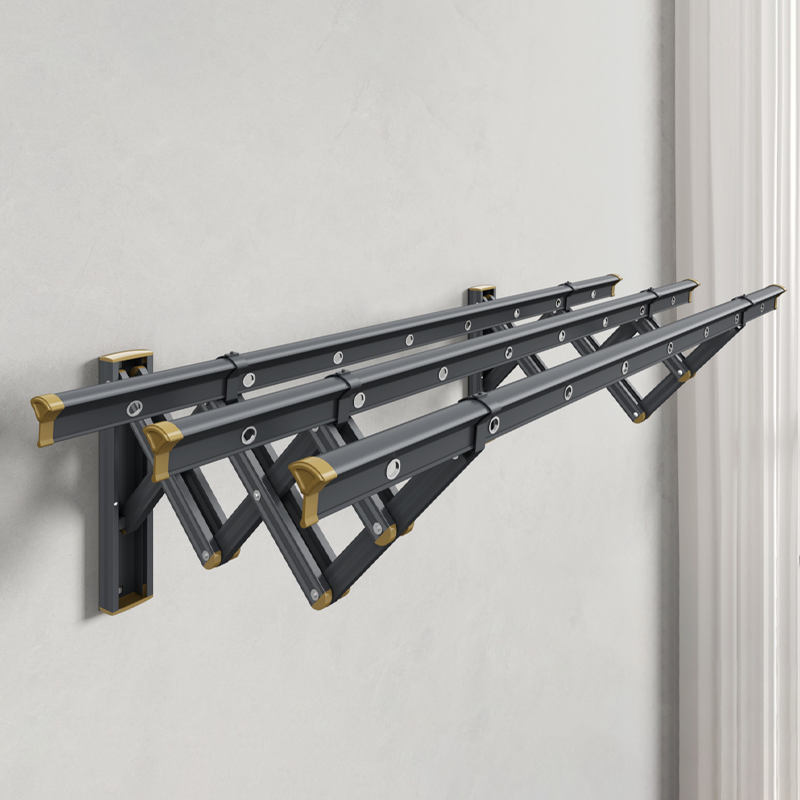
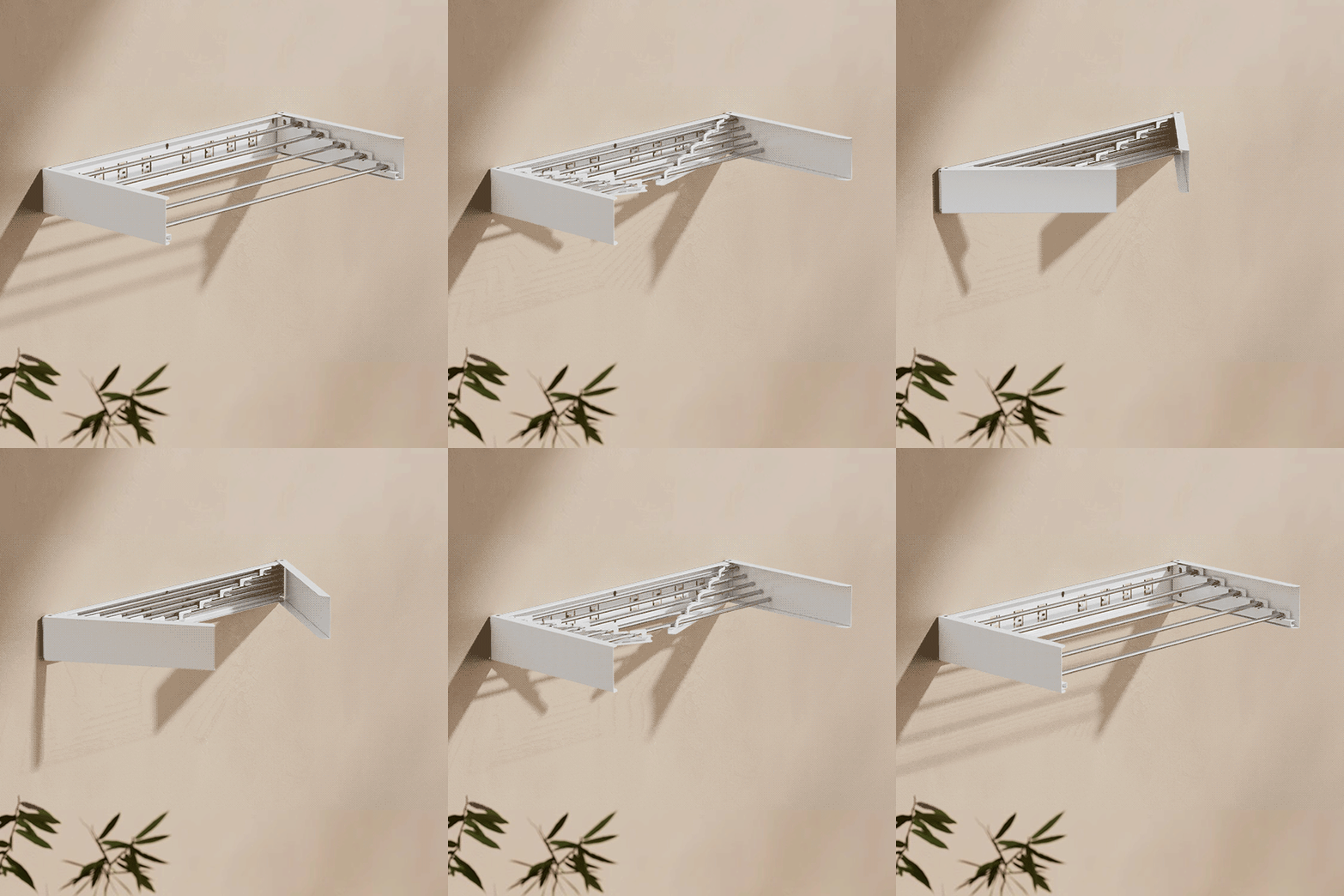
| Wall-Mounted Rack | Vertical Empty Walls | Solid Masonry or Internal Stud Fastening | None | Narrow hallways, utility corridors, walk-in laundry spaces |
| Standard Floor Horse | Active Floor Surface | Zero Setup Required | None (Unless Heated) | Temporary/Occasional drying in spacious single-family homes |
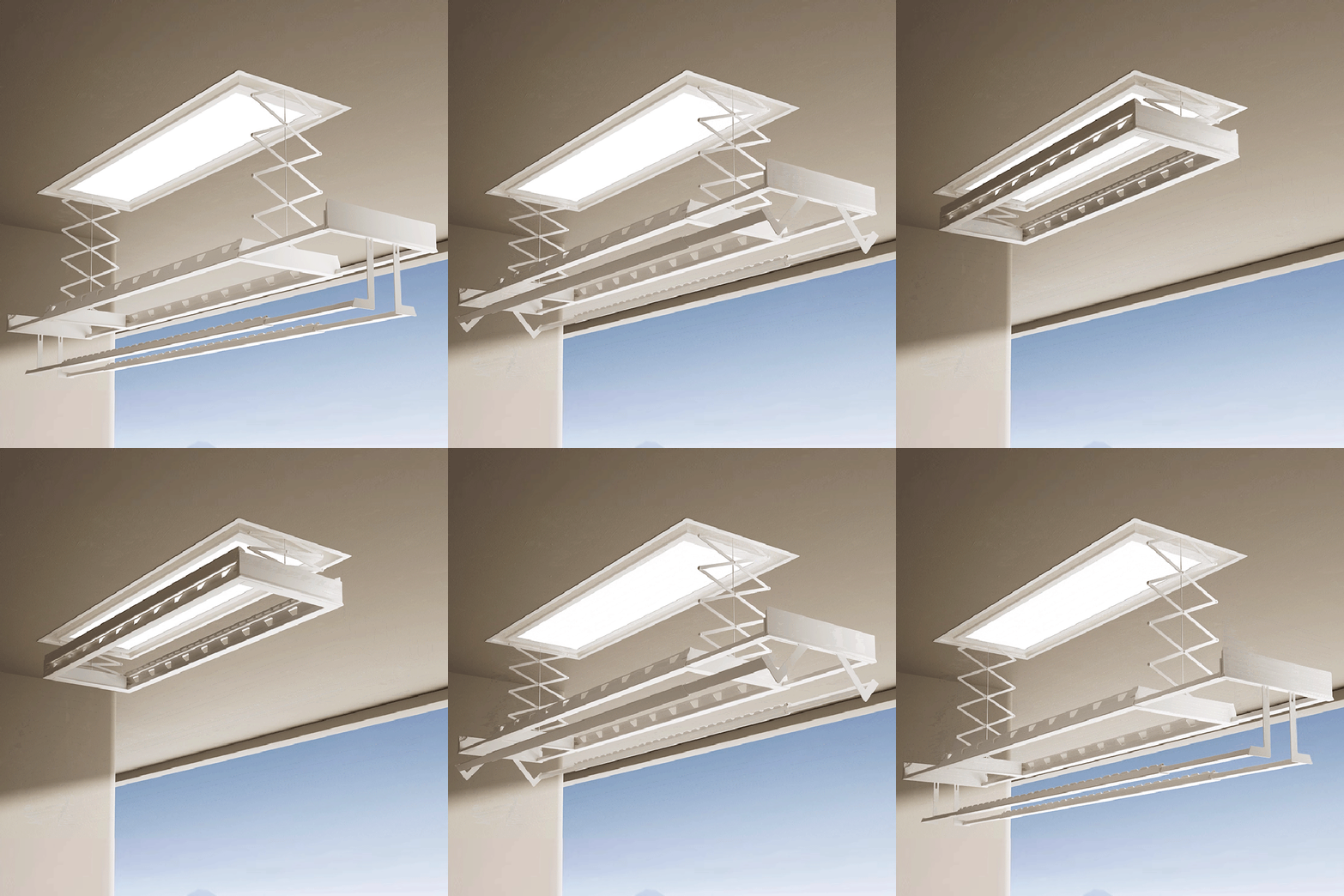
| Electric Ceiling Airer | Overhead Ceiling Space | Ceiling Structural Mounting + Hardwire Electrical | Requires Mains Power | Premium smart homes; users seeking automated remote lifting |
If you need to cross-examine specific dimensional metrics across manual and automated ranges, consult the interactive drying rack model comparison page. If your ceiling substrate cannot support heavy anchors, transitioning to EaseRack wall-mounted clothes airers is your next best structural path.
Pre-Purchase Blueprint: Is It Right For Your Space?
Before purchasing a ceiling pulley system, run these critical on-site verifications:
1. Identify Your Substrate Matrix
Ceiling anchors are subjected to substantial downward pull forces when loaded with wet textiles. Solid concrete and structural timber joists offer optimal support. If dealing with standard hollow plasterboard or drop ceilings, you must map your internal support studs or integrate secondary reinforcement brackets. Never guess your ceiling structure—when in doubt, seek professional installation support.
2. Map Your Volumetric Clearance
Take exact physical measurements before checking out. Ensure that when the pulley drying rack is fully hoisted, your longest hanging clothes will not clip swinging cabinet doors, tall window frames, or existing surface-mounted ceiling light tracks.
3. Choose Your Operational Mechanism
If you prioritize a premium, mechanically controlled non-electric lifting workflow, standard rope-and-cleat systems can feel clunky. Upgrading to the advanced EaseRack hand crank ceiling clothes airer offers internal braking gears that prevent accidental free-falls, ensuring heavy laundry sets are raised smoothly and safely.
FAQ
Can a pulley clothes airer genuinely replace a tumble dryer?
Yes, from a space-saving perspective, a pulley clothes airer successfully keeps massive laundry loads off your living floors without a tumble dryer. However, because it relies on natural air evaporation, it requires careful room ventilation to match the fast drying speeds of heated mechanical appliances.
Is a ceiling clothes airer safe for a rented property?
Because ceiling-mounted pulley systems require mechanical drilling into structural joists or concrete, you must obtain written landlord authorization. If drilling is strictly forbidden, a heavy-duty over-door rack or folding floor option will be necessary.
How much weight can a manual ceiling clothes airer hold?
Weight capacity scales dynamically based on structural build and installation stability. Premium systems can comfortably hold substantial family washes up to 30kg, provided the brackets are integrated directly into structural wood studs or concrete using matched, high-grade masonry expansion anchors.
Conclusion
A precision-engineered pulley clothes airer provides the perfect architectural solution for compact urban flats. By moving your damp washing into the unused vertical plane, you effectively protect your living spaces from physical clutter while retaining a fixed, sustainable laundry station.
Before finalizing your setup, carefully audit your ceiling material, ambient airflow paths, and expected weekly laundry volumes. Explore EaseRack's dynamic ceiling solutions today to achieve total schedule independence—completely free from floor constraints.

