



A small laundry area can become untidy quickly. Baskets, detergent bottles, wet clothes, hangers and cleaning products all compete for the same limited space, especially in flats, utility corners, compact kitchens and shared washing spaces.
The best way to organise a laundry area is to plan it around what actually happens there. In a small space, that means creating clear zones for sorting laundry, storing everyday products, drying clothes, folding or moving clean items, and resetting the area after each load.
This guide focuses on practical small laundry area ideas for everyday homes. It will help you create a clearer routine, use wall or ceiling space where suitable, and choose drying space that does not take over the room.
Organise a small laundry area by separating the space into four simple functions: sorting, storing, drying and resetting. Keep daily laundry products easy to reach, move spare items higher or behind doors, choose drying space that does not block the room, and keep the walkway clear after each load.
How to Organise a Laundry Area by Function
Washing and Sorting
Start with the items that arrive before the wash. If dirty laundry piles up on the floor, the area will feel cluttered even when everything else is tidy. A slim hamper, divided basket or two smaller laundry bins can make sorting easier without using too much space.
Choose a system that matches your home. Some households sort by colour, others by fabric type, person or washing temperature. The exact method matters less than keeping laundry contained and easy to move into the washing machine.
Drying
Drying space should be planned early, not added as an afterthought. A floor airer may work in a larger utility room, but in a small laundry area it can block the washing machine, cupboards, balcony door or walkway.
Think about where wet laundry will go as soon as it comes out of the machine. If floor space is limited, wall-mounted, ceiling-mounted or retractable drying space may be easier to live with than a freestanding floor airer.
Folding and Putting Away
Not every small laundry area has room for a folding counter. That is fine. You can use a nearby table, bed, worktop or basket system, as long as clean laundry does not sit in the laundry area for days.
A simple rule helps: only keep laundry in this area while it is waiting to be washed, drying or ready to move. Once clothes are dry, fold or transfer them to the room where they belong.
Cleaning and Laundry Supplies
Keep daily products close to the machine. Detergent, stain remover, laundry bags and pegs should be easy to reach. Spare bottles, seasonal products and less-used cleaners can go higher, behind doors or in a closed cupboard.
This keeps the visible area calmer and stops the worktop from turning into a storage shelf.
Small Laundry Area Ideas That Save Floor Space
Use Wall Space Before Floor Space
Wall space is often easier to use than floor space in a small laundry area. Shallow shelves, hooks, hanging organisers and slim wall cabinets can hold supplies without narrowing the room too much.
Use hooks for lightweight items such as garment bags, small baskets or hangers. Keep heavier products on stable shelves or inside cupboards where they are less likely to fall or get in the way.
Use Ceiling Space if the Structure Allows
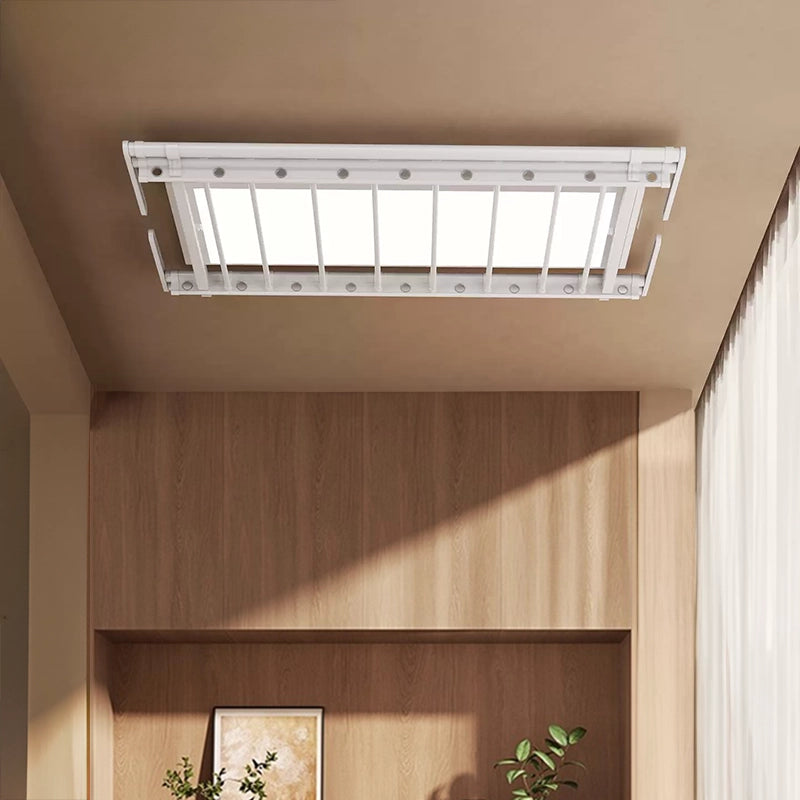
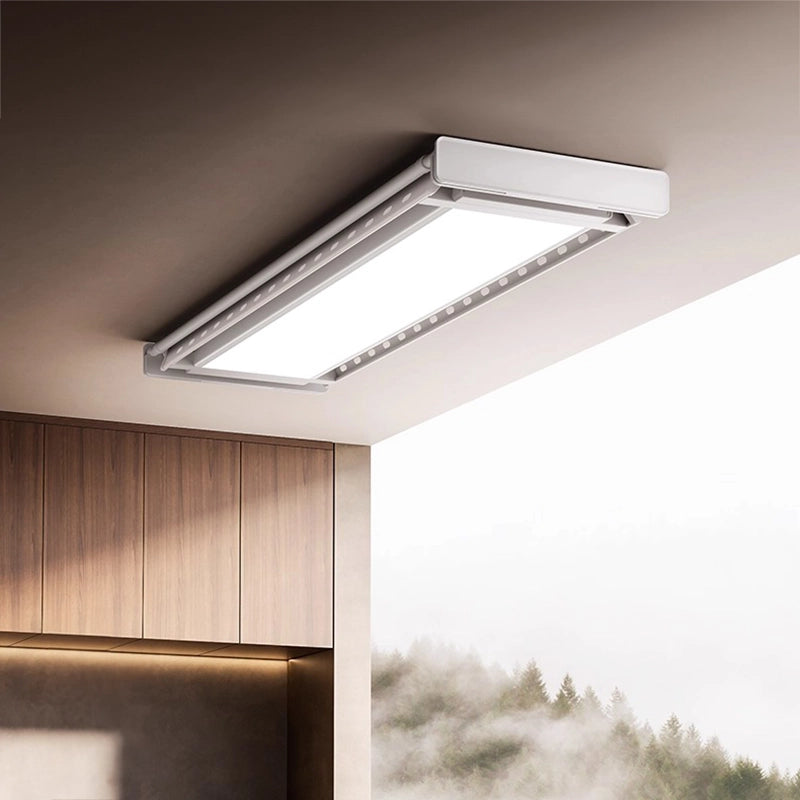
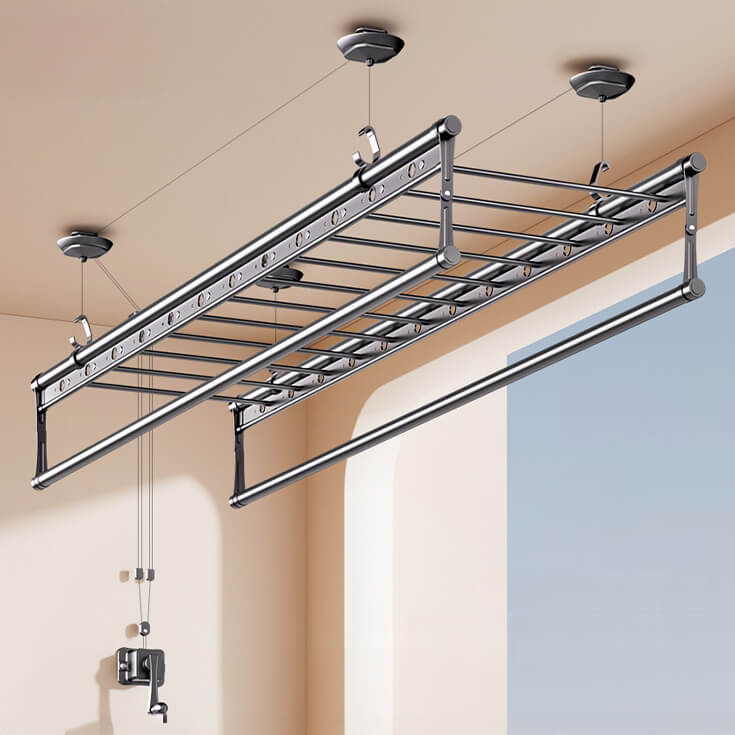
Ceiling space can be useful when the floor needs to stay clear. Ceiling clothes airers lift laundry above the floor and may suit compact laundry rooms, covered balconies and utility corners where the ceiling structure and clearance are appropriate.
Before choosing a fixed ceiling airer, check the mounting surface, lowered height, raised position and access to controls. If you are unsure about the ceiling structure, ask a qualified installer before fitting fixed hardware.
Choose Fold-Away or Retractable Drying Space
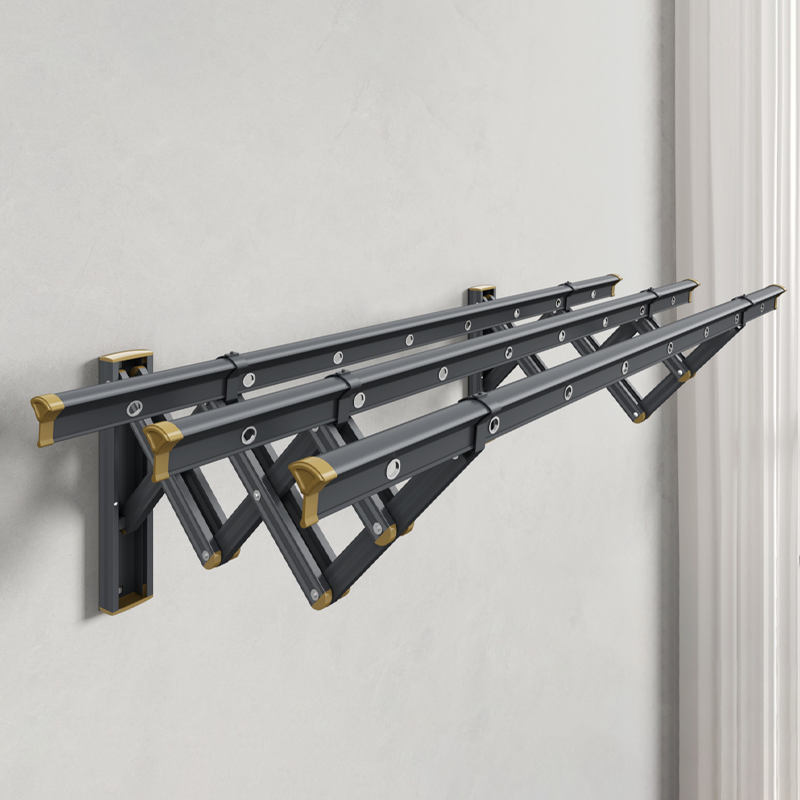
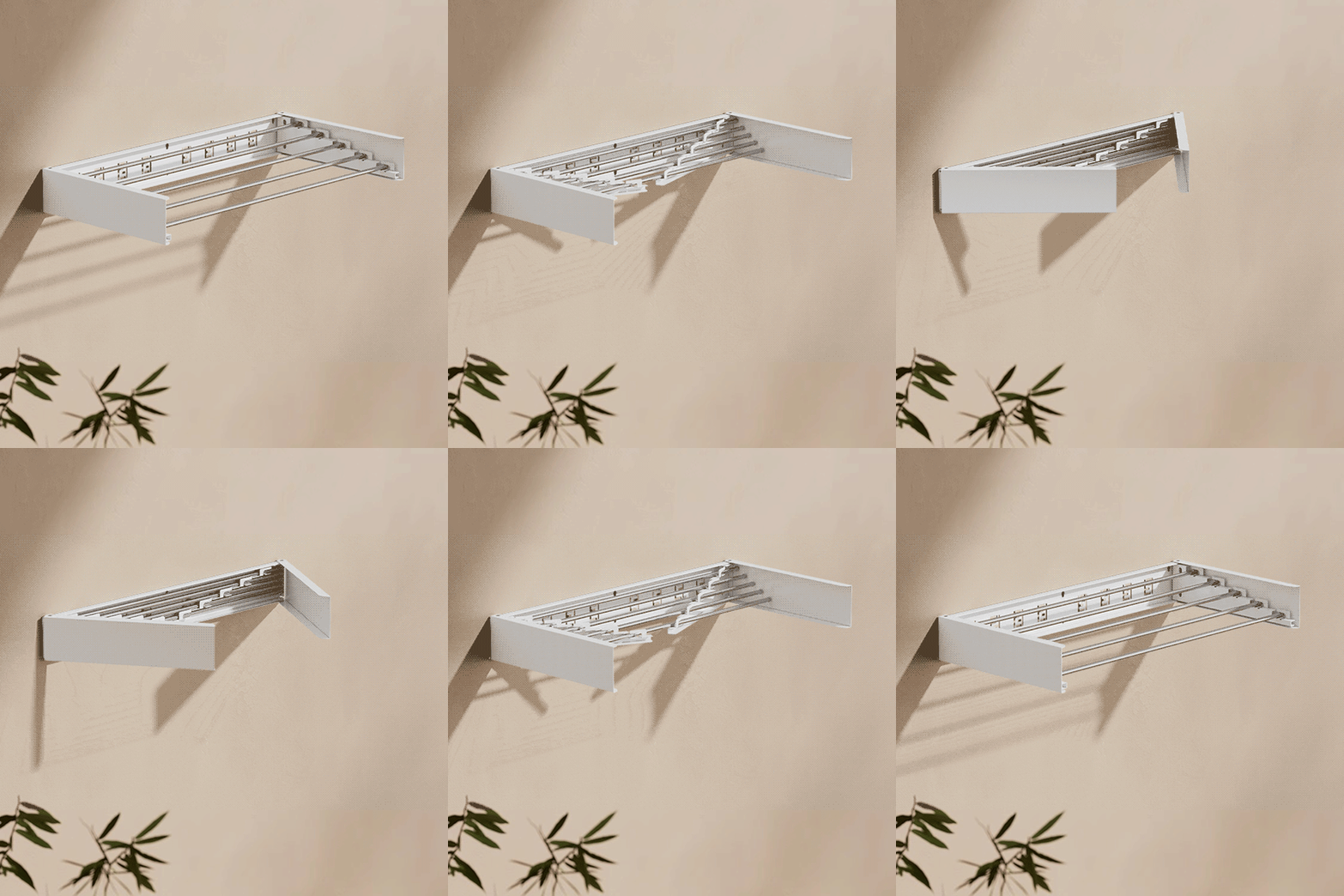
Fold-away and retractable designs can help when you need drying space only at certain times. Wall-mounted clothes airers and retractable drying racks can create a regular drying zone without leaving a floor rack open all day.
Measure the open position as well as the stored position. A rack that folds neatly against the wall still needs enough room when clothes are hanging from it.
Keep One Clear Movement Path
A laundry area should stay usable while laundry is in progress. Keep access clear around the washing machine door, cabinets, balcony door, sink, window and main walkway.
If an airer, basket or shelf makes it awkward to move through the space, the area will feel disorganised even if everything has a place.
| Small laundry area problem | Better organisation idea | What to consider |
|---|---|---|
| Floor airer blocks the room | Move drying space to the wall or ceiling | Check fixing surface, clearance and daily access |
| Detergent bottles clutter the worktop | Group daily products in one tray or basket | Keep refills higher, behind doors or in a cupboard |
| Dirty laundry piles up | Use slim or divided hampers | Separate by person, colour, fabric or washing type |
| Wet clothes sit in a corner | Plan a drying zone with airflow | Avoid airless corners, blocked vents and crowded rails |
| Small items go missing | Use a small box for pegs, clips and garment bags | Keep accessories close to the airer, not scattered around the room |
Real Example: Organising a Small 4.8 m² Balcony Laundry Area
This enclosed balcony measures approximately 1.5 m wide by 3.2 m long, giving it a floor area of about 4.8 m². It serves as a laundry, storage and drying area, so the layout needs to keep the washing facilities, windows and main walking route usable at the same time.
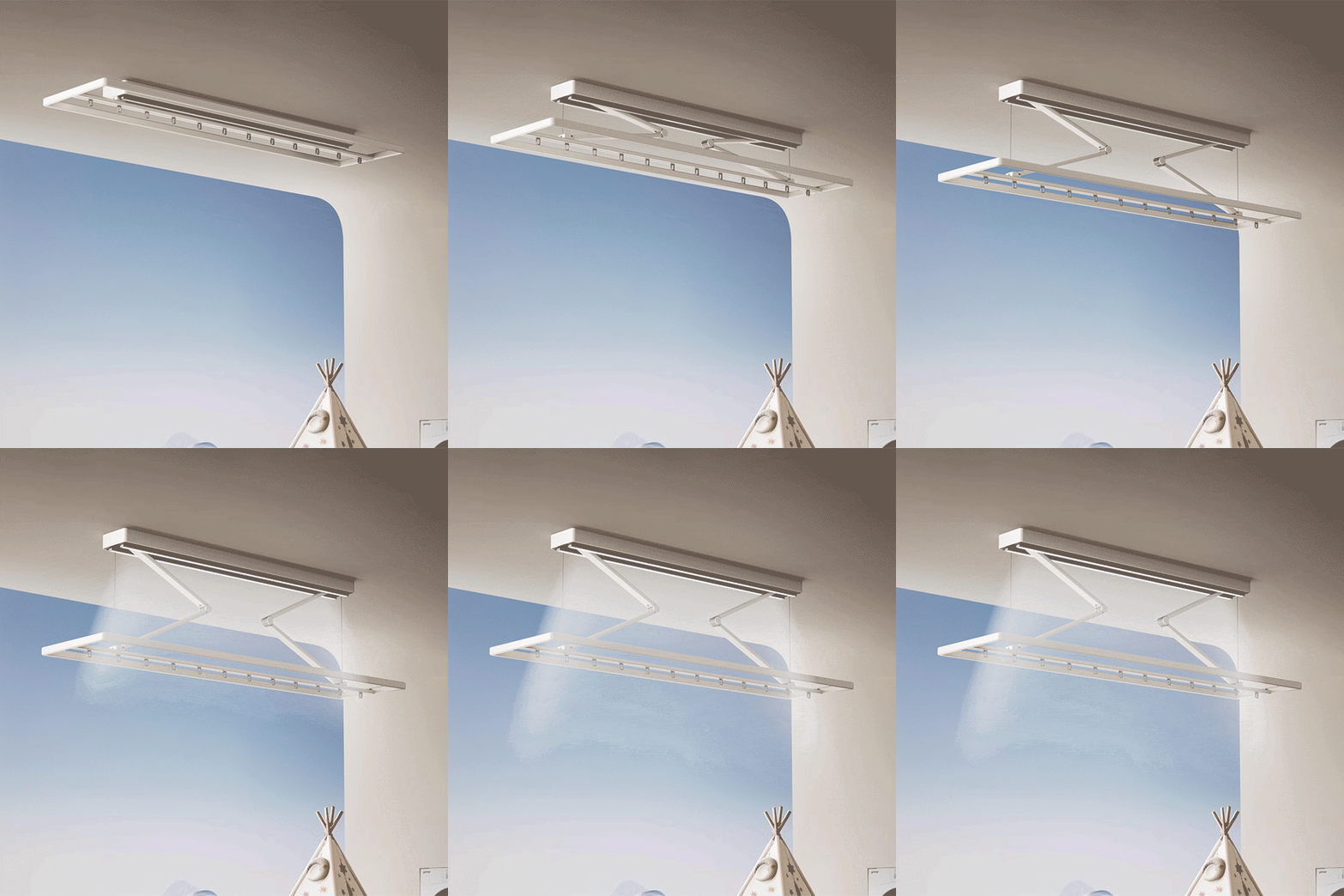
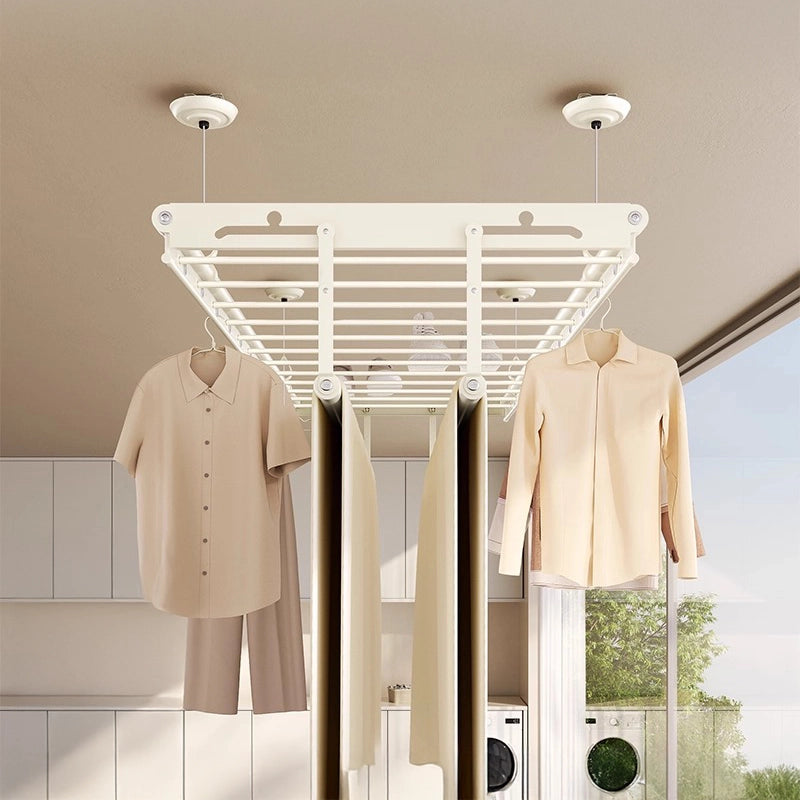
The installation uses an EaseRack M3 Mini electric ceiling airer. Instead of placing a freestanding airer in front of the windows, the drying zone uses the overhead space and can be raised towards the ceiling after the laundry is loaded.
 Keeping the Balcony Floor and View Clear
In a balcony of this width, an open floor airer would occupy much of the usable space beside the windows. Depending on its position and the amount of laundry, it could also interrupt the view, reduce the light reaching the adjoining room and make access to nearby storage more awkward.
The M3 Mini main unit is approximately 6 cm thick. When raised, the airer sits close to the ceiling and becomes less visually prominent from the adjoining living room. This leaves the floor clearer for walking and accessing the washing machines and storage areas.
 Lowering the Airer for Loading
The M3 Mini has a lift range of 6–120 cm, allowing the rails to be lowered to a more convenient loading height and raised again afterwards.
The most suitable lowered position depends on the ceiling height, preferred working height and available clearance around windows, curtains, cabinets and doors. Both the raised and fully lowered positions should be measured before installation.
Extendable Rails for Everyday Laundry
The installation includes two extendable drying rails and additional rails for larger household textiles. In this balcony, the extendable section opens to approximately 1.45 m, leaving some side clearance within the available 1.5 m width.
The frame provides 26 hanger positions to help keep garments organised and separated. Actual usable capacity depends on garment size, fabric weight, spacing, correct installation and even load distribution.
 Sheets and duvet covers can also be arranged across the larger-fabric rails where their size, weight and the available clearance allow. Large textiles should be positioned so they do not press against windows, curtains or surrounding furniture.
Drying performance will vary with airflow, humidity, temperature, fabric thickness and laundry spacing.
Lighting and Drying in One Ceiling Zone
The M3 Mini includes integrated 24W LED lighting. In a compact balcony, combining lighting and drying within the same overhead area can simplify the layout.
Whether the integrated light provides sufficient illumination will depend on the balcony size, natural light, mounting position and household preferences. The lighting plan should therefore be checked before removing or replacing an existing balcony light.
What This Balcony Layout Shows
This installation demonstrates how a ceiling clothes airer can support a small balcony that combines laundry, storage and everyday movement:
- Drying space is moved away from the floor.
- The main window and view remain more open.
- The frame raises closer to the ceiling after use.
- Extendable rails provide space for everyday garments.
- Larger rails accommodate selected sheets and duvet covers.
- Integrated lighting makes further use of the ceiling zone.
These dimensions relate to this particular installation. Before choosing a similar layout, measure your own balcony and check the ceiling structure, fixing method and the airer’s raised and lowered clearance around windows, curtains, cabinet doors and walking routes.
Installation requires a suitable ceiling structure and appropriate anchors. Consult a qualified installer if the mounting surface or fixing method is uncertain.
View the EaseRack M3 Mini electric ceiling airer, or compare other ceiling clothes airers for compact laundry areas and enclosed balconies.
Which Clothes Airer Fits a Small Laundry Area?
A clothes airer should support the laundry area, not dominate it. The right choice depends on your available wall, ceiling or floor space, how often you dry indoors, and whether fixed installation is allowed.
Ceiling Clothes Airers
A ceiling clothes airer may suit a small laundry area where overhead space is easier to use than the floor. It can help keep laundry lifted away from the main walkway, provided the ceiling structure, anchors and clearance are suitable.
Wall-Mounted Clothes Airers
A wall-mounted clothes airer can work well in a utility corner, laundry room or selected covered balcony area with a strong usable wall. It is worth checking how far the airer opens into the room before deciding on the position.
Retractable Drying Racks
A retractable drying rack may suit homes where drying space should appear when needed and store away afterwards. It is useful when you want a fixed drying zone but do not want rails or lines extended all the time.
Folding Floor Airers
A folding floor airer is still useful if you rent, cannot install fixed hardware or need to move the airer between rooms. The main trade-off is that it usually needs more floor space while laundry is drying.
| Airer type | Best for | Stored footprint | Main check |
|---|---|---|---|
| Ceiling clothes airer | Using overhead space | Raised near the ceiling | Ceiling structure and lowered clearance |
| Wall-mounted clothes airer | Utility walls and laundry corners | Folded or stored against the wall | Wall strength and open projection |
| Retractable drying rack | Drying space that appears when needed | Compact wall position | Extension path and fixing surface |
| Folding floor airer | Renters and portable drying | Folded and stored separately | Open floor footprint |
Storage Ideas for a Tidy Laundry Routine
Group Products by Use
Store laundry products by how often you use them. Daily items should be easy to grab. Occasional items can be moved higher or placed in a labelled box.
This keeps the area practical without making every product visible at once.
Use Slim Baskets or Divided Hampers
Small laundry areas often need narrow storage rather than deep storage. A slim basket beside the machine, a divided hamper or a stackable basket system can keep laundry contained without spreading across the floor.
If several people use the same space, separate baskets can also reduce sorting time.
Keep Small Items Contained
Pegs, clips, mesh bags, lint rollers and spare hangers are small, but they make a laundry area feel messy when they are scattered. Keep them in one tray, box or drawer close to the drying area.
The goal is simple: when you need to hang clothes, everything should already be in the same zone.
Avoid Storing Unrelated Clutter
A small laundry area can easily become a place for spare tools, packaging, cleaning products, shoes or random household items. Once that happens, the laundry routine becomes harder.
Keep the area focused on laundry and essential cleaning items only. If an item is not used for washing, drying, folding or maintaining the space, store it somewhere else if possible.
Plan Drying Space Without Creating Damp or Clutter
Leave Space Between Garments
Clothes need room around them while drying. Avoid packing garments tightly together just to fit more on the airer.
Drying performance may vary depending on airflow, humidity, temperature, fabric type, fabric thickness and laundry spacing.
Keep Damp Laundry Away from Blocked Corners
A laundry area that looks tidy can still dry poorly if wet clothes are pushed into an airless corner. Try to keep damp laundry away from blocked vents, closed cupboards and places where air cannot move easily.
Check Where the Airer Sits When Loaded
An empty airer may look fine, but wet laundry changes how the space works. Check whether hanging clothes will block the washing machine, cupboards, windows, balcony door or walkway.
For fixed ceiling or wall-mounted models, usable load depends on correct installation, suitable anchors, the mounting surface and even weight distribution.
Use Ventilation or a Dehumidifier Where Suitable
Ventilation, heating patterns and indoor humidity all affect how a laundry area feels during drying. In some homes, opening a window, using an extractor fan or using a dehumidifier may help manage moisture, depending on the room and conditions.
This article only covers airflow as part of laundry area planning. For a fuller indoor drying routine, see the related guide below.
For more detail on airflow, condensation and indoor drying habits, read our guide on how to dry clothes indoors without a tumble dryer.
Before You Buy or Rearrange: Small Laundry Area Checklist
- What is the laundry area’s main job: washing, drying, storage, folding or all four?
- Where will dirty laundry wait before washing?
- Where will wet laundry dry after washing?
- Is wall, ceiling or floor space easiest to use?
- Will the airer block doors, cabinets, appliances or walkways when loaded?
- Is the wall or ceiling suitable for fixed installation?
- Do renters need permission before drilling or fitting permanent hardware?
- Is there enough airflow around drying clothes?
- Where will pegs, hangers, garment bags and laundry accessories live?
- Can the area be reset quickly after laundry is done?
Compare EaseRack ceiling clothes airers, wall-mounted clothes airers and retractable drying racks for small laundry areas, or use our selector to find the right clothes airer for your home.
FAQ: How to Organise a Laundry Area
How Do I Organise a Laundry Area in a Small Flat?
Start by giving the area clear jobs: sorting, storing, drying and resetting. Use slim baskets, keep daily products close to the machine, move spare items higher or behind doors, and choose a drying setup that does not block the main walkway.
What Should Every Small Laundry Area Include?
A small laundry area should include a place for dirty laundry, everyday washing products, drying space, small accessories and a clear route to use the machine. If possible, also plan where clean laundry will go once it is dry.
How Do I Keep a Small Laundry Area Tidy Every Day?
Keep the routine simple. Put products back after each wash, remove dry clothes promptly, keep small items in one container and avoid using the laundry area for unrelated storage. A quick reset after each load prevents clutter from building up.
How Can I Dry Clothes in a Small Laundry Area Without Blocking the Floor?
Consider using wall, ceiling or retractable drying space if your home and installation conditions allow. A folding floor airer may still work, but check whether it blocks the washing machine, cupboards, doorways or walkway when open.
Is a Ceiling Clothes Airer Suitable for a Small Laundry Area?
It may be suitable if the ceiling structure, fixing points, lowered height and raised position work for your space. Ceiling airers can help keep the floor clearer, but they need correct installation and enough clearance for everyday use.
Are Wall-Mounted Clothes Airers Good for Utility Rooms?
Wall-mounted clothes airers can be useful in utility rooms with a strong usable wall and enough open space in front of the airer. Check the wall surface, opening depth, ventilation and whether the airer will block doors or appliances.
Conclusion
Organising a small laundry area is less about buying more storage and more about giving each part of the routine a clear place. Plan where laundry is sorted, where products live, where clothes dry and how the area is reset after use.
For compact homes, the drying zone often makes the biggest difference. If a floor airer keeps getting in the way, ceiling, wall-mounted or retractable options may help you use the space more comfortably, as long as the installation conditions suit your home.
Compare EaseRack drying racks for small spaces, or use our selector to find the right clothes airer for your home.

