

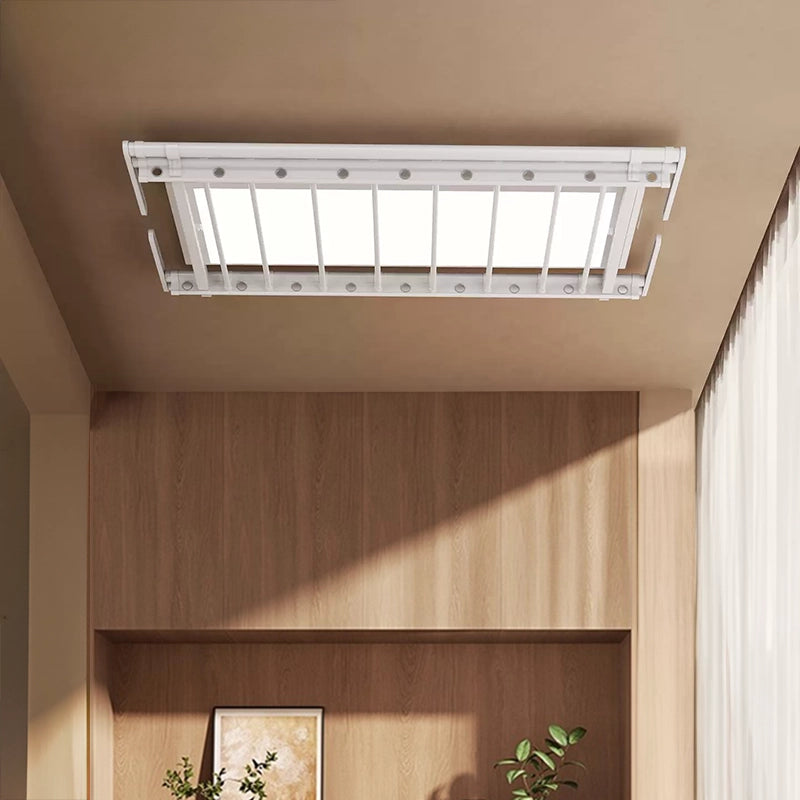
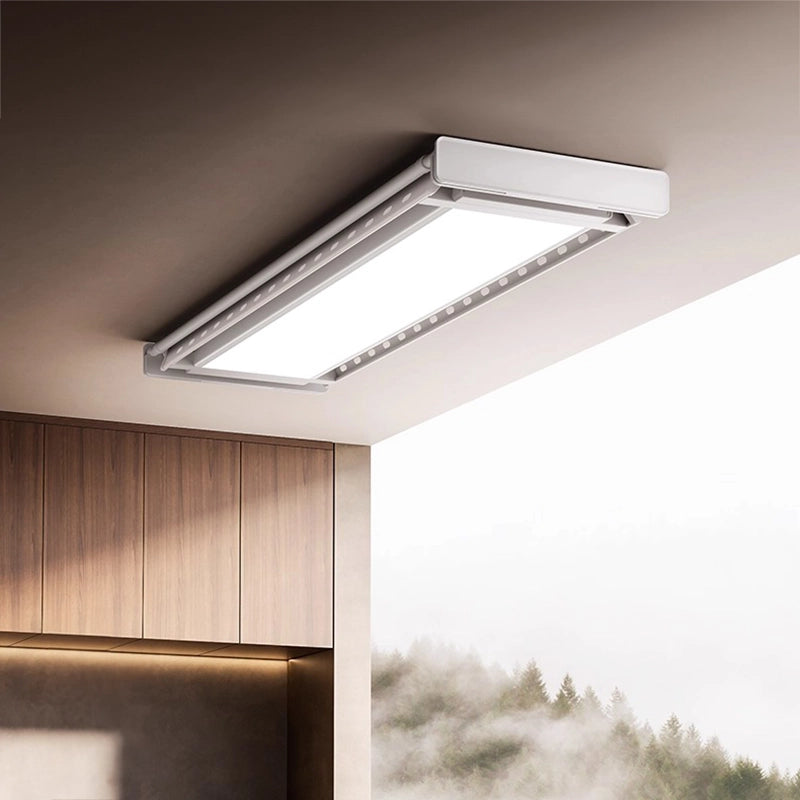

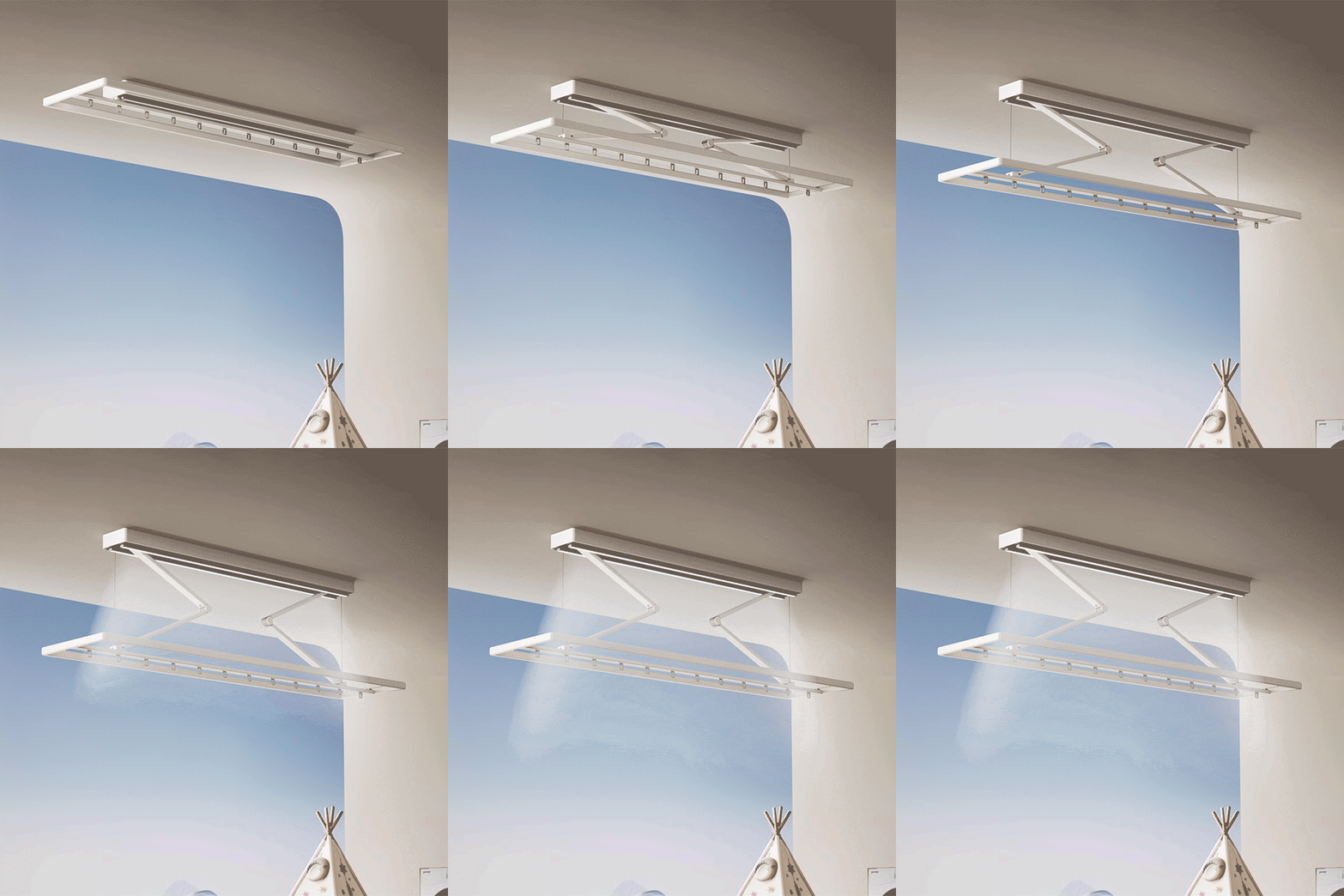
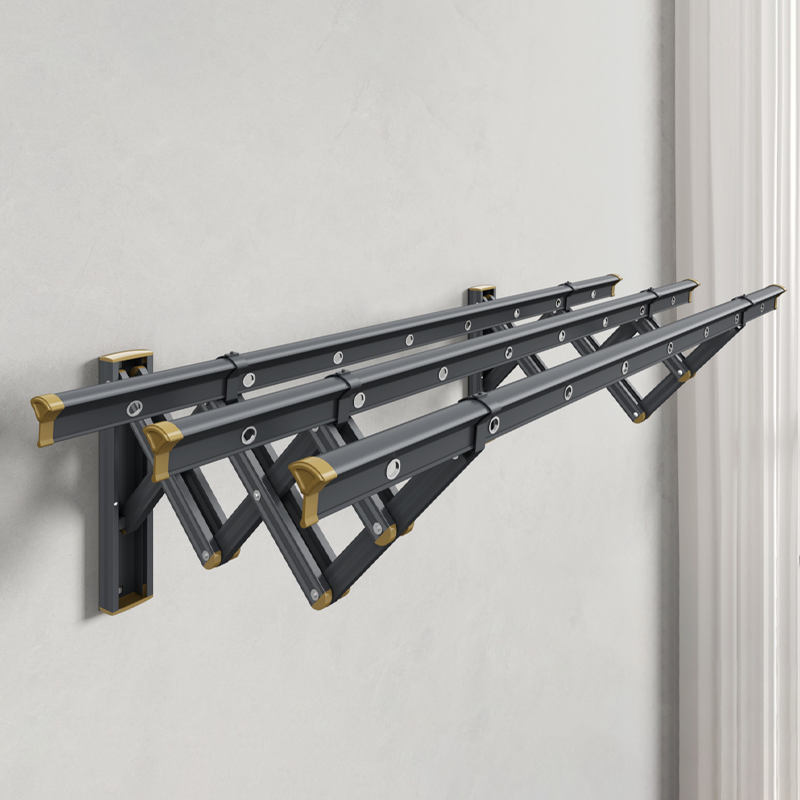

When floor space is limited, drying laundry can quickly become part of the room. A folding rack may block a hallway, take over a small flat, or make a narrow balcony harder to use. For many UK and European homes, a ceiling clothes airer offers a more practical way to dry clothes indoors while keeping laundry lifted above the floor.
But once you decide to use ceiling space, there is another choice to make: should you choose a manual ceiling clothes airer or an electric ceiling clothes airer?
The right answer depends on your home layout, ceiling structure, laundry routine, access to power, and how much convenience you want from the lifting system. A manual model may suit you if you prefer a simple non-electric pulley, hand crank, or hand winch system. An electric model may be a better fit if you want powered lifting and model-dependent features such as lighting, heating, fan assistance, UV, or remote control.
This guide compares both options carefully, so you can choose a ceiling clothes airer that suits your home without assuming that one type is always better than the other.
Manual vs Electric Ceiling Clothes Airer: The Quick Difference
Both manual and electric ceiling clothes airers are designed to save floor space by using the area above your head. The main difference is how the rack is raised and lowered.
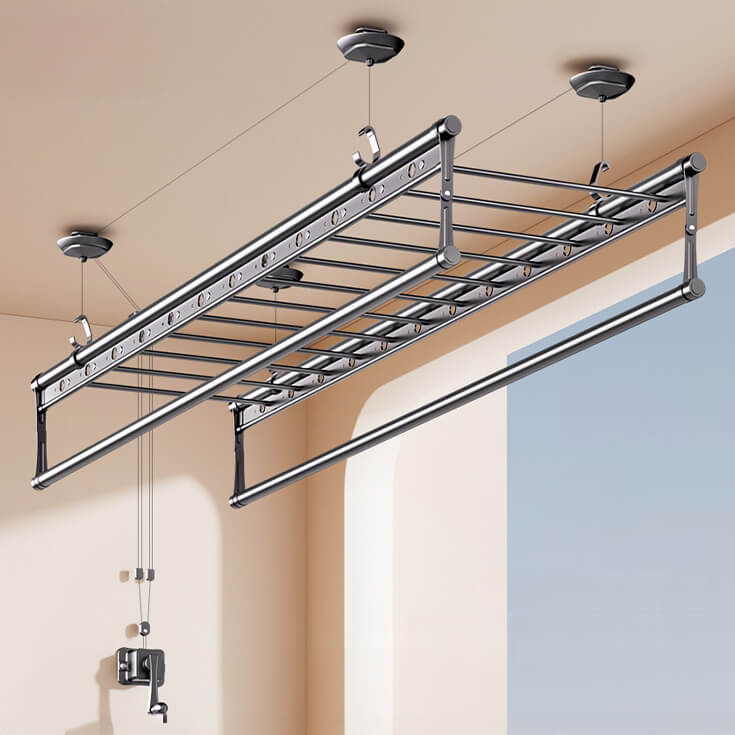
A manual ceiling clothes airer uses a pulley, cord, hand crank, or hand winch system. You lower the airer by hand, hang your laundry, and raise it back towards the ceiling. An electric ceiling clothes airer uses a powered motor to lift and lower the rack, usually controlled by a remote, wall switch, or control panel depending on the model.
| Comparison point | Manual ceiling clothes airer | Electric ceiling clothes airer |
|---|---|---|
| Operation | Uses a pulley, hand crank, or hand winch system | Uses powered lifting and lowering |
| Power access | No electricity needed for operation | Requires suitable power access or electrical setup |
| Convenience | Simple and practical, but requires manual effort | More convenient for users who prefer push-button control |
| Features | Usually focused on lifting, hanging space, and compact storage | May include lighting, heating, fan, UV, or remote control, depending on model |
| Installation checks | Needs suitable ceiling support and pulley or crank positioning | Needs suitable ceiling support plus safe electrical conditions |
| Good for | Homes wanting a non-electric ceiling airer | Homes wanting easier powered lifting and added convenience features |
If you are still comparing product types, you can start by browsing ceiling clothes airers to see how ceiling-mounted designs are used in compact homes, utility rooms, and suitable covered balcony areas.
What Is a Manual Ceiling Clothes Airer?
A manual ceiling clothes airer is a ceiling-mounted indoor clothes airer that you raise and lower by hand. It is often chosen by people who want a practical, space-saving drying solution without relying on electricity.
Manual models are especially useful in small flats, apartments, utility rooms, laundry corners, and suitable covered balconies where floor space is limited. They keep laundry above the floor when raised, helping the room or balcony stay easier to use.
How pulley, hand crank and hand winch systems work
A pulley clothes airer usually uses cords and pulleys to lift and lower the hanging rods. Some models use a hand crank clothes airer mechanism, while others use a hand winch clothes airer system for smoother manual control.
The exact layout depends on the model. Some manual ceiling airers have single rods for narrow spaces, while others have several rods for larger laundry loads. Traditional pulley systems also need careful positioning so that the rack lowers to a comfortable height and lifts clear of the living area when not in use. Manual ceiling airer installation references, such as PulleyMaid’s ceiling airer guidance, show how important ceiling fixing points and pulley positioning can be.
When a manual ceiling clothes airer may be the better fit
A manual ceiling clothes airer may suit your home if you want a non-electric system, have limited floor space, and are comfortable using a hand-operated lift. It may also be a practical option when there is no convenient power access near the ceiling.
Manual models can be a good match for:
- Small flats where floor drying racks get in the way
- Apartments with a suitable ceiling or covered balcony structure
- Utility rooms where you want laundry lifted out of the main work area
- Homes that prefer a simpler mechanism without electric controls
- Users who want a pulley, crank, or winch system for everyday laundry
If this sounds like your home, compare manual ceiling clothes airers to see pulley, hand crank, and hand winch options designed for indoor and suitable covered spaces.
What to check before choosing a manual model
Before choosing a manual model, check whether your ceiling or mounting surface is suitable. The airer must be installed into a structure that can support the product and laundry load. Rated load capacity depends on correct installation, suitable anchors, mounting surface, and even weight distribution.
You should also think about where the crank, winch, or cord will sit. It should be easy to reach, comfortable to use, and positioned where it will not interfere with doors, windows, cupboards, or daily movement through the room.
What Is an Electric Ceiling Clothes Airer?
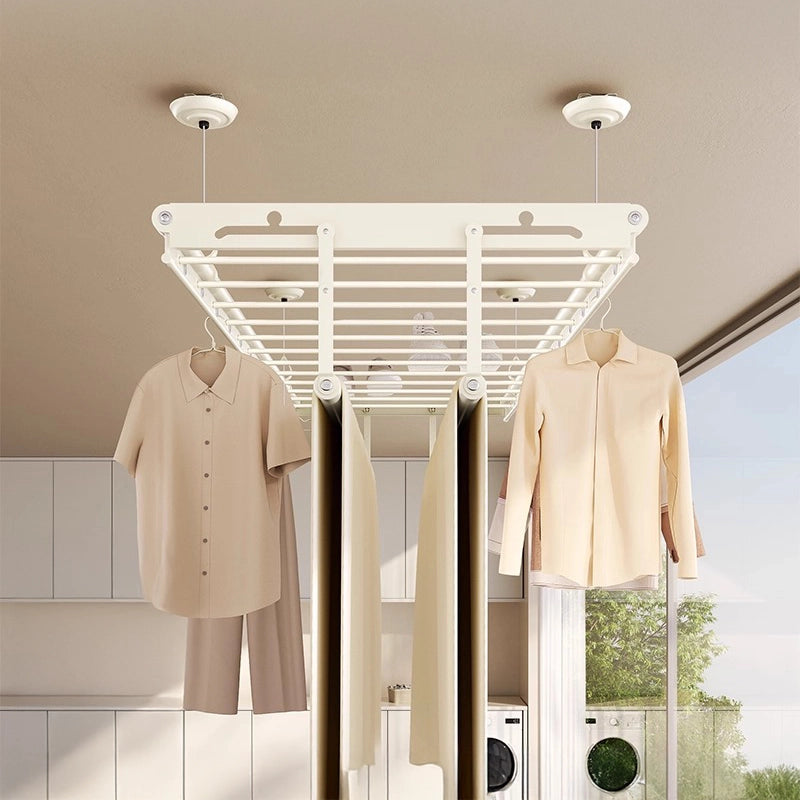
An electric ceiling clothes airer is a ceiling-mounted airer that uses powered lifting and lowering. Instead of manually pulling a cord or turning a crank, you use the model’s control system to move the rack up or down.
This can be useful if you dry laundry often, want a more convenient lift-and-lower experience, or prefer not to operate a manual pulley system. However, electric is not automatically the right answer for every home. It usually involves more installation considerations and needs suitable power access.
Powered lifting and daily convenience
The biggest advantage of an electric ceiling airer is convenience. You can lower the rack to a comfortable height, hang laundry, and raise it again without using a manual crank or pulley cord. This can be helpful for regular laundry routines, especially in homes where the airer is used several times a week.
For small flats and apartments, powered lifting may also make ceiling drying feel more accessible. You still need to check ceiling height, clearance, and installation conditions, but the daily operation can feel simpler for users who prefer electric control.
Features vary by model
Electric ceiling clothes airers vary widely. Some focus mainly on powered lifting. Others may include lighting, heating, fan assistance, UV, remote control, or app-style controls depending on the model.
It is important not to assume every electric clothes airer has the same features. For example, competitor products such as the Foxydry Pro electric ceiling airer show how electric models can include powered lowering and drying-assist features, but the exact specification depends on the product. Always check the model details before buying.
When an electric ceiling airer may be the better fit
An electric ceiling airer may suit your home if convenience is a priority and your installation area can support both the rack and the electrical setup. It may be useful for busy households, frequent laundry routines, or users who want a more automated lifting system.
An electric model may be a practical fit if:
- You want powered lifting and lowering
- You dry laundry several times a week
- You prefer remote or button-controlled operation
- Your ceiling structure and power access are suitable
- You want model-dependent features such as lighting, heating, fan assistance, or UV
If powered lifting is important to you, explore EaseRack electric clothes airers and compare the features available by model.
Which One Suits Your Home Layout?
Your home layout is one of the most important factors when choosing between manual and electric. A ceiling clothes airer should fit the room, not just the product description.
Small flats and apartments
For a small flat, the main benefit of a ceiling clothes airer is floor-space saving. Instead of leaving a rack open in the living room, hallway, or bedroom, you can lift laundry above the floor when the airer is raised.
A manual model may suit a small flat if you want a simpler, non-electric clothes airer. An electric model may suit you if the ceiling is appropriate, power access is available, and you want easier daily operation.
Utility rooms and laundry corners
In a utility room or laundry corner, both manual and electric models can work well if the ceiling structure is suitable. The choice often comes down to routine. If you only dry occasional laundry, a manual ceiling airer may be enough. If the airer will be used frequently, electric lifting may feel more convenient.
You should also check clearance around cabinets, appliances, doors, and windows. The rack should lower to a comfortable loading height without blocking essential movement.
Covered balconies and sheltered spaces
A covered balcony clothes airer can be useful when the space is sheltered and the installation conditions are suitable. However, covered balcony use depends on the model, exposure, ceiling structure, and installation conditions.
Manual models may be practical for covered balconies where power access is limited. Electric models may also be suitable in some covered spaces, but only if the product is designed for that setting and the electrical installation conditions are appropriate.
Avoid treating any balcony as a permanent all-weather location. If the area is exposed to heavy rain, strong wind, or long-term moisture, check the product guidance carefully before installation.
High ceilings, low ceilings and access height
Ceiling height affects comfort. In a room with a higher ceiling, a lift-and-lower system is especially useful because it brings the hanging rods down to a practical height. In a lower ceiling area, check that the airer does not sit too close to people’s heads, doors, or lighting.
Manual and electric systems both need enough clearance. The key question is not only whether the airer fits, but whether you can use it comfortably every week.
Installation, Load Capacity and Safety Checks
Installation is one of the most important parts of choosing any ceiling clothes airer. A ceiling-mounted airer must be fixed to a suitable structure, not just positioned where it looks convenient.
Ceiling structure and mounting surface
Before buying, check the ceiling type. Solid concrete, timber joists, beams, suspended ceilings, plasterboard, and balcony structures may require different installation methods. Some surfaces may not be suitable without additional support or professional advice.
If you rent your home, also check whether ceiling installation is allowed. Some apartments or rented flats may restrict ceiling drilling, balcony changes, or electrical work.
Anchors, weight distribution and rated capacity
Rated load capacity depends on correct installation, suitable anchors, mounting surface, and even weight distribution. This applies to both manual and electric ceiling clothes airers.
Even weight distribution matters because laundry does not always hang evenly. Towels, jeans, bedding, and thicker garments can place more weight on one side if they are grouped together. Spread heavier items across the rods where possible and follow the product’s loading guidance.
When to consider professional installation
Professional installation is worth considering if you are unsure about the ceiling structure, suitable anchors, power access, or load conditions. This is especially relevant for electric ceiling airers, which may require safe electrical planning in addition to secure mounting.
For manual models, professional help may also be useful if the pulley, crank, or winch needs careful positioning. The goal is a rack that feels stable, accessible, and comfortable to use.
Drying Performance: What Actually Affects Results?
A ceiling clothes airer can help you dry clothes indoors without using floor space, but drying performance does not depend only on whether the airer is manual or electric.
Drying performance may vary depending on airflow, humidity, temperature, fabric type, fabric thickness, and laundry spacing. This is true for manual ceiling airers, electric ceiling airers, heated airers, and standard indoor clothes airers.
Airflow and ventilation
Good airflow helps moisture move away from fabrics. If clothes are packed too closely together, drying can take longer because damp air becomes trapped between garments.
UK guidance on damp and condensation, such as South Kesteven District Council’s damp and mould advice, highlights the importance of managing moisture and ventilation indoors. This is useful to remember when drying laundry inside a flat or apartment.
Humidity and indoor moisture
In winter, rainy seasons, or humid homes, indoor drying may take longer. If moisture cannot escape, laundry may stay damp and condensation may build up on windows or colder surfaces.
Where possible, use ventilation, avoid overcrowding the airer, and allow enough space around garments. If you use a heated or fan-assisted electric model, check the manufacturer’s guidance for safe and effective use.
Fabric type, thickness and spacing
Thin shirts usually dry differently from towels, jeans, bedding, or thick jumpers. Fabric type and thickness can affect drying time as much as the airer itself.
Spacing also matters. Hanging clothes with a small gap between items can improve airflow. For larger fabrics, spread them across more than one rod when suitable, instead of bunching them tightly together.
Drying without relying on a tumble dryer
Many people choose a ceiling clothes airer because they want to dry clothes indoors without relying fully on a tumble dryer. This can be practical, especially in compact homes, but it should still be managed carefully.
Consumer advice on heated airers, such as Ideal Home’s heated clothes airer testing guide, shows that drying results can vary depending on airer design, controls, covers, spacing, and fabric contact. The same practical thinking applies when comparing manual and electric ceiling clothes airers.
How to Choose the Right Ceiling Clothes Airer for Your Home
The best choice is the one that fits your home, routine, and installation conditions. Manual and electric ceiling clothes airers both have a place. The decision is less about which type is universally better and more about which one makes sense for your daily use.
Choose manual if...
- You want a non-electric ceiling clothes airer
- You do not have convenient power access nearby
- You prefer a simpler pulley, hand crank, or hand winch system
- You are comfortable raising and lowering the rack manually
- Your ceiling structure is suitable for the chosen manual model
- You want a practical clothes airer for a small flat, apartment, utility room, or suitable covered balcony
Choose electric if...
- You want powered lifting and lowering
- You dry laundry frequently and value daily convenience
- You prefer button, remote, or model-dependent control options
- Your ceiling and power access are suitable
- You want to compare model-specific features such as lighting, heating, fan assistance, or UV
- You are comfortable with a more involved installation setup
Consider wall-mounted or portable options if...
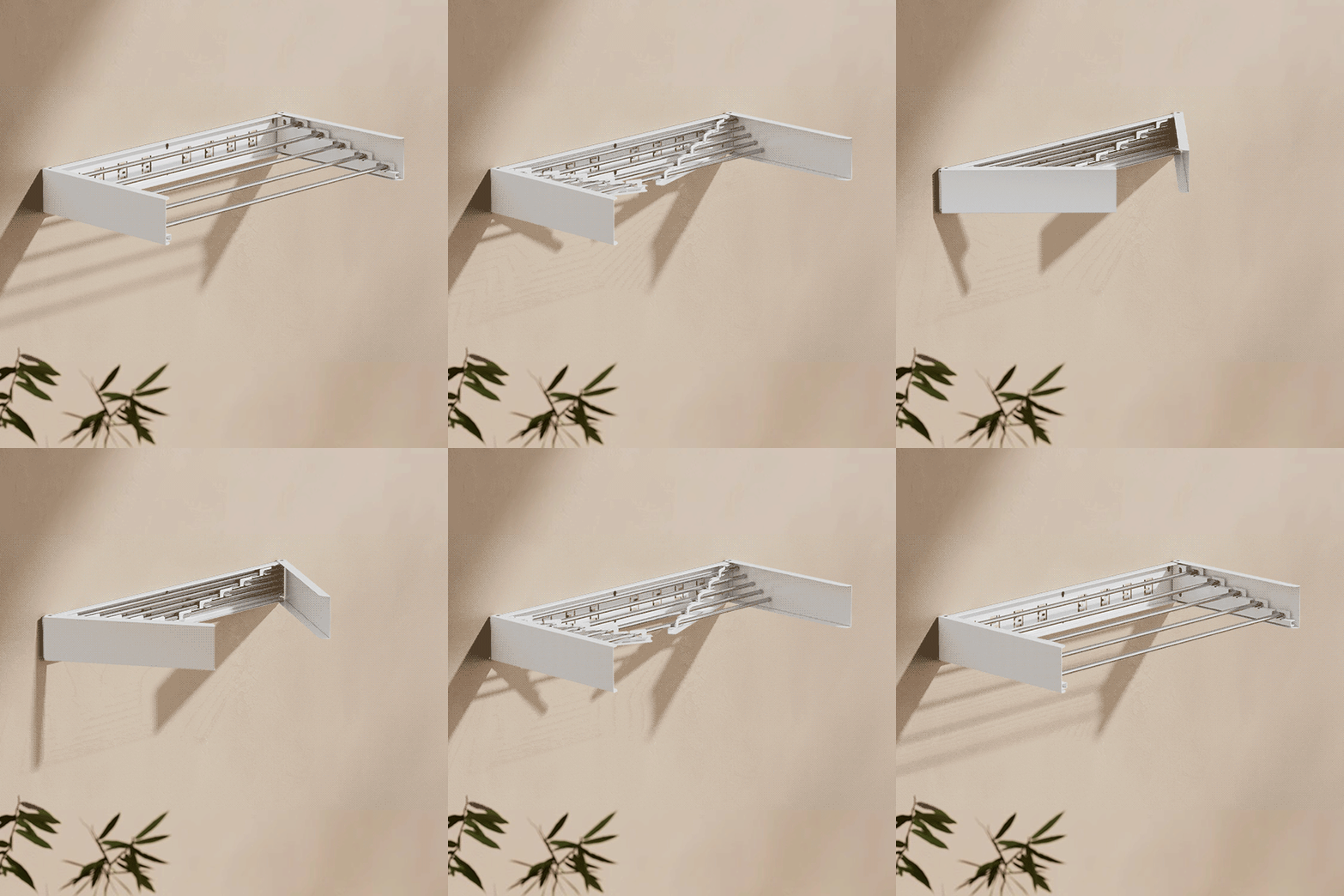
A ceiling clothes airer may not be right for every home. If your ceiling is unsuitable, if you rent and cannot drill into the ceiling, or if your space has low clearance, a wall-mounted or portable airer may be more practical.
This is especially relevant for apartments where ceiling structure is uncertain or for covered balconies where the installation surface may not support a ceiling-mounted system. In those cases, a wall-mounted or folding option may provide drying space with fewer ceiling-related concerns.
Final checklist before buying
- Where will the airer be installed?
- Is the ceiling structure suitable?
- Do you have power access nearby if choosing electric?
- Will the airer lower to a comfortable height?
- Will it interfere with doors, lights, windows, cabinets, or balcony use?
- How often do you dry laundry?
- Do you prefer a manual or powered lifting system?
- Are the product features suitable for your routine?
- Can laundry be spaced evenly for better airflow?
- Is professional installation needed?
If you are still comparing options, you can compare EaseRack clothes airer models or use the guide to find the right clothes airer for your home.
FAQ: Manual and Electric Ceiling Clothes Airers
Is a manual ceiling clothes airer better than an electric one?
Not always. A manual ceiling clothes airer may be better if you want a non-electric pulley, hand crank, or hand winch system. An electric ceiling clothes airer may be better if you want powered lifting and model-dependent convenience features. The right choice depends on your home layout, installation conditions, laundry routine, and preference for manual or electric operation.
Is an electric ceiling clothes airer worth it for a small flat?
It may be worth considering if you dry laundry often and want powered lifting. However, you should check ceiling structure, clearance, power access, and the model’s features before choosing. Electric is convenient, but it is not automatically the best option for every small flat.
Which ceiling clothes airer is better if I do not have power access nearby?
If you do not have suitable power access near the installation area, a manual ceiling clothes airer may be the more practical choice. It can be operated with a pulley, hand crank, or hand winch system without electricity. You should still check that the ceiling structure, anchors, mounting surface, and installation position are suitable.
Can I use a ceiling clothes airer on a covered balcony?
Possibly, but it depends on the model, exposure, ceiling structure, and installation conditions. A covered balcony may be suitable for some ceiling clothes airers if the space is sheltered and the mounting surface is appropriate. Avoid assuming that any model is suitable for exposed outdoor conditions or long-term heavy rain.
Do ceiling clothes airers dry clothes faster?
Not automatically. Drying performance may vary depending on airflow, humidity, temperature, fabric type, fabric thickness, and laundry spacing. Some electric models may include heating or fan assistance, but these features vary by model and should not be assumed for every electric ceiling airer.
What should I check before installing a ceiling clothes airer?
Check the ceiling structure, mounting surface, anchors, clearance, access height, and expected laundry load. Rated load capacity depends on correct installation, suitable anchors, mounting surface, and even weight distribution. For electric models, also check power access and whether professional installation is recommended.
Conclusion
A manual vs electric ceiling clothes airer decision should come down to how your home works day to day. Manual models are practical for users who want a non-electric pulley, hand crank, or hand winch system. Electric models are useful for users who prefer powered lifting and model-dependent convenience features.
Neither option is automatically better for every home. Before you choose, think about your ceiling structure, power access, room layout, laundry volume, balcony exposure, and drying conditions. With the right checks, a ceiling clothes airer can help you make better use of unused overhead space while keeping everyday laundry more organised.
Explore EaseRack clothes airers to compare manual ceiling, electric ceiling, and space-saving options for your home.

