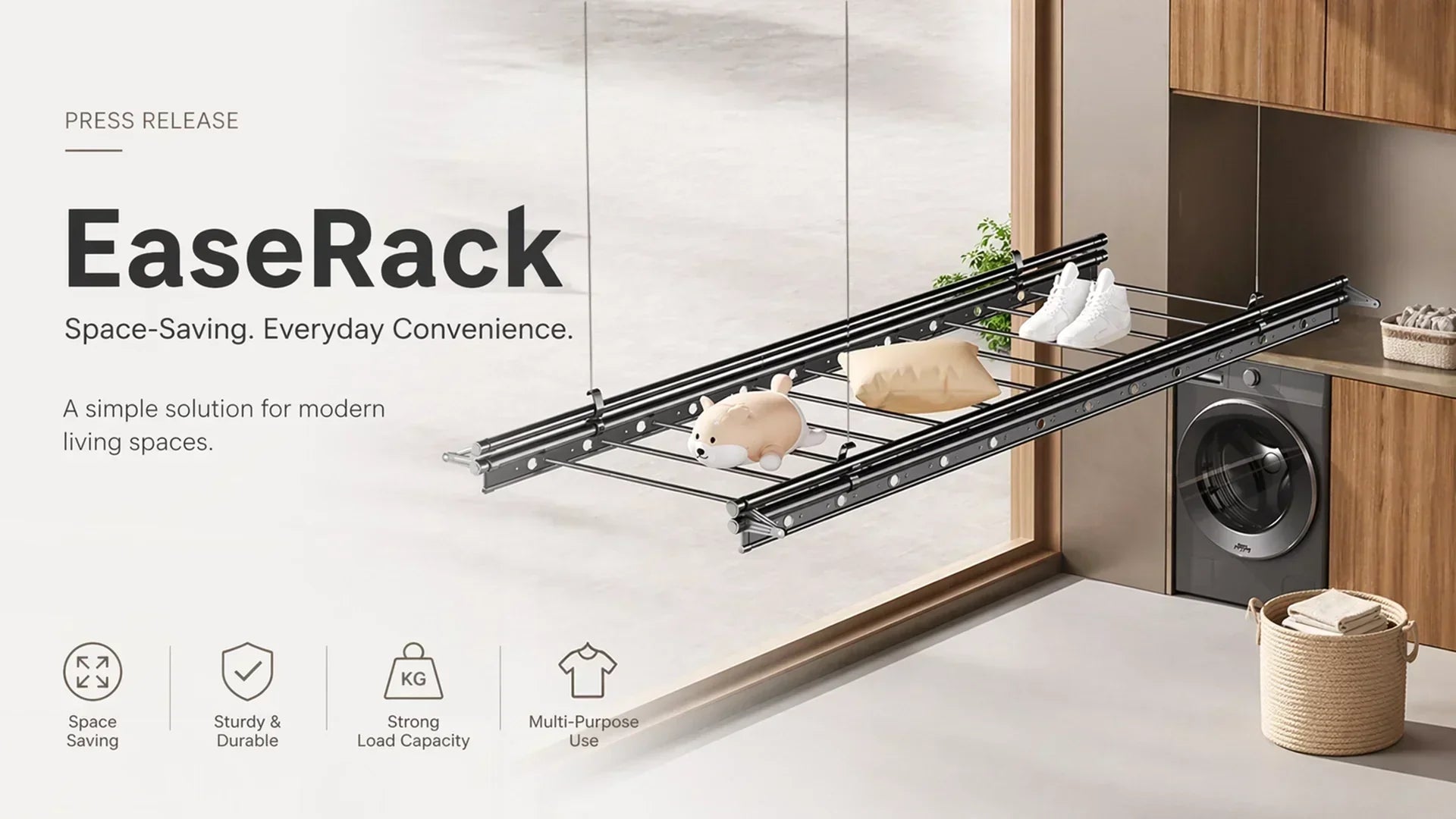

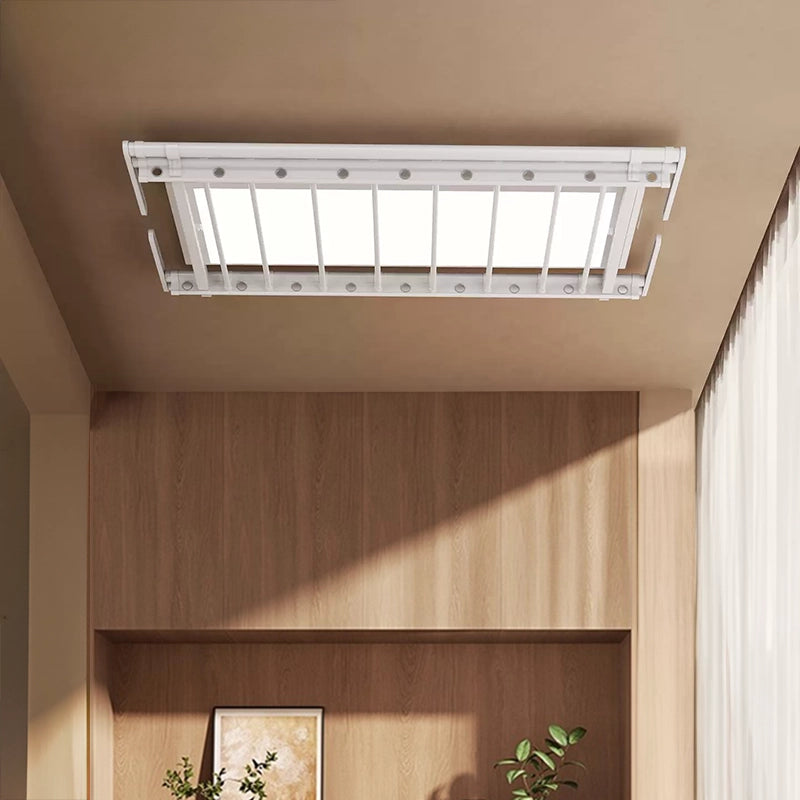
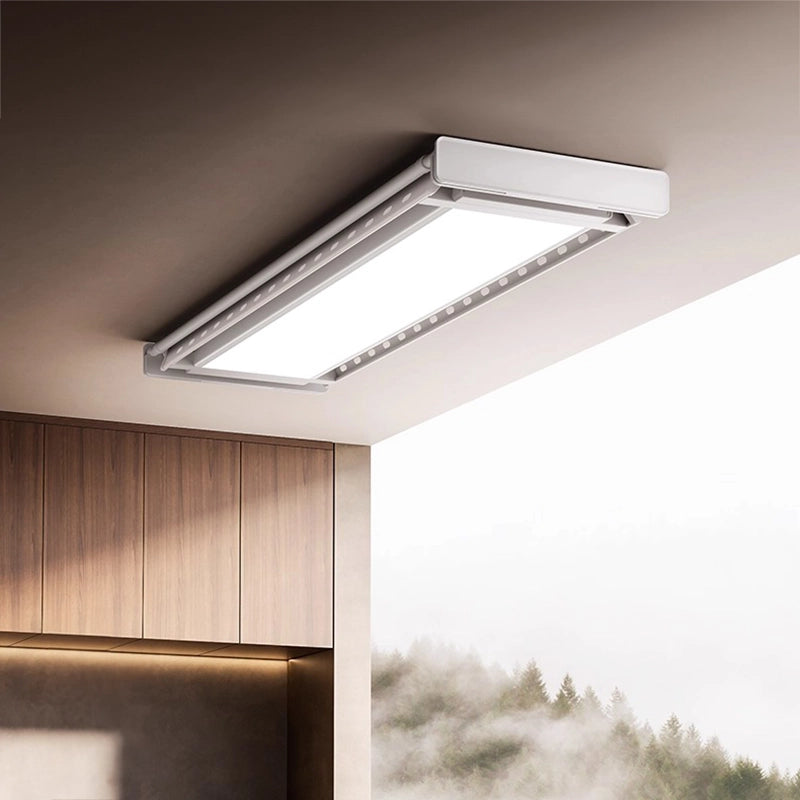


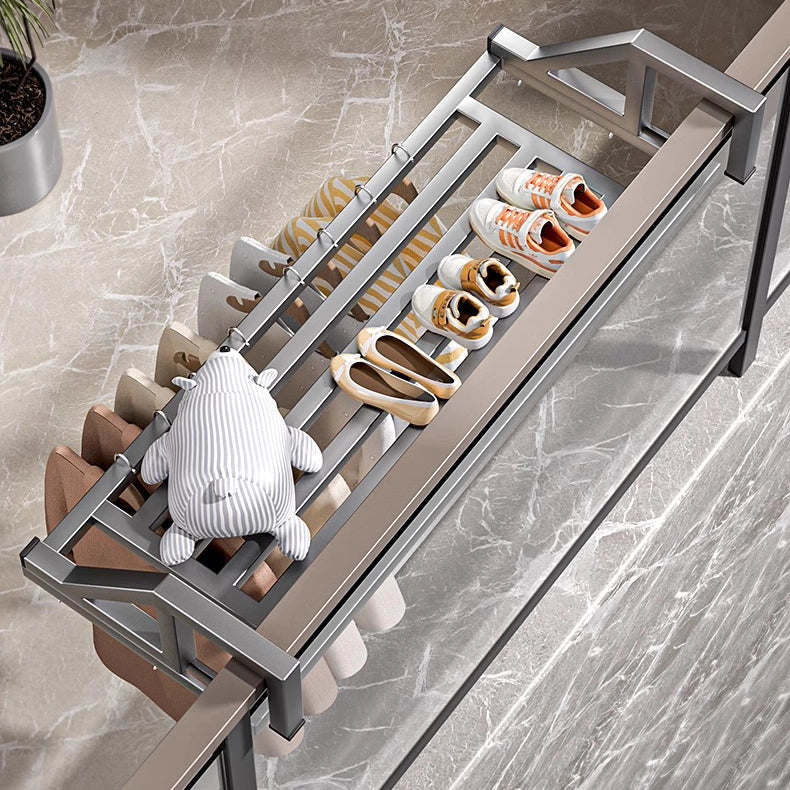
A ceiling clothes airer is a clothes drying solution that is mounted above the floor, usually on the ceiling of a balcony, utility room, bathroom, laundry corner, or compact indoor space. Instead of leaving a floor drying rack in the middle of the room, a ceiling airer helps you use overhead space for everyday laundry.
For UK and European homes where floor space is limited, this can be a practical option. Small flats, apartments, covered balconies, and compact homes often do not have enough room for a traditional drying rack. A ceiling mounted clothes airer can help keep laundry in one planned area while leaving the floor easier to use.
This guide explains what a ceiling clothes airer is, how it works, who it may suit, what types are available, and how to choose between manual, pulley, hand crank, electric, recessed, and wall-mounted alternatives.
What Is a Ceiling Clothes Airer?
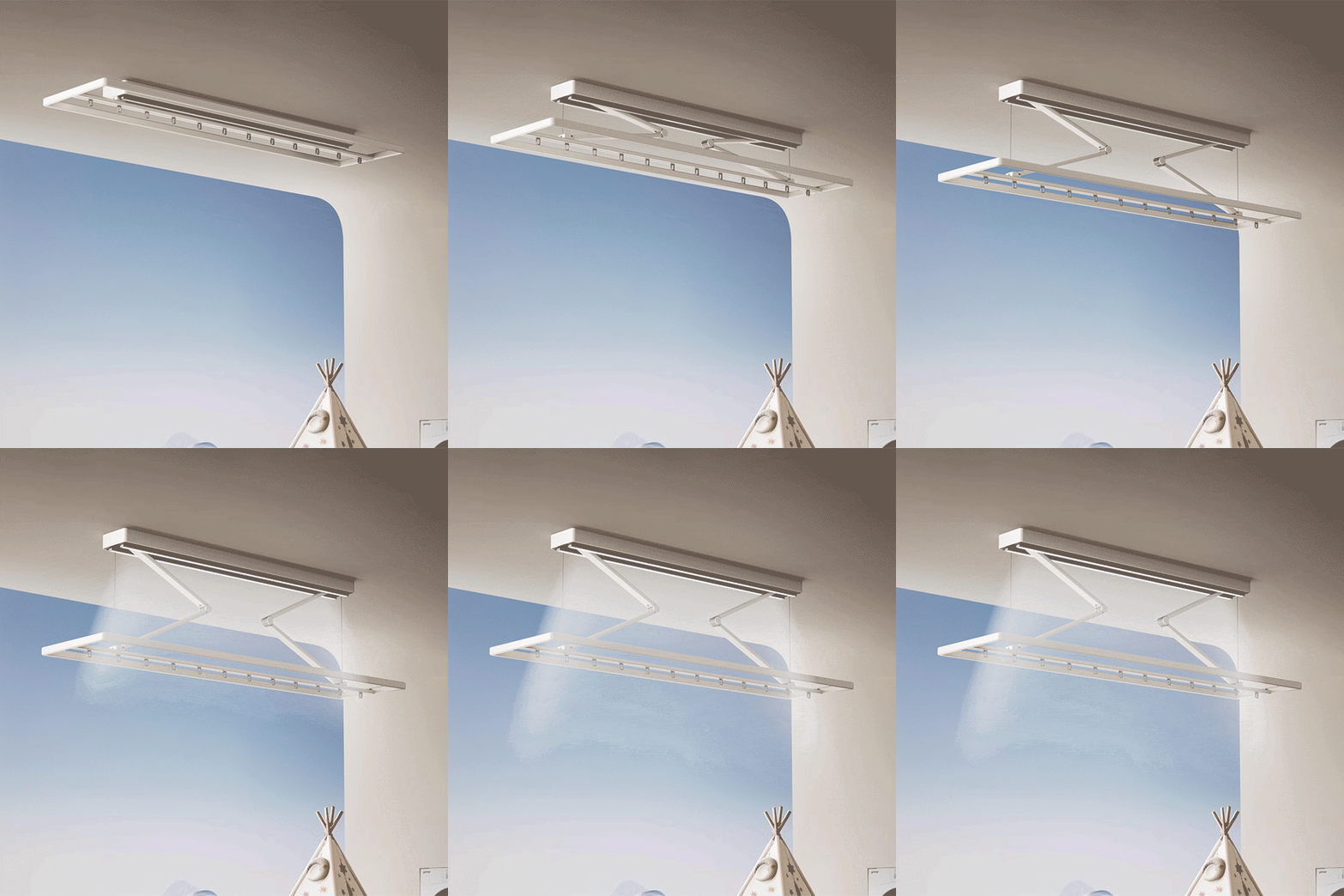
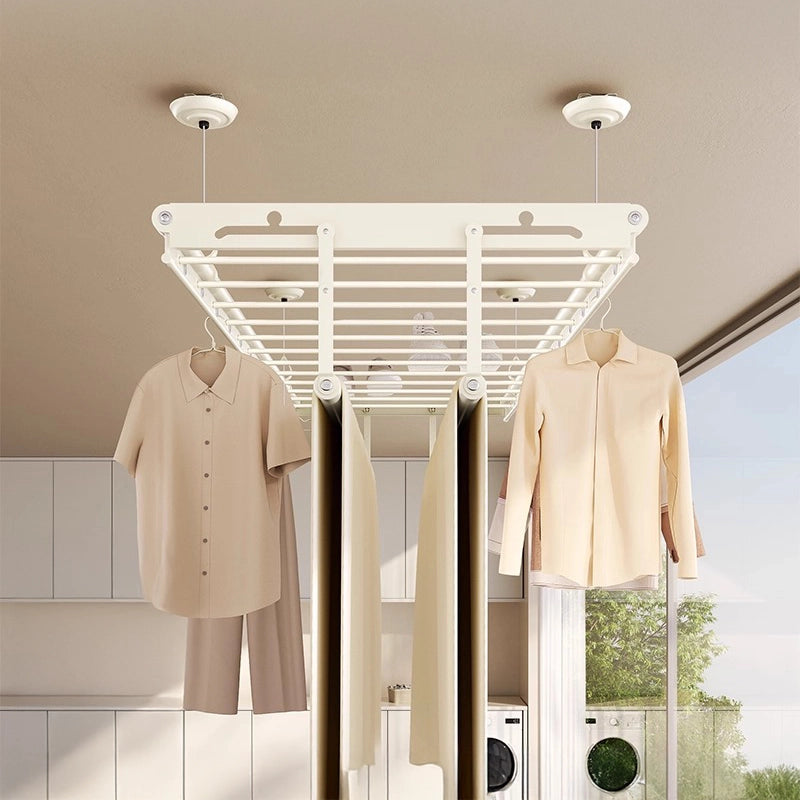
A ceiling clothes airer is an indoor clothes airer that is fixed to the ceiling rather than placed on the floor. It usually has rods, rails, or bars for hanging laundry, and many designs can be lowered for loading and raised again while clothes dry.
The main purpose is simple: to help you make better use of unused ceiling space. This can be especially useful in small homes where a folding airer may block walkways, balconies, furniture, or living areas.
EaseRack offers a range of ceiling clothes airers designed for compact homes, covered balconies, utility rooms, and apartment laundry areas.
How a ceiling mounted clothes airer works
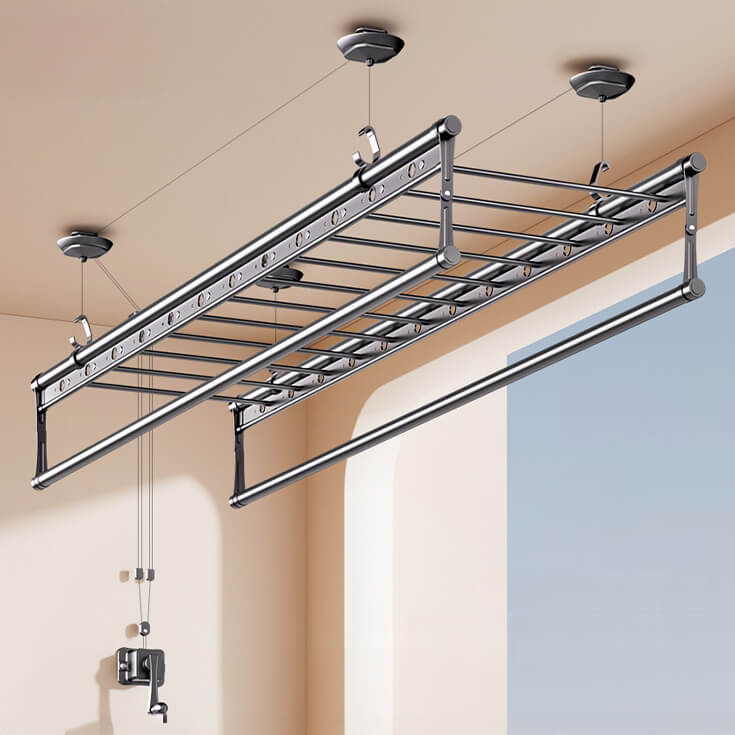
A ceiling mounted clothes airer is installed above the drying area. Depending on the type, it may use a pulley, hand crank, manual winch, or electric lifting system to lower the drying rods to a comfortable height. Once the laundry is loaded, the airer can be raised back up so the clothes dry above the floor.
The exact design varies by model, but most ceiling airers include:
- Ceiling brackets or a ceiling-mounted body
- Drying rods, rails, or hanging bars
- A lifting system, such as a pulley, crank, winch, or motor
- Fixings suitable for the installation surface
- A way to raise and lower the airer for daily use
Installation suitability depends on ceiling type, correct fixing, suitable anchors, mounting surface, and even weight distribution. If you are unsure whether your ceiling is suitable, professional installation is recommended.
Why it is different from a floor airer
A floor airer can be useful because it is portable and does not need fixed installation. However, it also uses floor space every time you dry laundry. In a small flat or apartment, that can quickly become inconvenient.
A ceiling clothes airer works differently. It gives laundry a fixed drying position above the floor, helping keep walkways, balconies, and compact rooms easier to use. It may be a better fit if you want a more permanent indoor clothes airer and have a suitable ceiling area for installation.
Is a Ceiling Clothes Airer Right for Your Home?
A ceiling clothes airer can be a practical choice for many small homes, but it is not suitable for every space. Before choosing one, think about where it will be installed, how much laundry you usually dry, and whether your ceiling structure can support the system correctly.
Small flats and apartments
In small flats and apartments, laundry often has to dry indoors. A folding rack may take over the living room, bedroom, hallway, or balcony. A ceiling clothes airer can help by moving laundry above the floor and giving it a dedicated place to dry.
This can be especially useful if you want a clothes airer for apartment living but do not want a drying rack permanently standing in the room.
Covered balconies and utility spaces
Many European homes have small balconies or utility corners that are useful for drying, but not large enough for a full floor rack. A ceiling airer may suit some covered or sheltered balconies, depending on the ceiling structure, exposure, and product guidance.
Covered balcony use should be described carefully. A ceiling clothes airer should not be treated as suitable for all-weather outdoor exposure unless the specific model guidance supports that use.
Homes without space for floor drying racks
If a traditional drying rack blocks your daily routine, a ceiling clothes airer may be worth considering. It can help free up floor space in laundry areas, bathrooms, covered balconies, or compact rooms where every bit of usable space matters.
Users who want a fixed indoor clothes airer
A ceiling mounted clothes airer is also useful for people who prefer a fixed drying setup. Instead of unfolding, moving, and storing a rack each time, you can use one planned drying area for regular laundry.
This may suit households that dry clothes indoors often and want a more organised arrangement than a temporary floor rack.
Main Types of Ceiling Clothes Airers
“Ceiling clothes airer” is a broad category. It can include traditional pulley models, manual winch designs, hand crank systems, electric ceiling airers, compact ceiling airers, and recessed designs. Pulley and electric models are important subtypes, but they are not the whole category.
Pulley clothes airer
A pulley clothes airer is one of the most traditional types of ceiling airer. It usually uses a cord and pulley system to raise and lower the drying rods. The user lowers the airer to hang laundry, then lifts it back up while the clothes dry.
This type can be useful for homes where people want a simple lift-and-lower system without electric controls. It is often associated with classic ceiling drying systems used in kitchens, utility rooms, and laundry spaces.
Manual ceiling clothes airer
A manual ceiling clothes airer may use a pulley, hand winch, or hand crank system. It does not rely on powered lifting, which can make it a practical option for users who want a non-electric ceiling airer.
EaseRack’s manual ceiling clothes airers include pulley, winch, and crank-style options for indoor spaces, laundry rooms, and covered balcony areas where suitable installation is possible.
Electric ceiling airer
An electric ceiling airer uses a powered lifting system to raise and lower the airer. Depending on the model, it may also include features such as lighting, heating, fan-assisted airflow, UV, remote control, or adjustable rods. These features vary by model and should always be checked before buying.
EaseRack’s electric ceiling airers may suit users who prefer powered lifting and a more convenient daily routine, especially in compact homes where overhead drying space is useful.
Compact or recessed ceiling airer
Some ceiling airers are designed for smaller spaces or a more discreet appearance. A compact ceiling airer may suit a small flat, narrow laundry area, or covered balcony. A recessed model may suit users who want a cleaner ceiling look, where the ceiling structure and installation conditions allow it.
These models are usually chosen when appearance, space, and installation layout are especially important.
Ceiling Clothes Airer vs Other Indoor Clothes Airers
The right indoor clothes airer depends on your home layout, ceiling or wall structure, laundry routine, and available space. A ceiling airer is useful for many compact homes, but it should be compared with other options before you decide.
| Airer Type | How It Uses Space | Installation Needed | Electricity Use | Best Suited For |
|---|---|---|---|---|
| Ceiling clothes airer | Uses overhead ceiling space | Yes, ceiling installation required | Depends on manual or electric model | Small homes, apartments, utility areas, covered balconies |
| Pulley clothes airer | Uses ceiling space | Yes, ceiling installation required | No electricity for manual operation | Users who want a traditional lift-and-lower system |
| Electric ceiling airer | Uses ceiling space | Yes, ceiling installation and power access may be needed | Yes | Users who prefer powered lifting and model-specific features |
| Wall-mounted clothes airer | Uses wall space | Yes, wall installation required | Usually no electricity | Homes where ceiling installation is not suitable |
| Folding floor airer | Uses floor space | No fixed installation | No electricity unless heated | Occasional drying or homes with spare floor area |
| Heated clothes airer | Usually uses floor space | Usually no fixed installation | Yes | Users who want assisted drying and have space for the unit |
| Tumble dryer | Uses appliance space | Needs appliance position and power | Yes | Homes with enough appliance space and suitable access |
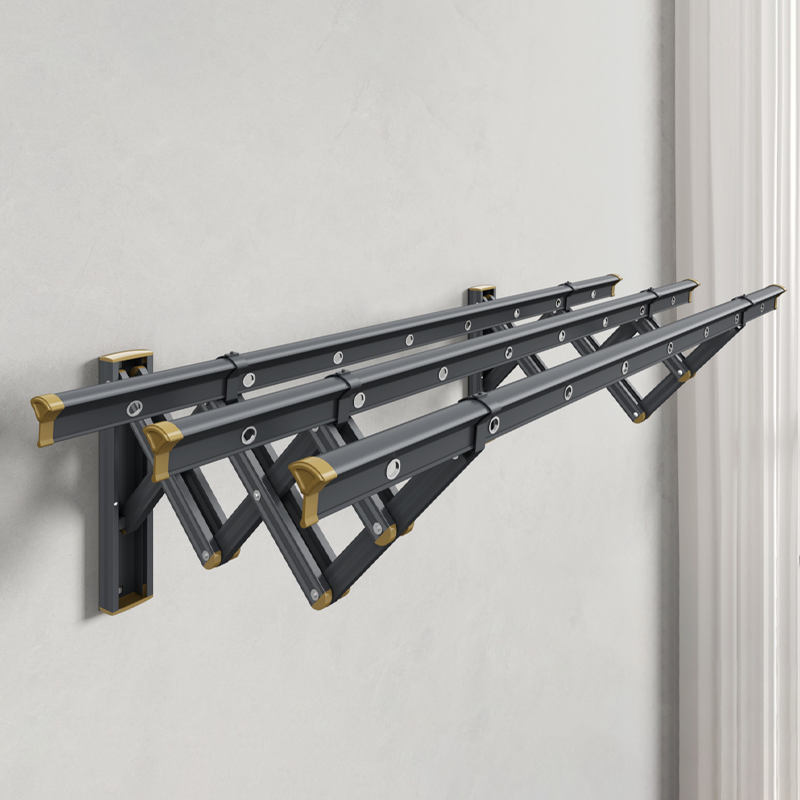
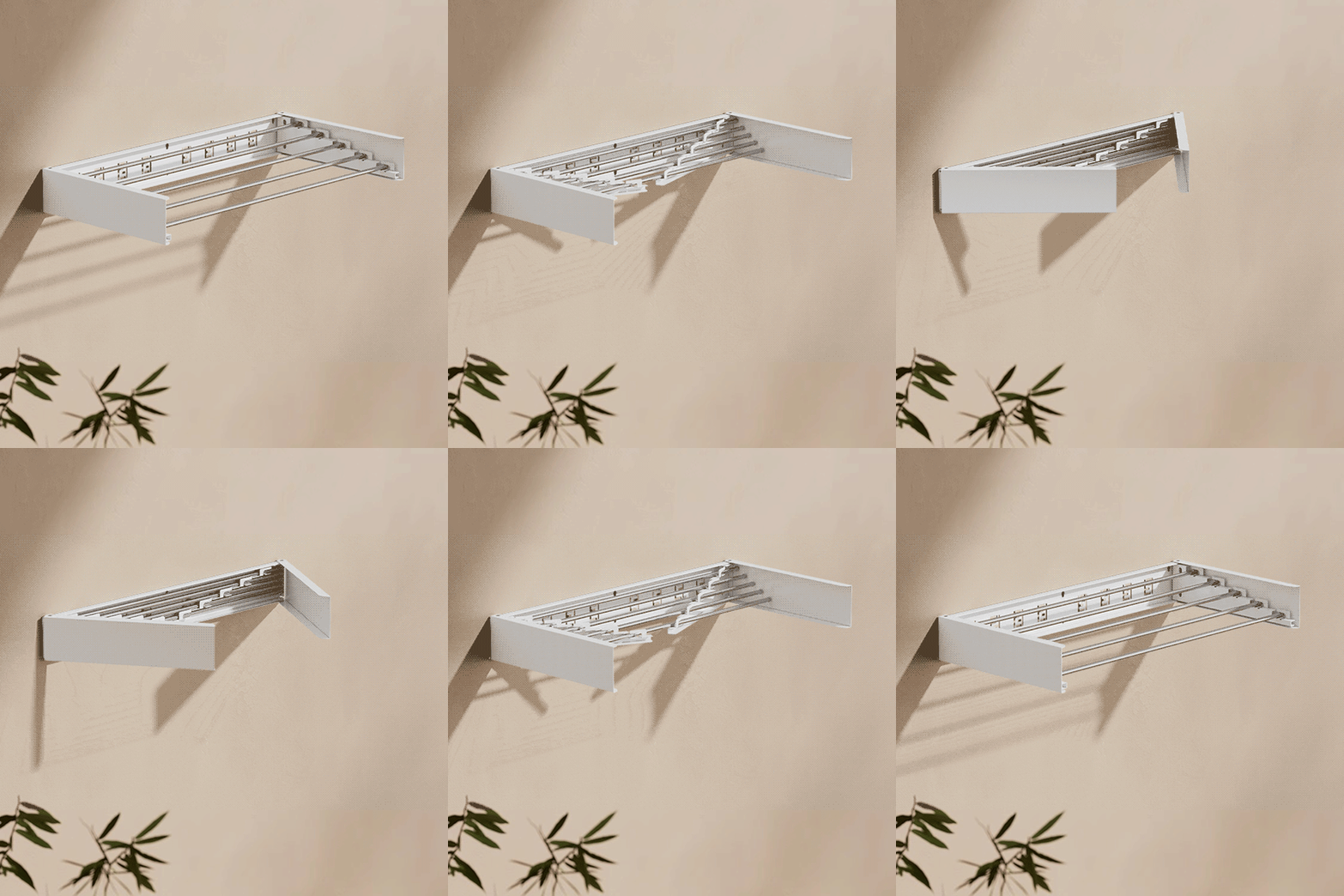
If your ceiling is not suitable, EaseRack’s wall-mounted clothes airers may be a more practical alternative. They still need a suitable wall and correct installation, but they can provide fixed drying space without using the ceiling.
Can a Ceiling Clothes Airer Help You Dry Clothes Indoors Without a Tumble Dryer?
A ceiling clothes airer can help you dry clothes indoors without tumble dryer reliance for many everyday loads. It gives laundry a fixed place to hang and helps keep drying above the floor, which can be useful in small homes.
However, it should not be presented as a complete replacement for a tumble dryer in every situation. Drying performance may vary depending on airflow, humidity, temperature, fabric type, fabric thickness, and laundry spacing.
Indoor drying also adds moisture to the room. The GOV.UK ventilation guidance explains why ventilation matters for managing moisture in the home, while UK council damp and mould guidance often recommends drying washing in a heated, well-ventilated room where possible. The European Commission’s tumble dryer policy information also shows why households may pay attention to appliance efficiency, but any energy-related claims should be made carefully.
What Should You Check Before Choosing a Ceiling Clothes Airer?
Before choosing a ceiling clothes airer, think about both the product and the room. A good fit depends on installation suitability, available space, laundry volume, and how you prefer to use the airer each day.
Ceiling type and fixing suitability
Installation suitability depends on ceiling type, correct fixing, suitable anchors, mounting surface, and even weight distribution. A concrete ceiling, timber joist, beam structure, or plasterboard ceiling may require different installation methods.
If you are unsure whether the ceiling can support the airer and laundry load, professional installation is recommended.
Available ceiling space
Measure the ceiling area before buying. Consider the airer’s length, width, lowering height, and the space needed for clothes to hang freely.
Check nearby lights, cupboards, windows, doors, extractor fans, and furniture. The airer should be easy to lower and load without blocking normal use of the room.
Laundry volume
A person drying small daily loads may need a different ceiling airer from a family drying towels, sheets, and heavier garments. Look at the rod layout, usable hanging space, and rated load guidance.
Rated load capacity should always be understood with conditions. It depends on correct installation, suitable anchors, mounting surface, and even weight distribution.
Manual or electric operation
Manual ceiling clothes airers may suit users who prefer a simpler non-electric system. Electric ceiling airers may suit users who want powered lifting and model-specific features.
The right choice depends on your routine, comfort, power access, ceiling position, and budget.
Indoor or covered balcony location
A ceiling clothes airer may suit indoor spaces or some covered balconies, depending on the model and installation conditions. Covered balcony use should be described as covered or sheltered, not all-weather outdoor use.
Avoid installing an airer where it will be exposed to long-term heavy rain, strong wind, or unsuitable outdoor conditions unless the product guidance clearly supports that use.
Which EaseRack Ceiling Airer May Suit Your Home?
EaseRack offers several clothes airer formats for different homes and routines. The right option depends on whether you want a ceiling-mounted system, a manual lift, powered lifting, or an alternative wall-mounted setup.
Main category: ceiling clothes airers
If you are still learning about the category, start with ceiling clothes airers. This gives you a broad view of ceiling-mounted drying options for small homes, apartments, covered balconies, and utility areas.
Prefer non-electric: manual ceiling clothes airers
If you want a pulley, hand crank, or winch-style system, manual ceiling clothes airers may be a practical fit. They help use overhead space without relying on powered lifting.
Want powered lifting: electric ceiling airers
If you prefer a more convenient lift-and-lower experience, electric ceiling airers may be worth comparing. Check the specific model details carefully, because features such as heating, fan, UV, and lighting vary by model.
Need an alternative to ceiling mounting: wall-mounted clothes airers
If your ceiling is not suitable, wall-mounted clothes airers may offer another fixed drying option. This can be useful for bathrooms, utility rooms, covered balconies, or narrow laundry areas with suitable wall structure.
Still unsure: compare EaseRack clothes airer models
If you are deciding between ceiling, manual, electric, and wall-mounted options, you can compare EaseRack clothes airer models based on your space, installation conditions, laundry volume, and daily routine.
FAQ
Is a ceiling clothes airer suitable for a small flat?
Yes, it may be suitable if the flat has enough ceiling space, a suitable mounting surface, and enough clearance for loading and drying laundry. It can help keep floor space clearer compared with a traditional floor rack.
What is the difference between a ceiling clothes airer and a pulley clothes airer?
A pulley clothes airer is one type of ceiling clothes airer. “Ceiling clothes airer” is the broader category and can include pulley, manual winch, hand crank, electric, compact, and recessed designs.
Is an electric ceiling airer better than a manual ceiling clothes airer?
It depends on your needs. An electric ceiling airer may suit users who prefer powered lifting and model-specific features. A manual ceiling clothes airer may suit users who prefer a simpler non-electric system.
Can I install a ceiling mounted clothes airer on any ceiling?
No. Installation suitability depends on ceiling type, correct fixing, suitable anchors, mounting surface, and even weight distribution. If you are unsure, professional installation is recommended.
Can a ceiling clothes airer be used on a covered balcony?
It may be suitable for some covered or sheltered balconies, depending on the model, ceiling structure, exposure, and installation conditions. It should not be treated as suitable for all-weather outdoor use unless the product guidance clearly supports that use.
Does a ceiling clothes airer help clothes dry faster?
A ceiling clothes airer can help position laundry in a more organised drying area, but it should not be expected to dry clothes faster in every home. Drying performance may vary depending on airflow, humidity, temperature, fabric type, fabric thickness, and laundry spacing.
Conclusion
A ceiling clothes airer is a practical indoor clothes airer for small homes where floor space is limited. It helps move laundry above the floor and can suit small flats, apartments, covered balconies, utility areas, and compact laundry spaces when the installation conditions are right.
The best option depends on your home. A pulley or manual ceiling clothes airer may suit users who prefer a non-electric lift system. An electric ceiling airer may be better for powered lifting. A wall-mounted clothes airer may be more suitable if your ceiling cannot support a fixed airer.
Explore EaseRack ceiling clothes airers and compare manual, electric, compact, and wall-mounted options to choose a practical drying solution for your home.