



Choosing a clothes airer for a small apartment is rarely just about finding somewhere to hang wet laundry. In a flat, every square metre has a job to do. A floor airer can block the living room, make a hallway feel narrow, or take over a balcony that is already short on space.
The right choice depends on your layout, installation options, laundry routine, and how you manage indoor drying conditions. A ceiling clothes airer may suit one apartment because it uses unused overhead space. A wall-mounted clothes airer may suit another because the wall is easier to use than the ceiling. A folding airer may still be the practical answer if you rent or only dry laundry indoors occasionally.
Quick answer: The best clothes airer for a small apartment is usually one that makes better use of the space you already have. A ceiling airer can help keep floor areas clearer, a wall-mounted model may suit a narrow laundry zone or sheltered balcony, and a folding airer can work well for occasional use. The right choice depends on your layout, installation conditions, laundry volume, and drying routine.
In This Guide
- What makes a clothes airer suitable for a small apartment?
- Main types of space-saving clothes airers
- Comparison table: which type fits your space?
- Best clothes airer by apartment layout
- Manual, electric, or heated: what is the difference?
- Before-you-buy checklist
- Frequently asked questions
What Makes a Clothes Airer Suitable for a Small Apartment?
A good clothes airer for small apartment living should solve a real space problem. It should fit into the way you already use your home, rather than creating a new obstacle every laundry day.
It uses space efficiently
In a compact flat, the floor is often the least convenient place to dry laundry. You may need that space for walking, cooking, relaxing, working from home, or reaching the balcony door. A space-saving clothes airer should help move laundry into a less disruptive area, such as overhead ceiling space, a suitable wall, or a sheltered balcony zone.
This is why small-apartment buyers often compare drying racks for small spaces before choosing a single product type.
It matches your everyday laundry routine
Think about how often you wash clothes, not only how compact the airer looks when empty. A single person in a studio flat may need a different setup from a household drying towels, bedding, work clothes, and children’s laundry every week.
If you dry laundry frequently, a fixed ceiling or wall-mounted airer may be more convenient than opening and storing a floor rack each time. If you only dry occasional loads indoors, a folding airer may be enough.
It allows airflow around clothes
A compact airer still needs enough room for clothes to dry properly. Drying results vary depending on airflow, humidity, room temperature, fabric type, fabric thickness, and garment spacing.
If clothes are packed too closely together, drying may take longer and the room may feel more humid. This matters in small apartments where colder walls, windows, and limited airflow can make condensation more noticeable.
It stays out of the way when not in use
The best small-apartment airer is not only useful when loaded. It should also fit neatly into the room between laundry days. Look for designs that lift towards the ceiling, fold towards the wall, retract, or store away easily.
Main Types of Space-Saving Clothes Airers
There is no single best clothes airer for every small apartment. The most suitable type depends on where your usable space is: above the room, against a wall, beside a window, on a balcony, or temporarily on the floor.
Ceiling-mounted clothes airers for unused overhead space
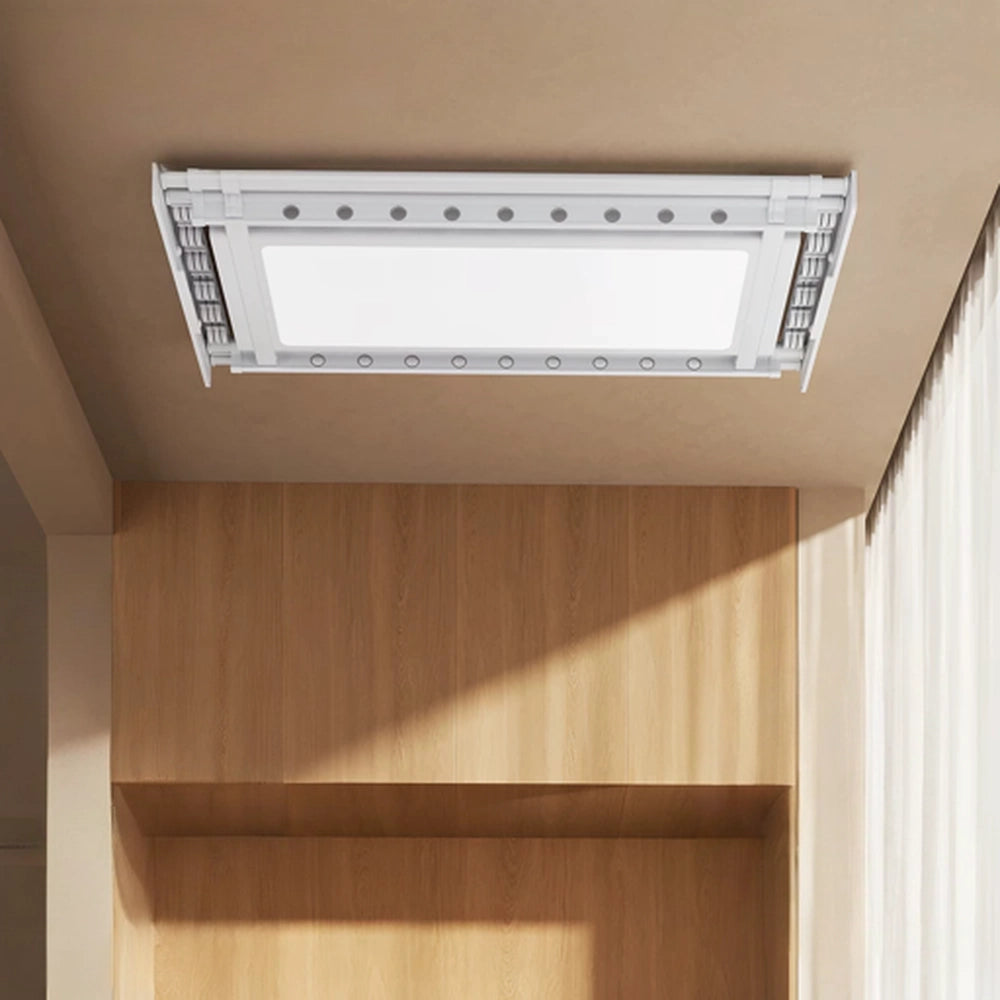
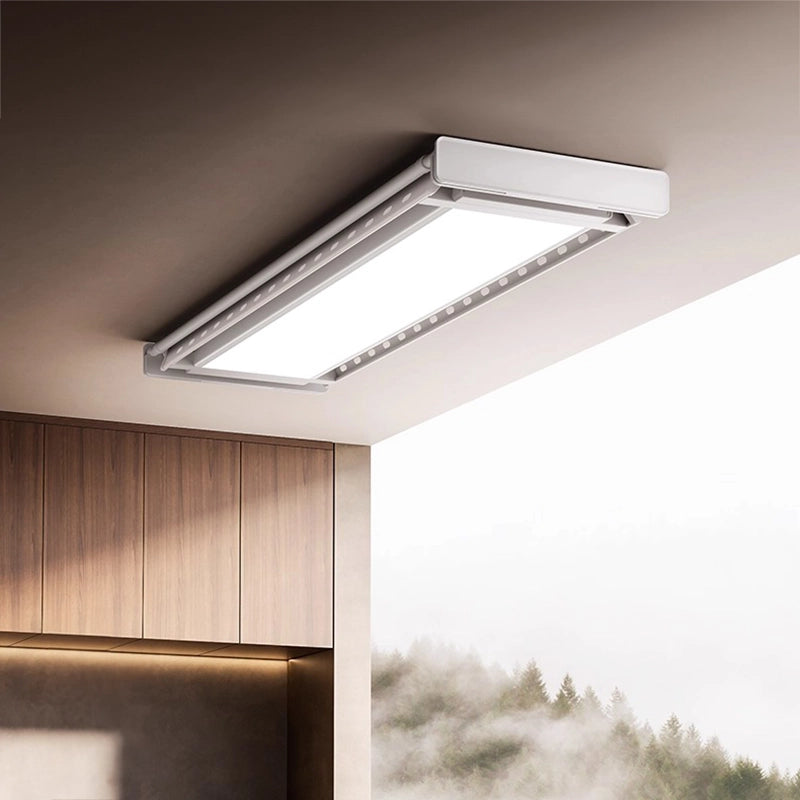
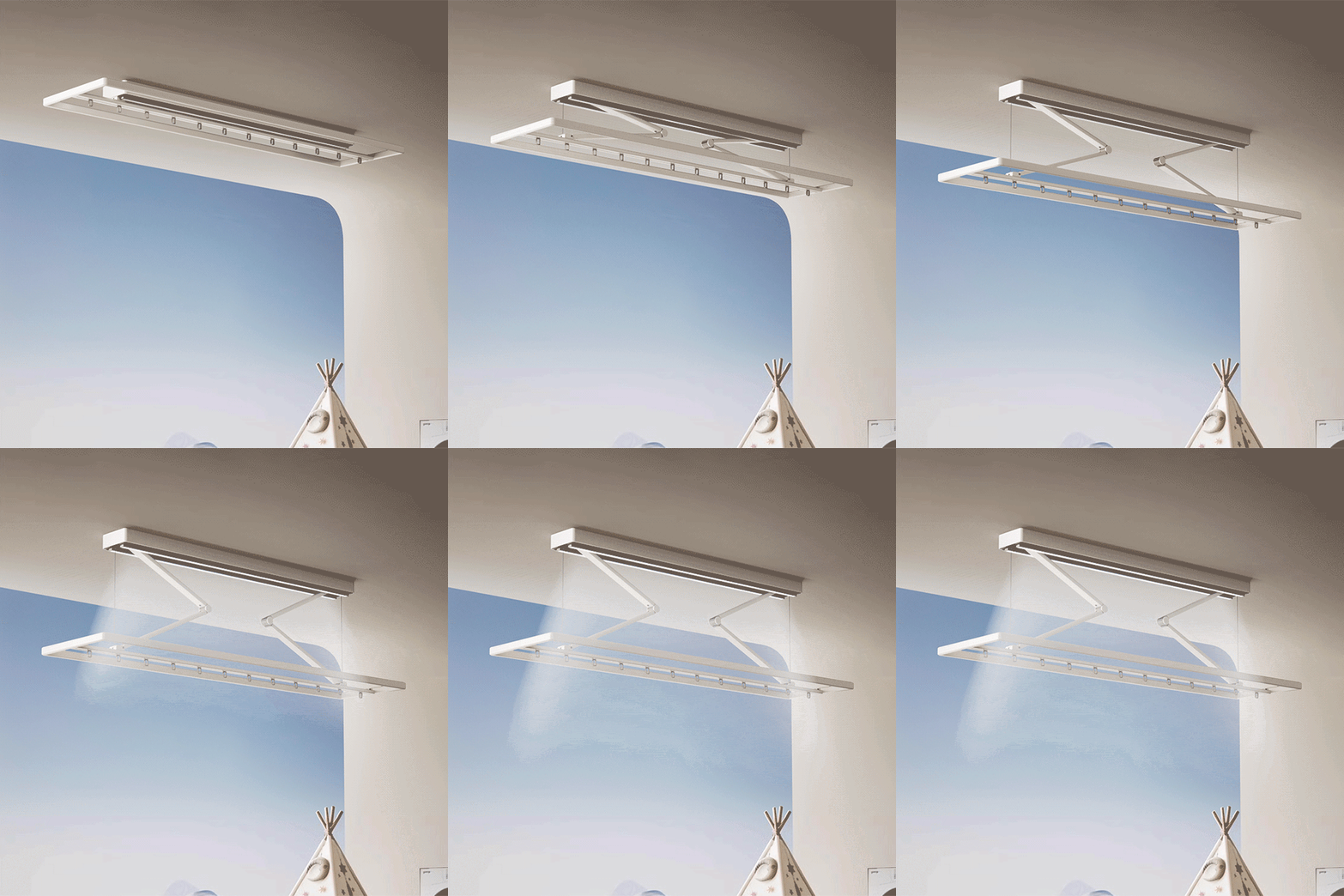
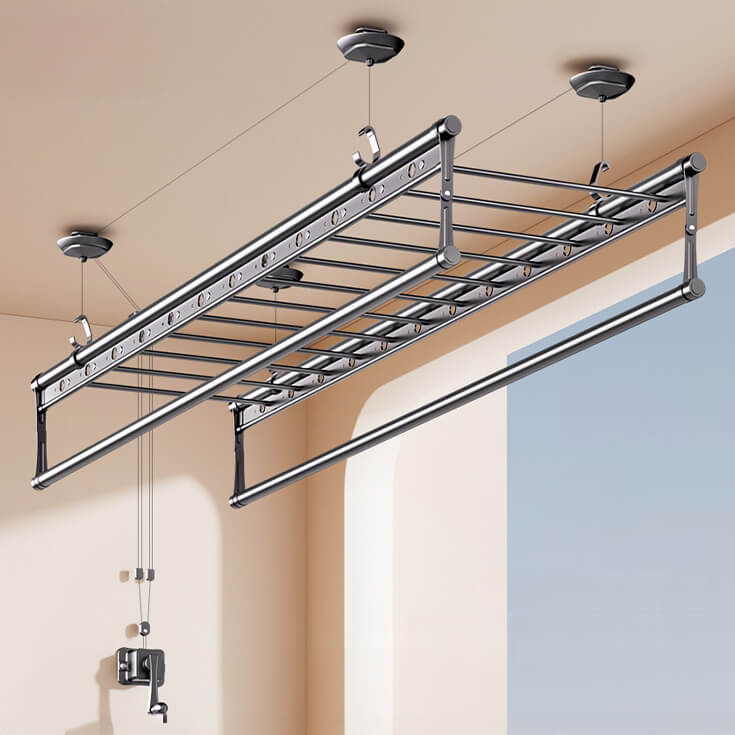
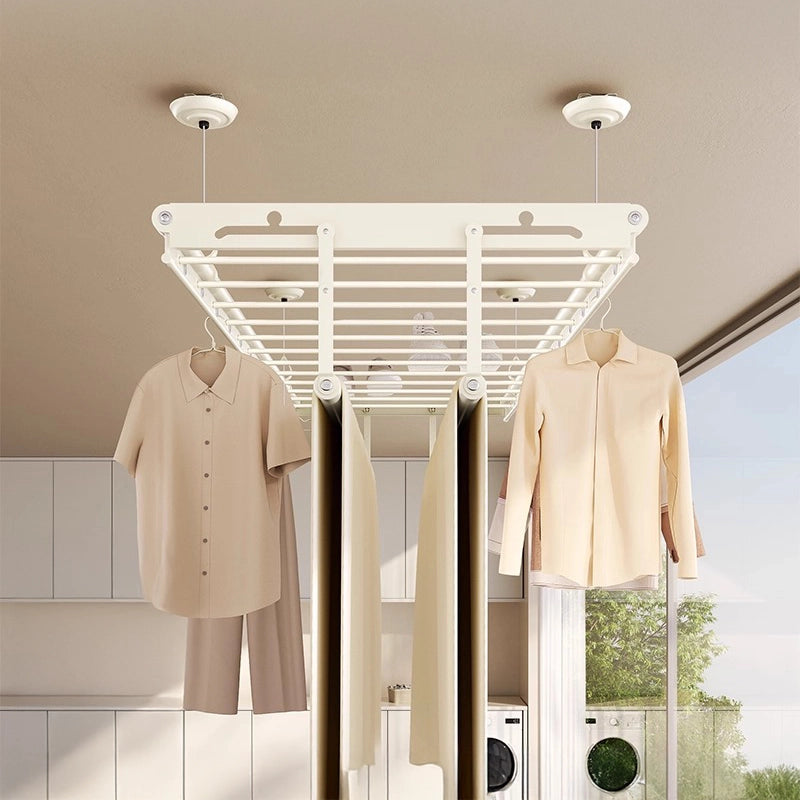
A ceiling clothes airer uses space above the room instead of taking over the floor. This can work well in compact flats, utility areas, and suitable covered balconies where the ceiling structure allows installation.
Before choosing one, check the ceiling type, room height, lowering area, and installation conditions. Rated load capacity depends on correct installation, suitable anchors, an appropriate mounting surface, and even weight distribution.
Explore ceiling clothes airers if your main problem is limited floor space and your ceiling area is suitable.
Wall-mounted and retractable airers for narrow spaces
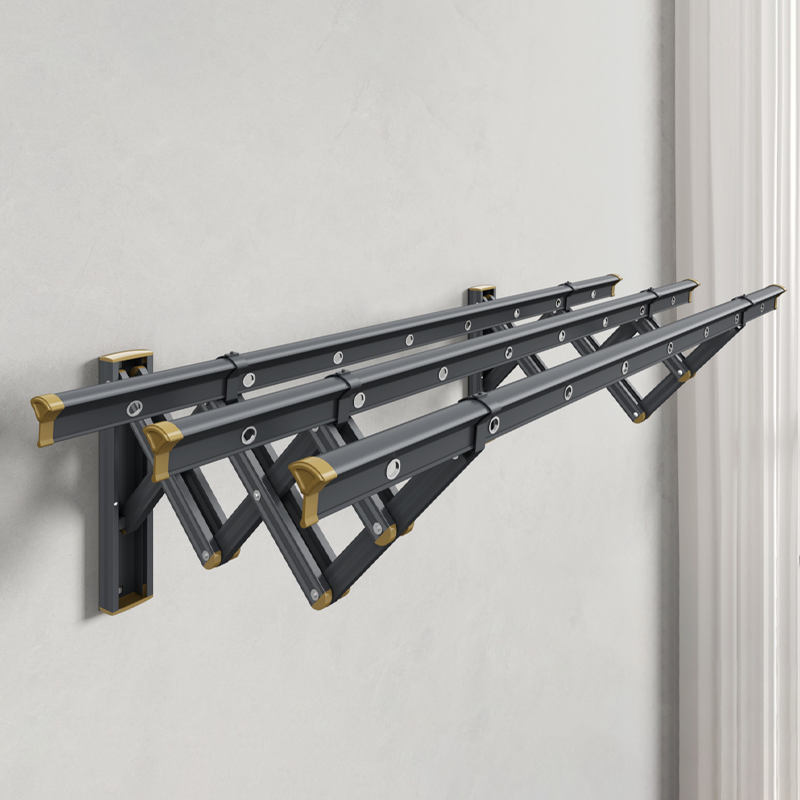
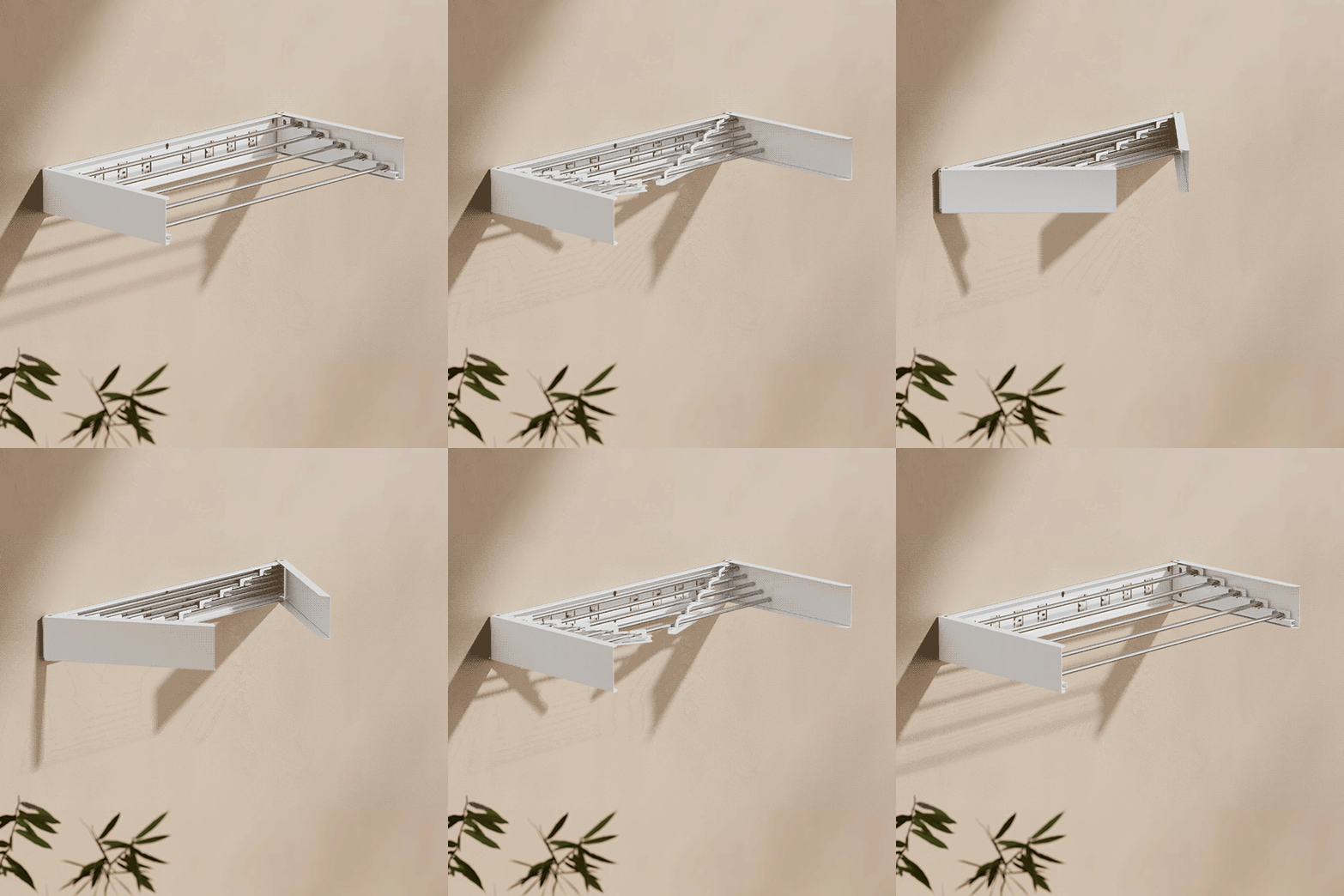
A wall-mounted clothes airer may suit a narrow laundry area, utility corner, or suitable covered balcony. Some models fold or retract towards the wall when not in use, which can help keep walkways and living areas clearer.
Check the wall material, fixing surface, anchors, opening depth, and where the airer will sit when loaded. It should not block doors, cupboards, windows, or everyday movement.
Compare wall-mounted clothes airers if wall space is easier to use than floor or ceiling space.
Window, railing, and balcony airers for suitable outdoor areas
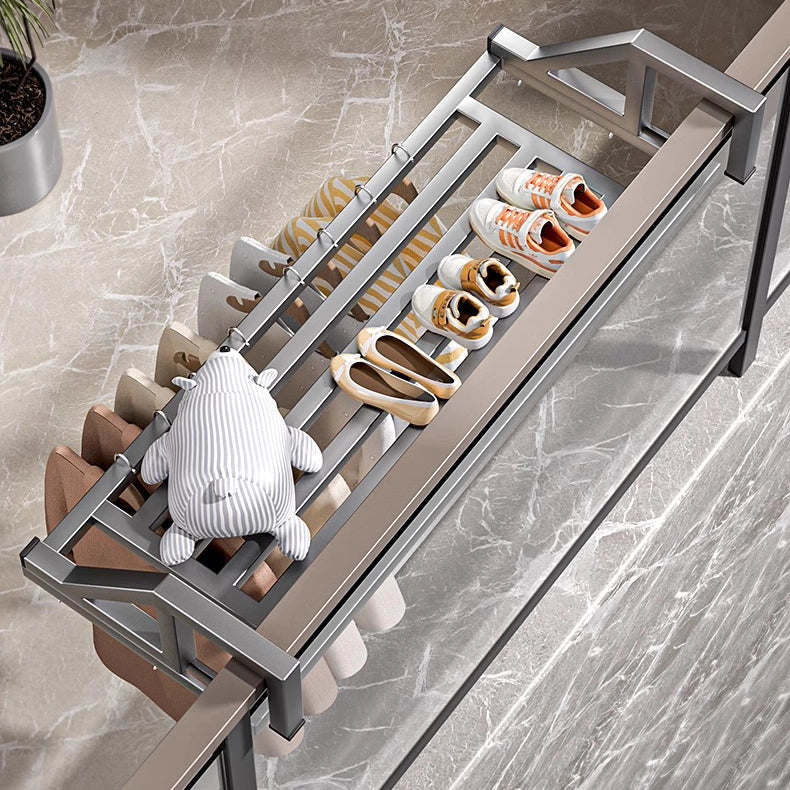
A balcony-friendly drying rack can be practical if your apartment has a covered or sheltered outdoor area. Depending on the model, it may attach to a wall, window-side area, railing, or other suitable fixing point.
Suitability depends on the product type, weather exposure, wind, fixing surface, building rules, landlord or property-management requirements, and model-specific installation guidance. Do not assume every apartment balcony is suitable for fixed drying equipment.
Use balcony drying racks as a starting point if you want to keep laundry away from the main living area.
Folding floor airers for renters and occasional use
A folding floor airer can still be useful, especially for renters or occasional indoor drying. It does not normally require fixed installation and can be stored away after use.
The trade-off is floor space. In a small apartment, a folding airer may block the living room, hallway, or bedroom while clothes dry. It can be practical for temporary use, but less convenient if you wash laundry several times a week.
Comparison Table: Which Clothes Airer Fits Your Space?
| Airer type | Best suited for | Space-saving benefit | What to check before buying | Explore options |
|---|---|---|---|---|
| Ceiling-mounted airer | Small flats with suitable overhead space | Keeps floor areas clearer | Ceiling structure, room height, lowering area, anchors, installation conditions | Ceiling clothes airers |
| Wall-mounted or retractable airer | Narrow laundry areas, utility zones, suitable covered balconies | Folds or retracts towards the wall depending on the model | Wall material, fixing surface, opening depth, clearance, laundry needs | Wall-mounted clothes airers |
| Window, railing, or balcony airer | Covered or sheltered balcony layouts | Uses an existing outdoor edge, wall, railing, or window-side area where suitable | Product compatibility, exposure, wind, fixing method, building rules | Balcony drying racks |
| Folding floor airer | Occasional drying or rented homes | Can be stored away after use | Floor area, stability, storage size, walkway clearance | Drying racks for small spaces |
Best Clothes Airer by Apartment Layout
The strongest way to choose is to start with your apartment layout. The same airer can feel practical in one home and inconvenient in another.
Small studio apartment
In a studio, the living, sleeping, and drying areas often overlap. A floor airer can quickly become part of the room. If your ceiling structure is suitable, a ceiling clothes airer may help keep the floor clearer. If fixed ceiling installation is not possible, a compact wall-mounted or folding airer may be easier to manage.
One-bedroom flat with no balcony
Without a balcony, indoor drying needs more thought. Choose a ventilated room where laundry can sit without blocking the main walkway. A wall-mounted airer may work well in a utility corner or suitable spare wall space. A ceiling airer may suit a room with usable overhead space if the mounting surface is appropriate.
Apartment with a covered or sheltered balcony
A covered balcony can be useful for drying laundry, but only when conditions allow. Check weather exposure, wind, fixing surface, building rules, landlord or property-management requirements, and product instructions.
A balcony airer can help keep laundry away from the main living area. It should not be treated as a permanent all-weather outdoor solution unless the specific product information supports that use.
Utility corner or well-ventilated bathroom area
A utility corner can be a practical place for a wall-mounted or retractable airer. Some models may also work in a well-ventilated bathroom area where the product guidance, mounting surface, and installation conditions allow.
When drying clothes in a bathroom, ventilation matters. Islington Council’s condensation advice recommends keeping the door closed and allowing moisture to leave the room when drying laundry indoors.
Fixed or electric airers should only be installed in a bathroom where the selected model, mounting surface, electrical requirements, and installation guidance allow.
Rented apartment with installation limits
If you rent, check your tenancy agreement or ask your landlord before fitting a fixed ceiling or wall-mounted airer. A folding airer may be the simplest option if you cannot drill. A freestanding or removable setup may also suit short-term living situations.
Manual, Electric, or Heated: What Is the Difference?
Installation type and operating method are not the same thing. A ceiling airer may be manual or electric. A heated airer is usually a different type of product altogether.
Manual ceiling clothes airers
A manual ceiling airer is raised and lowered by hand, often using a crank, winch, or pulley system. It may suit users who want to use ceiling space without adding powered lifting.
Before buying, check the ceiling type, lowering area, installation requirements, and how the controls will be accessed during everyday use.
Electric ceiling airers
An electric ceiling airer is mainly designed to raise and lower laundry with powered lifting. It is not automatically the same as a heated clothes airer.
Some electric models include additional features such as lighting, airflow fans, heating, or remote control, while others focus mainly on motorised lifting. Always check the individual product specification before buying. For more background, read EaseRack’s guide to electric ceiling airers.
Heated floor airers
A heated floor airer is usually a separate product type. It may suit users who want assisted drying and still have enough floor space for a freestanding rack.
Heating alone does not solve every indoor drying issue. Airflow, humidity, room temperature, load size, garment spacing, and fabric thickness still affect results. In a very small apartment, a heated floor airer may not solve the main problem if the living area is already crowded.
Before You Buy: Small Apartment Clothes Airer Checklist
Use this checklist before choosing a clothes airer for a small apartment, especially if you are comparing fixed, folding, retractable, manual, or electric models.

Measure the available area
Measure the space when the airer is open, lowered, extended, or loaded. A product may look compact when closed but still need enough room for hanging laundry and everyday movement.
Check the fixing conditions
Look at the actual installation area. Ceiling structure, wall material, balcony exposure, railing compatibility, window-side clearance, and suitable anchors all affect whether a product can be installed safely.
Think about laundry volume and heavier fabrics
Daily clothing, towels, bedding, baby clothes, and thick winter garments all dry differently. If you often wash heavier items, choose a setup that allows enough spacing and even weight distribution.
Consider airflow and moisture control
A clothes airer helps organise laundry, but it does not remove moisture from the room by itself. Leave space between garments and make use of ventilation where suitable.
Oxford City Council’s condensation guidance explains that condensation forms when moist air meets colder surfaces. South Kesteven District Council’s damp, mould and condensation advice also highlights ventilation and household moisture as important considerations.
If you regularly see water collecting on windows after laundry dries, your setup may need better airflow, smaller loads, or additional moisture control.
Decide whether you need fixed, folding, retractable, manual, or electric operation
Fixed airers can be convenient for regular use. Folding airers are easier for renters and occasional drying. Manual systems may suit non-electric setups. Electric ceiling models may suit users who want powered lifting, but features vary by model.
Check how the airer looks when not in use
In a small apartment, the airer may be visible often. Consider whether it lifts away, folds flat, retracts, or stores neatly enough for your room.
Review model-specific installation guidance
Do not assume a product is suitable for every ceiling, wall, balcony, window, or railing. Read the installation guidance and check whether professional help may be appropriate, especially for fixed or electric models.
Tired of leaving a floor airer open in your living area? Explore EaseRack space-saving clothes airers to compare ceiling, wall-mounted, and balcony-friendly options for your apartment, or use the selector to find the right clothes airer for your home.
FAQ: Clothes Airers for Small Apartments
What is the best clothes airer for a small apartment?
The best option depends on your layout. A ceiling clothes airer may suit homes with usable overhead space. A wall-mounted airer may suit narrow laundry areas or covered balconies. A folding airer may be better if you rent or need temporary drying only.
Is a ceiling clothes airer suitable for a small flat?
It can be suitable if the ceiling structure, room height, clearance, and installation conditions are appropriate. A ceiling clothes airer can help keep the floor clearer, but it still needs sensible laundry spacing and suitable room ventilation.
Is a wall-mounted clothes airer better than a folding airer?
A wall-mounted clothes airer may be more convenient if you have a suitable wall and dry laundry frequently. A folding airer may be more practical if you cannot install fixed fittings or only dry laundry indoors occasionally.
Can I use a clothes airer on an apartment balcony?
Possibly, if the balcony is covered or sheltered and the selected product is suitable. Check weather exposure, wind, fixing surface, building rules, landlord or property-management requirements, and model-specific installation guidance.
What clothes airer is suitable for a rented apartment?
A folding airer is often the simplest choice for rented homes because it does not usually require fixed installation. Some renters may also use removable or freestanding options. If you want a ceiling or wall-mounted airer, check permission before drilling or fitting permanent fixtures.
How do I reduce damp and condensation when drying clothes indoors?
Use a ventilated room where suitable, leave space between garments, avoid overloading the airer, and watch for condensation on windows or colder surfaces. A clothes airer helps organise laundry, but moisture control still depends on airflow, room conditions, and sensible load sizes.
Is an electric ceiling airer the same as a heated clothes airer?
No. An electric ceiling airer usually refers to a ceiling-mounted airer with powered lifting. A heated clothes airer is generally designed to provide assisted drying through heat. Some electric ceiling models may include heating or airflow features, but this varies by model. Always check the individual product specification.
Conclusion
The best clothes airer for a small apartment is the one that fits your layout, not the one with the longest feature list. Start with your main space problem. If the floor is always blocked, compare ceiling options. If the ceiling is unsuitable but you have a usable wall, look at wall-mounted or retractable designs. If you rent, a folding airer may be the practical starting point.
Indoor drying also needs airflow, garment spacing, and moisture control. A clothes airer helps organise laundry in a compact home, but it should be chosen alongside sensible drying habits.
Explore EaseRack clothes airer guides to compare drying options for small flats, apartments, utility areas, and covered balcony spaces.

