

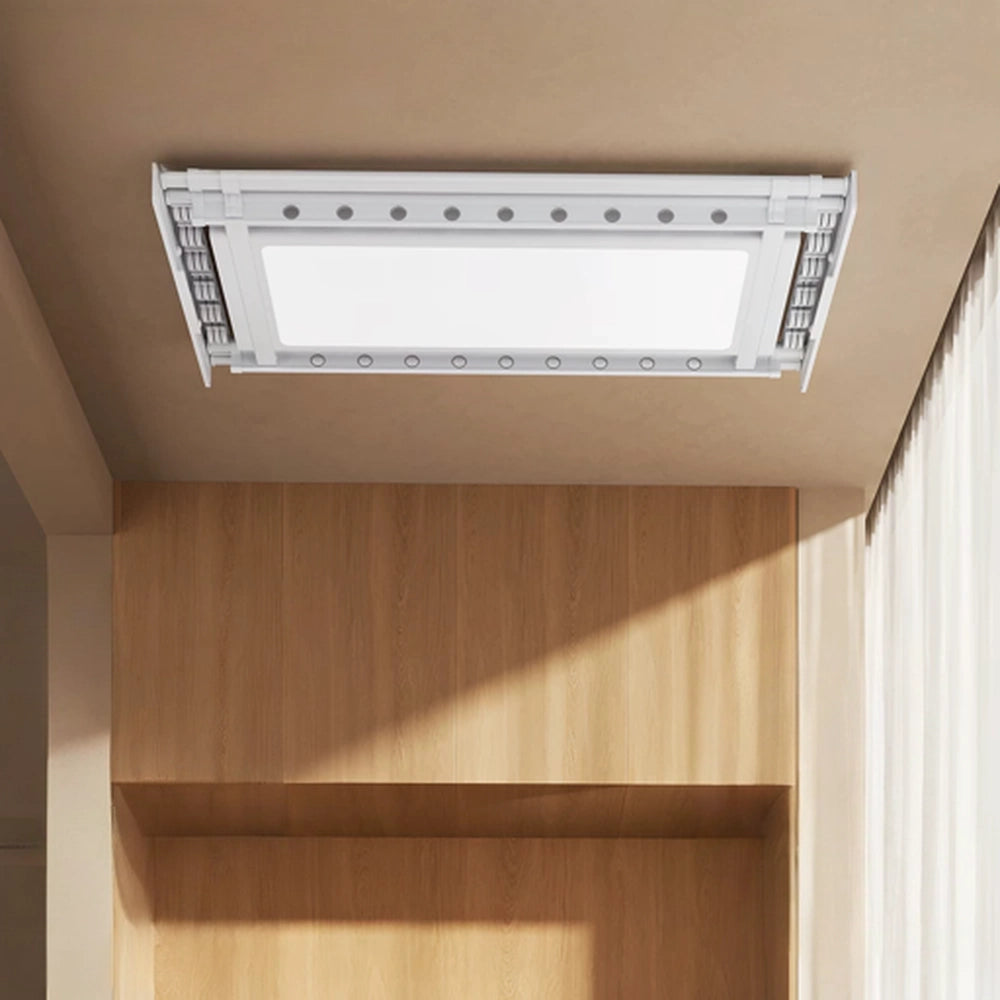
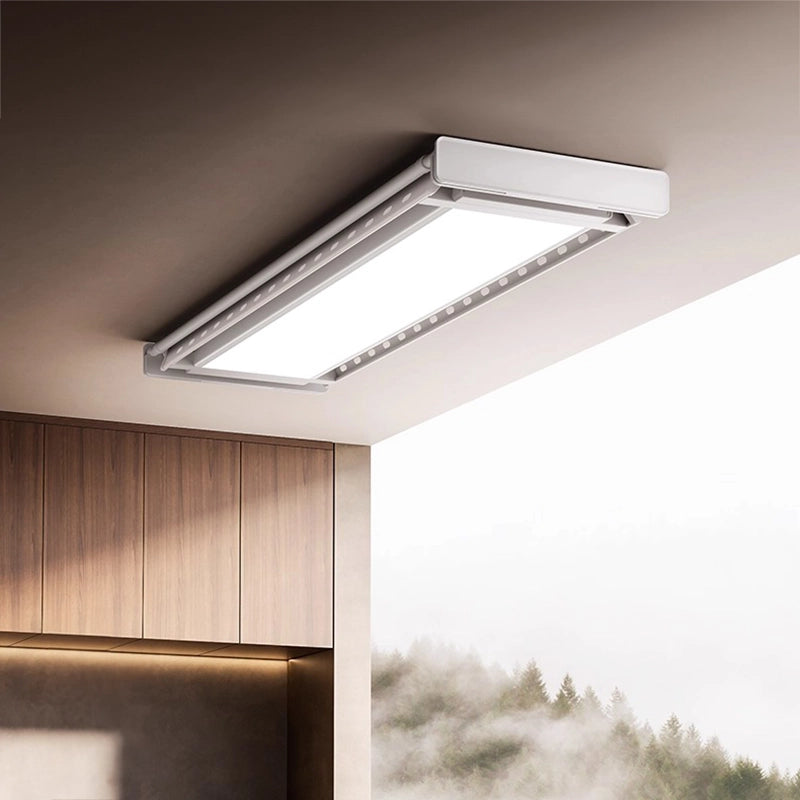

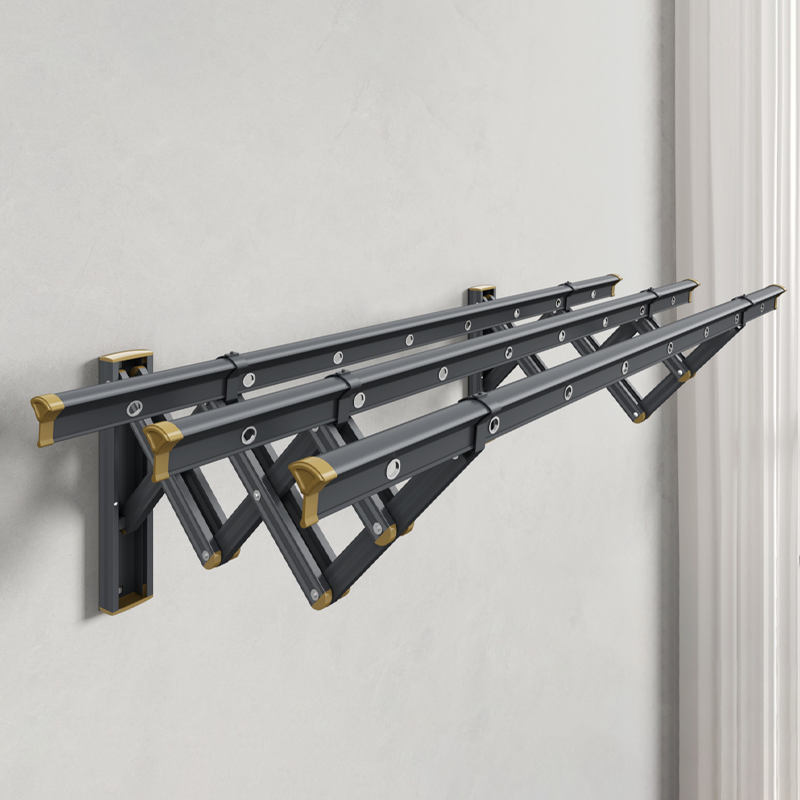

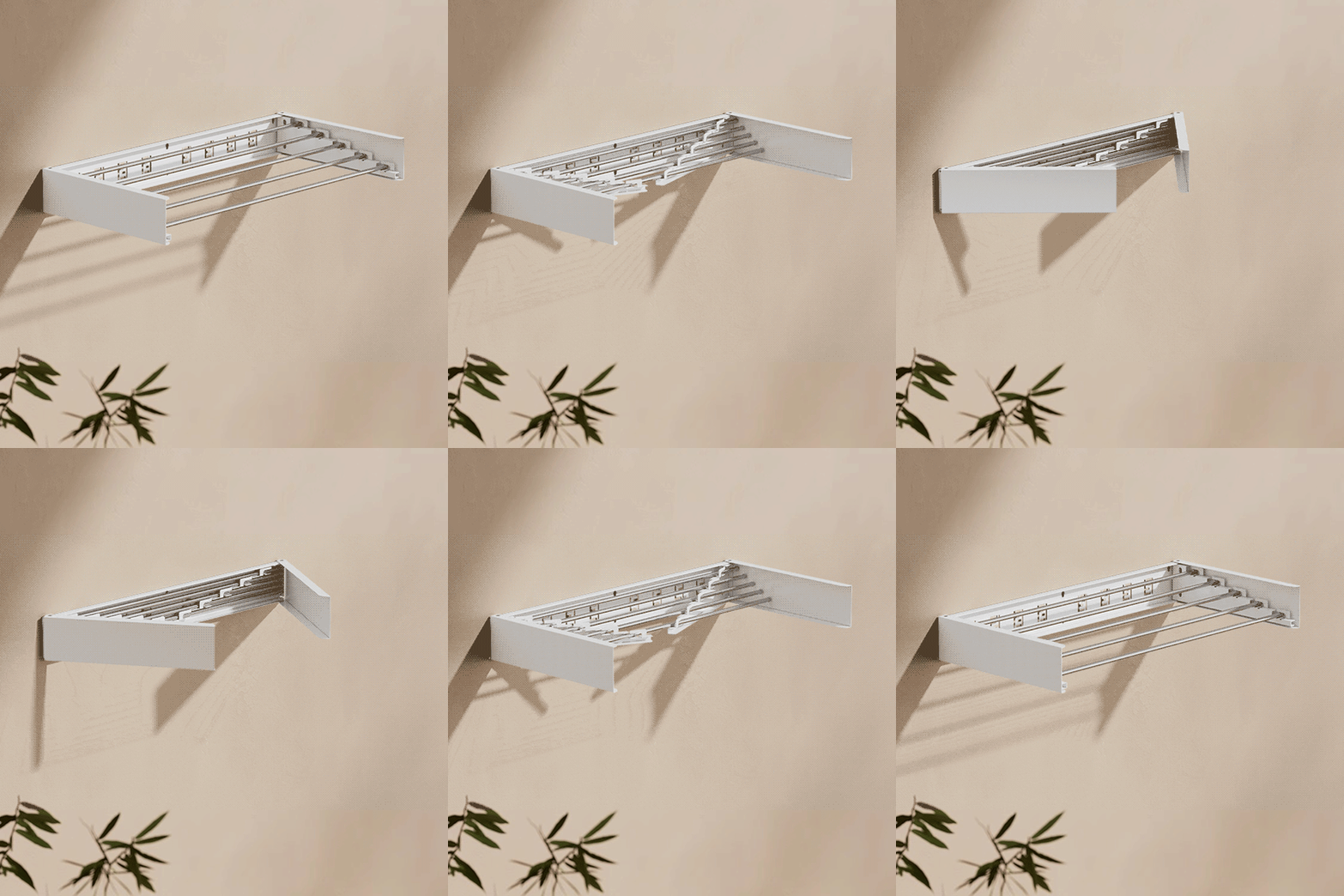
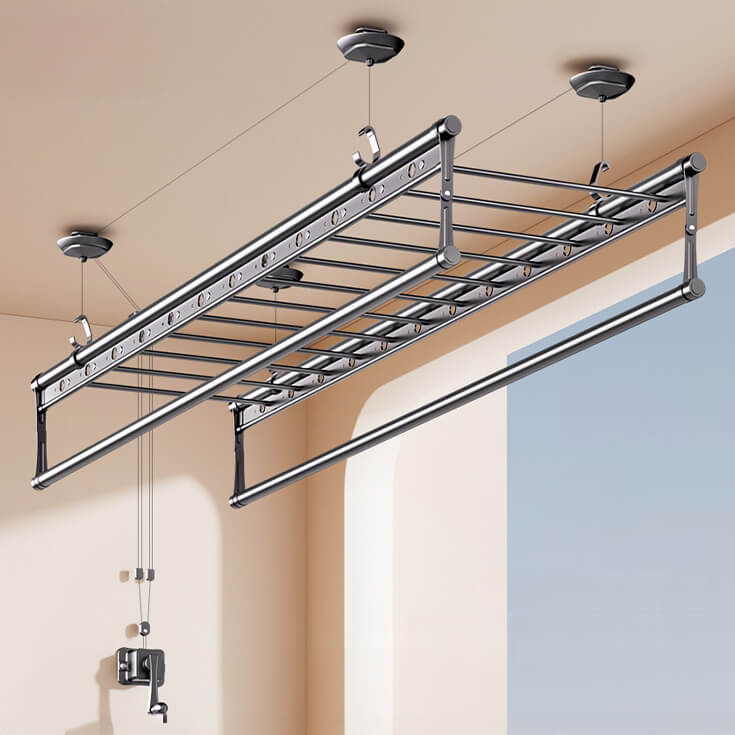
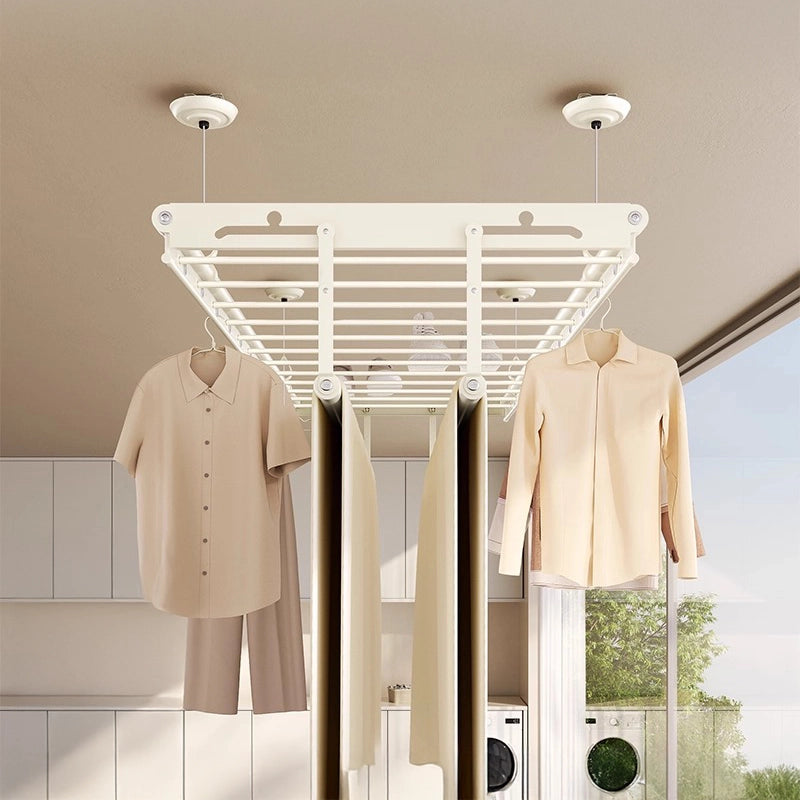
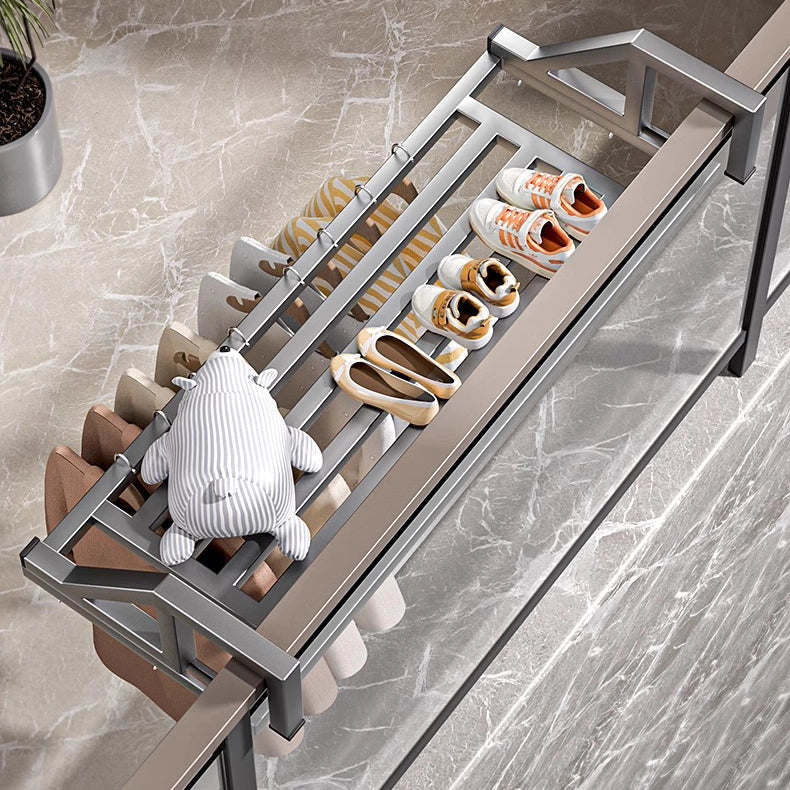
In a small apartment, a floor airer can quickly take over the living room, hallway, or balcony. It may be easy to unfold, but once it is full of laundry, the space around it becomes harder to use. For flats, covered balconies, and compact laundry corners, a pulley clothes airer can be a practical way to move laundry above the floor.
A pulley clothes airer for apartments is not suitable for every home. Before choosing one, check whether your layout and installation conditions make a fixed manual ceiling airer practical for everyday use.
Quick answer: A pulley clothes airer can be a practical option for an apartment when the ceiling or mounting area is suitable, there is enough clearance to lower the rack safely, and the drying area has reasonable airflow. It works best for users who want to keep the floor clearer and prefer a manual lift-and-lower system rather than a freestanding rack.

In This Guide
- What is a pulley clothes airer?
- Is a pulley clothes airer suitable for your apartment?
- Which manual lift-and-lower system suits your routine?
- Where can a pulley clothes airer work in an apartment?
- What can a pulley airer do?
- When may a pulley airer not be the right choice?
- Before-you-buy installation checklist
- Frequently asked questions
What Is a Pulley Clothes Airer?
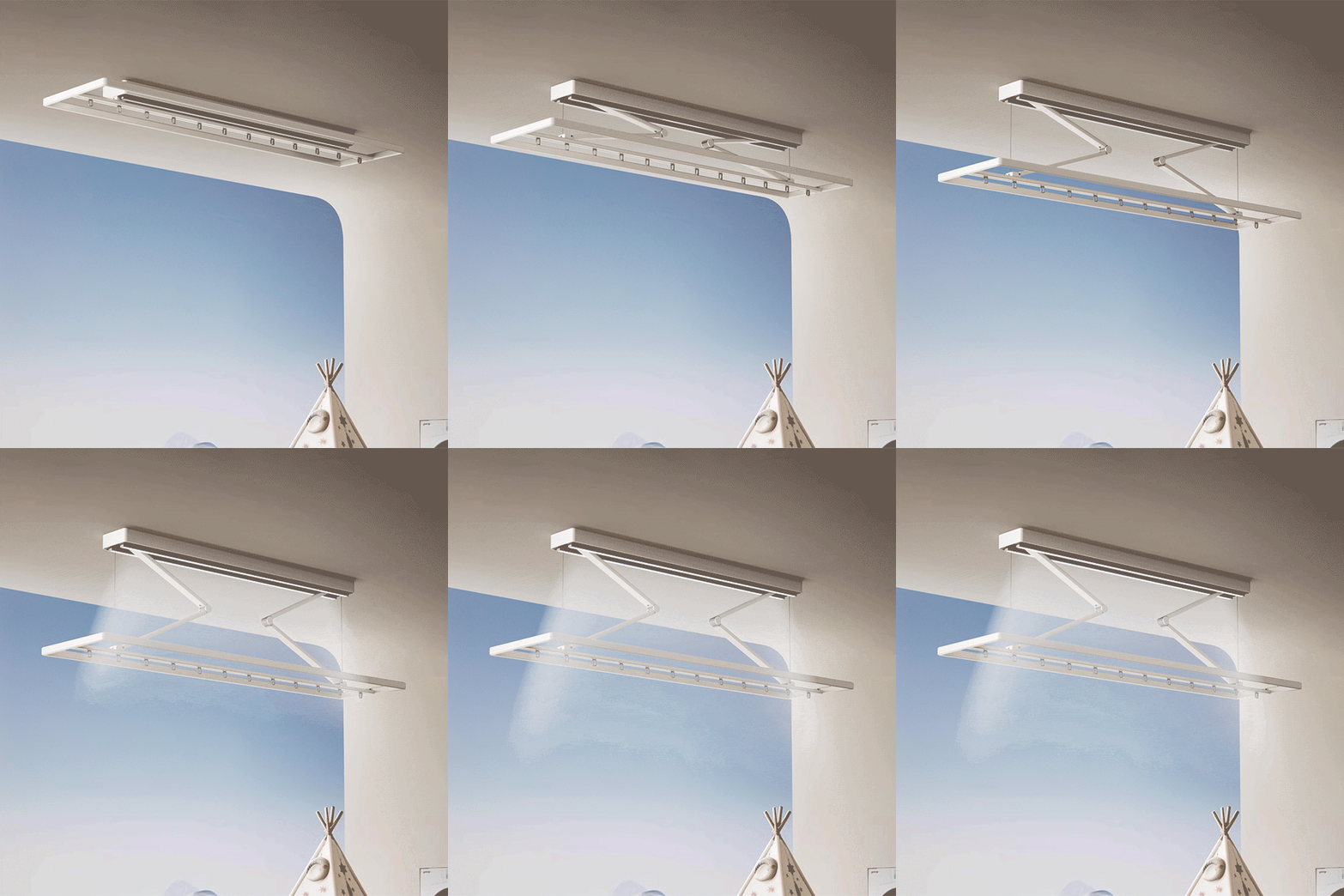
A pulley clothes airer is a ceiling-mounted clothes airer that uses a manual lift-and-lower system. You lower the rods or rails to a comfortable height, hang your laundry, and raise the airer again so the clothes dry above the main floor area.
The main difference from a floor airer is space use. A floor airer needs open floor space while clothes dry. A pulley airer uses overhead space, which can be useful in apartments where the living room, balcony, or laundry corner is already tight.
Good to know: A pulley clothes airer is designed to improve space use. It does not automatically dry laundry faster or remove moisture from the room. Airflow, humidity, temperature, fabric type, fabric thickness, and garment spacing still affect drying results.
If you are still comparing manual and electric options, browse EaseRack ceiling clothes airers before narrowing your choice to a manual system.
Is a Pulley Clothes Airer Suitable for Your Apartment?

Before choosing a pulley airer, start with the apartment itself. The question is not only whether the product fits. It is whether the ceiling, access, clearance, and daily routine make sense.
Check the ceiling structure and mounting area
A fixed ceiling airer needs reliable installation points. The exact method depends on the ceiling structure and the selected product. Concrete ceilings, timber joists, suspended ceilings, plasterboard, and balcony structures may all require different checks.
If the ceiling structure is unclear, ask a qualified installer before fitting a fixed airer. Do not assume that every ceiling is suitable.
Measure the raised and lowered clearance
You need enough room for the airer in both positions. When lowered, it should not block doors, windows, cabinets, appliances, or main walkways. When raised, it should still leave enough headroom and should not make the room feel impractical for everyday use.
Think about everyday access
Manual operation should be comfortable. Check where the rope, cleat, crank, or winch will sit. If you have to stretch awkwardly or stand in a narrow passage to operate the airer, it may become inconvenient in daily use.
Check tenancy and building rules
If you rent, check your lease conditions and building rules before drilling into a ceiling, wall, or balcony area. Some apartment buildings also have restrictions on balcony fixtures or visible drying equipment.
Consider ventilation when drying indoors
A ceiling airer organises laundry, but it does not remove moisture. If you dry clothes indoors, the space still needs airflow. Oxford City Council explains that condensation can form when moist air meets colder surfaces, so ventilation and moisture control matter in small homes.
| Question | Why it matters |
|---|---|
| Is the ceiling or mounting area suitable? | Fixed airers need reliable installation points. |
| Is there enough room to lower the airer safely? | Laundry should not block doors, windows, cabinets, or walkways. |
| Will the raised airer leave enough headroom? | The stored position should remain practical for everyday use. |
| Can you reach the controls comfortably? | Manual adjustment should be easy to use regularly. |
| Do you have permission to install fixed hardware? | Renters may need landlord or property-management approval. |
| Is the drying area ventilated? | An airer organises laundry but does not remove moisture. |
Which Manual Lift-and-Lower System Suits Your Routine?
Manual ceiling airers can use different lift-and-lower controls. Some use a traditional rope-and-cleat pulley setup, while others use a hand crank or hand winch mechanism for more controlled adjustment. The best choice depends on how often you use the airer, where the controls can be placed, and what feels comfortable in daily use.
Traditional rope-and-cleat pulley systems
A rope-and-cleat pulley system is the traditional version many people picture when they think of a pulley clothes airer. It can be a simple manual option, but it needs a sensible rope path and a cleat position that is easy to reach.
Hand crank systems for controlled lifting
A hand crank system lets you raise and lower the airer using a crank handle. This may suit users who want more controlled adjustment than a traditional rope-and-cleat setup. The crank position needs to be comfortable and should not interfere with cabinets, doors, or everyday movement.
Explore the EaseRack hand crank ceiling clothes airer if you prefer controlled lifting with a crank handle.
Hand winch systems for convenient adjustment
A hand winch system is another manual option for raising and lowering the airer. It may be useful for regular laundry routines where guided adjustment feels more convenient. As with any fixed airer, placement matters. The winch should be easy to reach and practical for the person using it most often.
Explore the EaseRack hand winch clothes airer if you prefer a guided manual adjustment system for regular use.
Single-rod or multi-rod layouts
Rod layout is separate from the lifting method. A single-rod layout may suit smaller loads, narrow spaces, or selected balcony areas. A multi-rod layout gives more hanging positions, but it needs more ceiling space and more careful weight distribution.
| Manual lifting method | Best suited for | Main benefit | What to consider |
|---|---|---|---|
| Rope-and-cleat pulley system | Users comfortable with a traditional manual setup | Simple lift-and-lower operation | Rope access, cleat position, daily use |
| Hand crank system | Users who want controlled adjustment | Raise and lower the airer with a crank handle | Handle position, access, installation space |
| Hand winch system | Users who want a guided manual mechanism | Convenient adjustment for regular use | Winch position, access, model-specific operation |
| Rod layout | Best suited for | Main benefit | What to consider |
|---|---|---|---|
| Single-rod layout | Smaller loads, narrower spaces, selected balconies | Compact setup | Limited hanging area |
| Multi-rod layout | Regular household laundry | More hanging positions | Ceiling space, spacing, load distribution |
Available rod layouts vary by model, so check the individual product specification before choosing.
For a broader product view, browse EaseRack manual ceiling clothes airers to compare pulley, hand crank, and hand winch styles for compact homes.
Where Can a Pulley Clothes Airer Work in an Apartment?
A pulley clothes airer works best when the installation position supports the way you already use the apartment. It should make laundry easier to manage, not create a new obstacle.
Small flat with limited floor space
In a small flat, the main benefit is keeping laundry away from the floor. A ceiling-mounted clothes airer can be useful when the living room or bedroom often becomes the drying area. Measure both the raised and lowered positions before choosing a model.
Covered or sheltered balcony
A covered balcony can be a useful drying area, but suitability depends on the model, weather exposure, wind, ceiling or wall structure, and installation conditions. Do not treat a balcony airer as a permanent all-weather outdoor fixture unless the product information supports that use.
Utility area or dedicated laundry corner
A utility area or laundry corner can work well if there is enough clearance and airflow. A well-ventilated bathroom area may also be suitable for selected models where the mounting surface, moisture conditions, and installation guidance allow.
Rented apartment with installation limits
Renters should be cautious with fixed ceiling hardware. If the lease or property manager does not allow drilling, a freestanding or temporary clothes airer may be a better option. If installation is allowed, keep written permission where possible and check the mounting surface carefully.
What a Pulley Airer Can and Cannot Do
It can help keep floor areas clearer
A pulley airer can help move laundry into overhead space. This is useful when a floor rack blocks walkways, balcony access, or the main living area. For many apartment users, the benefit is not more space overall, but better use of the space already available.
It does not automatically dry clothes faster
A ceiling position does not guarantee faster drying. Drying results vary depending on airflow, humidity, temperature, fabric type, fabric thickness, and garment spacing. Towels, jeans, bedding, and thick garments need more space than lightweight clothing.
Airflow and moisture control still matter
A pulley clothes airer helps organise laundry and make better use of overhead space, but it does not remove moisture from the room by itself. If you dry clothes indoors, leave space between garments and use ventilation where suitable. Avoid overloading the rods so air can move around the laundry.
When a Pulley Clothes Airer May Not Be the Right Choice
A good buying guide should also explain when not to buy. A pulley clothes airer can be practical, but some apartment situations call for a different solution.
Your ceiling structure is unclear
If you do not know what the ceiling can support, do not guess. Fixed airers need suitable mounting points. Ask a qualified installer if the structure is unclear.
You do not have enough raised or lowered clearance
The airer needs to work in both positions. If it blocks a door, cabinet, window, appliance, or main walkway when lowered, it may become inconvenient. If it hangs too low when raised, it may make the room feel cramped.
Fixed installation is not permitted
If your lease or building rules do not allow ceiling or wall drilling, choose a temporary or freestanding option instead. A fixed airer is only practical when installation is allowed and the mounting area is suitable.
Your balcony is exposed to wind or rain
A sheltered balcony may be useful, but an exposed balcony can create problems. Wind, rain, long-term moisture, and building rules all matter. Check product guidance before installing any airer in a balcony area.
Manual controls are difficult to access comfortably
If the rope, cleat, crank, or winch cannot be placed at a comfortable height, daily use may become awkward. This is especially important if different household members need to operate the airer.
You only need a temporary drying setup
If you dry laundry indoors only occasionally, a fixed ceiling airer may be more than you need. A folding or freestanding airer may be simpler, especially in rented homes.
 Before You Buy: Apartment Installation Checklist
Measure the raised and lowered positions
Check the full movement of the airer. It should be easy to load when lowered and unobtrusive when raised. Measure around doors, windows, cabinets, lights, and walkways.
Check ceiling structure, anchors, and fixing points
The ceiling or mounting area must be suitable for a fixed airer. The correct anchors and fixing method depend on the surface and selected product. If the ceiling structure or mounting area is unclear, ask a qualified installer before fitting a fixed airer.
Leave clearance around doors, cabinets, and windows
A convenient installation position should not interfere with normal apartment use. Make sure the airer can be raised and lowered without hitting furniture, doors, cupboards, windows, or appliances.
Consider laundry volume and heavier fabrics
Think about what you dry most often. Daily clothing, towels, jeans, and bedding all need different spacing. Heavier laundry should be spread carefully rather than grouped in one place.
Distribute laundry weight evenly
Rated load capacity depends on correct installation, suitable anchors, the mounting surface, and even weight distribution. Follow the product guidance and avoid loading one side more heavily than the other.
Plan ventilation and moisture control
Any indoor drying setup needs airflow. Choose a space where damp air can move away from laundry. If the room is humid or condensation appears on windows, adjust the load size, spacing, or ventilation.
Compare EaseRack manual ceiling clothes airers to explore pulley, hand crank, and hand winch options for your space. Not sure where to start? Use our selector to find the right clothes airer for your home.
FAQ: Pulley Clothes Airers for Apartments
Can I install a pulley clothes airer in an apartment?
You may be able to install one if the ceiling or mounting area is suitable, there is enough clearance, and fixed installation is allowed. Renters should check lease conditions and building rules before drilling.
Is a pulley clothes airer suitable for a small flat?
It can be suitable if floor space is limited and the ceiling area can support correct installation. It is most useful when you want a manual ceiling-mounted drying option that lifts laundry away from the main floor area.
Does a pulley clothes airer need electricity?
A traditional pulley clothes airer does not need electricity for lifting. Hand crank and hand winch systems are also manual systems. Always check the product details, because features and operation can vary by model.
What is the difference between a pulley, hand crank, and hand winch airer?
The main difference is the daily control method. A rope-and-cleat pulley system uses a rope and cleat. A hand crank system uses a crank handle for controlled adjustment. A hand winch system uses a guided manual mechanism. The best choice depends on access, comfort, and installation position.
Can I use a pulley clothes airer on a covered balcony?
Possibly, if the balcony is sheltered and the selected model is suitable for that setting. Check weather exposure, wind, mounting surface, building rules, and installation guidance before choosing a balcony position.
What should renters check before installing a ceiling airer?
Renters should check lease conditions, property-management rules, and whether drilling into the ceiling or wall is allowed before choosing a fixed ceiling airer.
Conclusion
A pulley clothes airer can be a practical choice for apartments where floor space is limited and the ceiling area is suitable. It lets you lower laundry for loading, then raise it above the main living area while clothes dry. For small flats, covered balconies, and dedicated laundry corners, that can make everyday drying easier to manage.
It is not the right answer for every apartment. Check ceiling structure, raised and lowered clearance, installation permission, manual control access, and ventilation before choosing. Once those basics are clear, you can compare pulley, hand crank, and hand winch systems based on your daily laundry routine.

