



Drying clothes in a flat can quickly take over the room. A floor airer may seem compact when folded, but once it is open and full of wet laundry, it can block the sofa, bed, hallway, wardrobe, washing machine or balcony door for hours.
The goal is not just to dry clothes indoors. It is to keep the flat usable while laundry is hanging. The most useful way to plan flat drying is to look at the airer while it is fully loaded, not while it is folded away. If it blocks the sofa, bed, hallway, wardrobe or balcony door for several hours, it is not just a drying tool. It is taking over the room.
The best way to dry clothes in a flat without losing floor space is to plan a drying zone before choosing an airer. Use ceiling or wall space where suitable, keep doors and walkways clear, leave room between garments, and choose a folding floor airer only if you have enough open floor space or need a no-drill option.
Plan the Drying Zone Before Choosing an Airer
Before comparing airers, decide where laundry can hang without making the flat harder to use. In a small home, the drying zone matters as much as the airer itself.
Avoid the Main Walkway
Start by looking at the route you use most often. This might be the path from the bedroom to the bathroom, the kitchen to the living room, or the hallway to the front door. If a fully loaded airer sits in that route, it will feel inconvenient every time you pass it.
A drying zone should sit to the side of daily movement where possible. Even a compact indoor clothes airer can feel too large if it cuts through the middle of the room.
Keep Doors, Cupboards and Windows Usable
Check what needs to open while laundry is drying. Wardrobe doors, washing machine doors, kitchen cupboards, balcony doors and windows all need clearance. A floor airer may look fine when empty, then become a problem once longer garments are hanging from it.
If the airer stops you opening a window, it may also reduce airflow around damp laundry. That matters in a flat where rooms often have several jobs at once.
Check the Airer When It Is Fully Loaded
Do not judge the airer only by its folded size. Think about the actual footprint when wet shirts, towels, bedding or thicker garments are hanging from it.
For a realistic check, imagine the widest part of the loaded airer. Will it brush against furniture? Will it make the hallway awkward? Will it block access to the washing machine or balcony? These small details decide whether the drying setup works day after day.
Leave Enough Room for Airflow
Clothes need space around them while drying. If the airer is squeezed into a tight corner, pressed against furniture or crowded with garments, drying may feel slower and the room may feel damp.
Drying performance may vary depending on airflow, humidity, temperature, fabric type, fabric thickness and laundry spacing. A space-saving layout still needs enough room for air to move around the laundry.
Choose an Airer Position That Keeps the Flat Usable
The most practical airer position is the one that lets the flat carry on working while laundry is drying. In most flats, the best option is not the smallest airer when stored, but the position that keeps the main route, doors and furniture usable while clothes are drying.
For some homes, that means using ceiling space. For others, a wall area, retractable rack, folding floor airer or covered balcony drying zone may be more realistic.
| Airer position | Best for | Space used while drying | What to check |
|---|---|---|---|
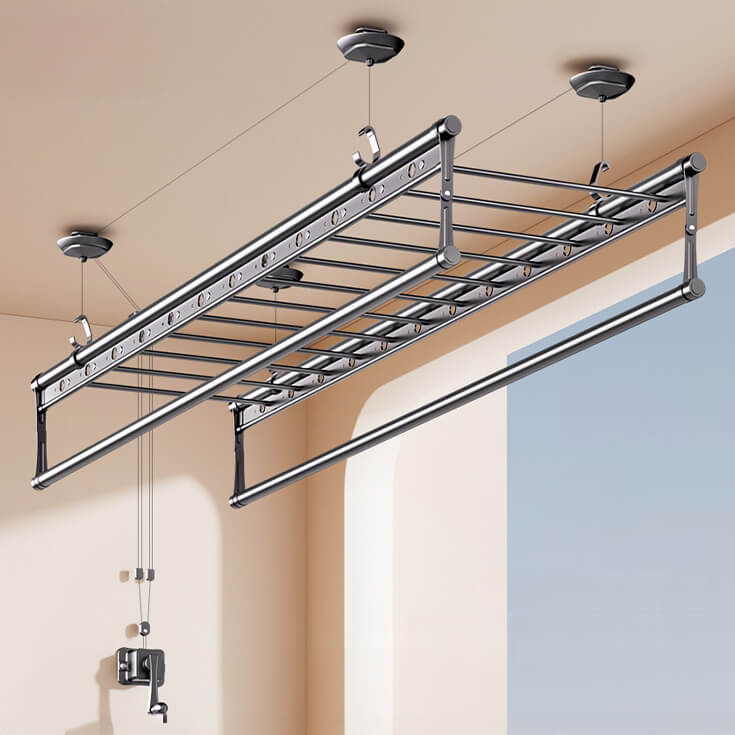
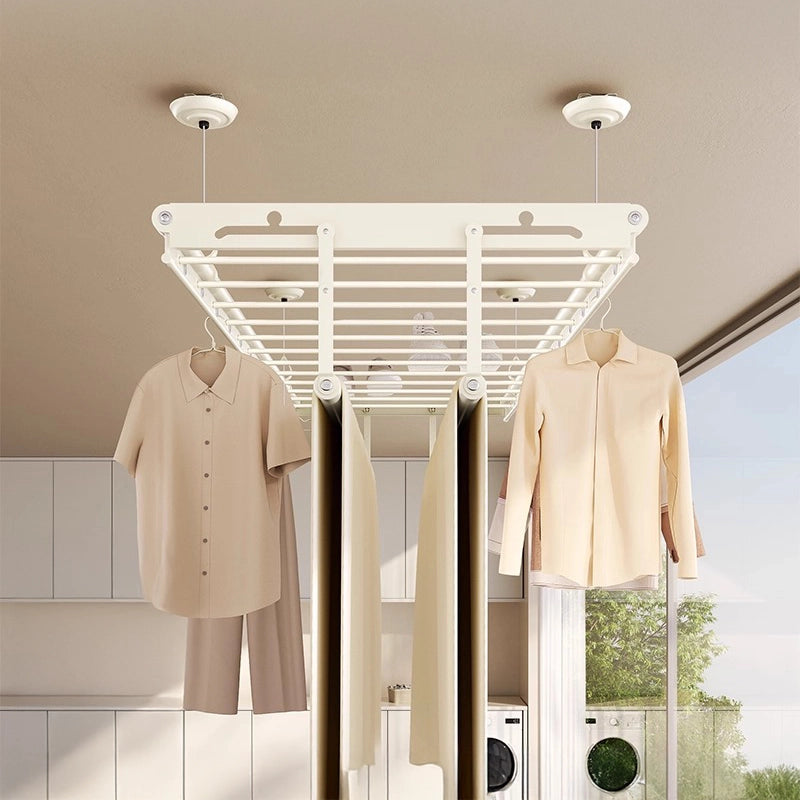
| Ceiling-mounted airer | Overhead drying zone in flats with suitable installation | Helps keep the floor clearer | Ceiling structure, height, fixing points and clearance |
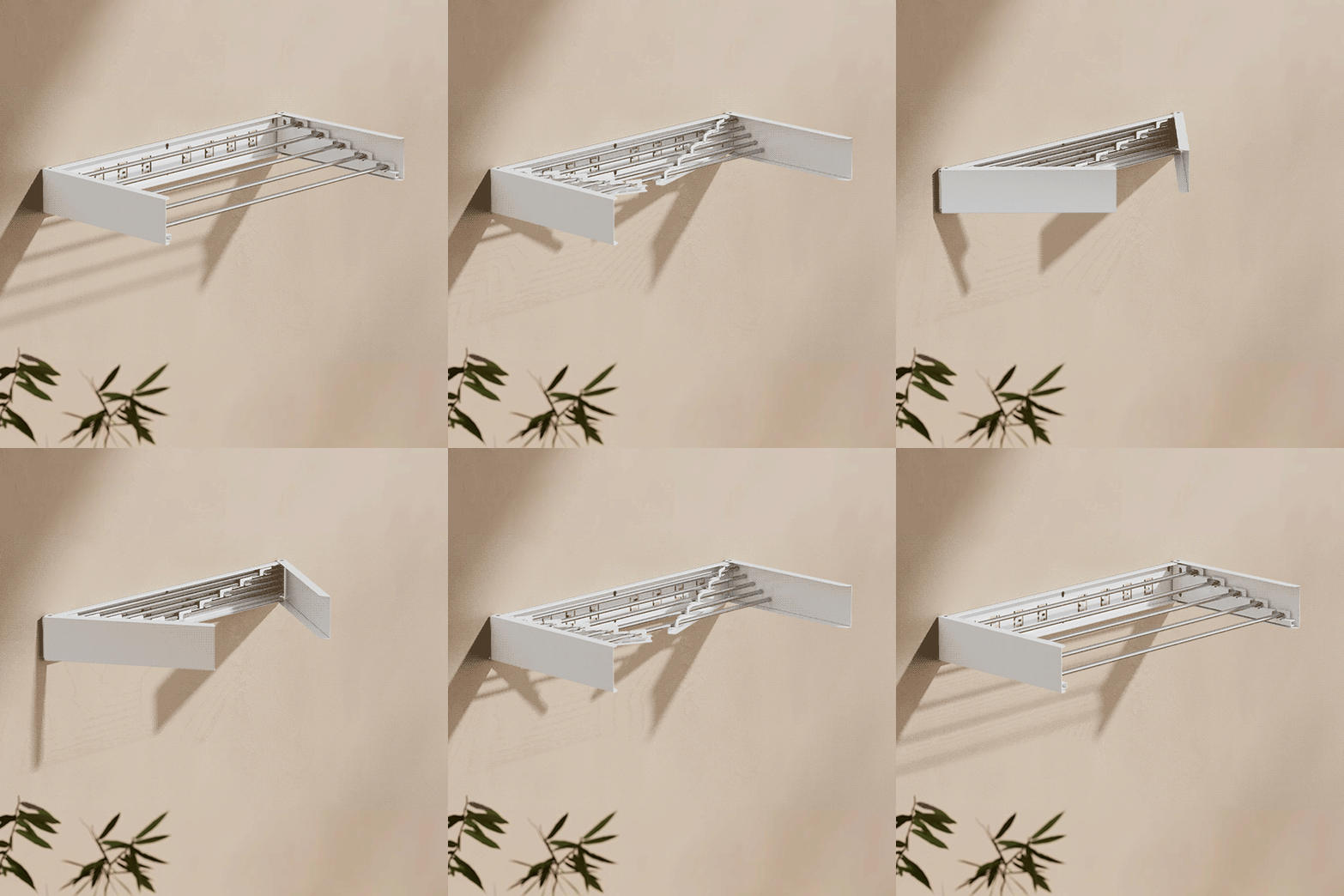
| Wall-mounted airer | Narrow utility corners, laundry walls or selected flat layouts | Uses wall projection instead of central floor space | Wall strength, open depth and nearby doors or cupboards |
| Retractable drying rack | Occasional fixed drying where the rack should store away neatly | Extends only when needed | Extension path and whether the loaded rack blocks movement |
| Folding floor airer | No-drill flexibility, renters and temporary drying | Uses floor space when open | Walkways, storage position and open footprint |
| Covered balcony drying zone | Flats with a sheltered balcony area | Depends on balcony layout and airer type | Building rules, exposure, airflow and safe access |
Use Ceiling Space if Floor Space Is Limited
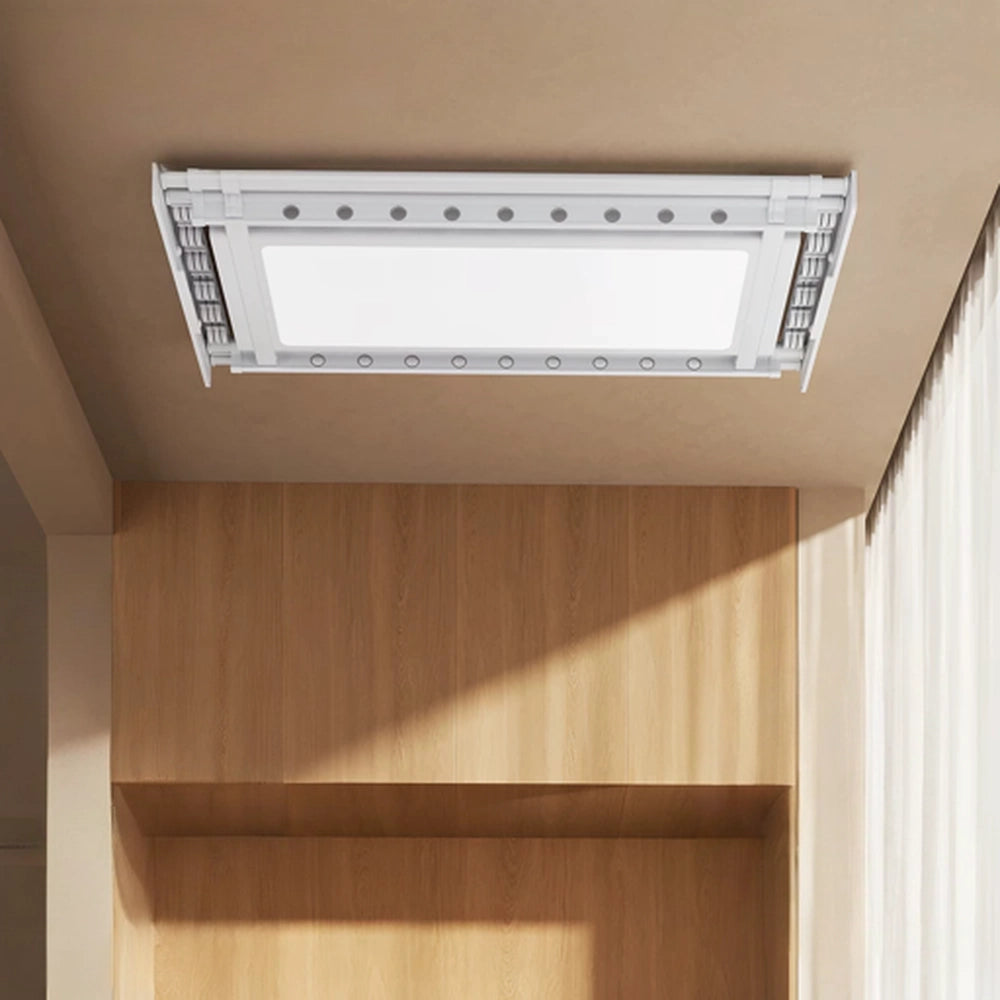
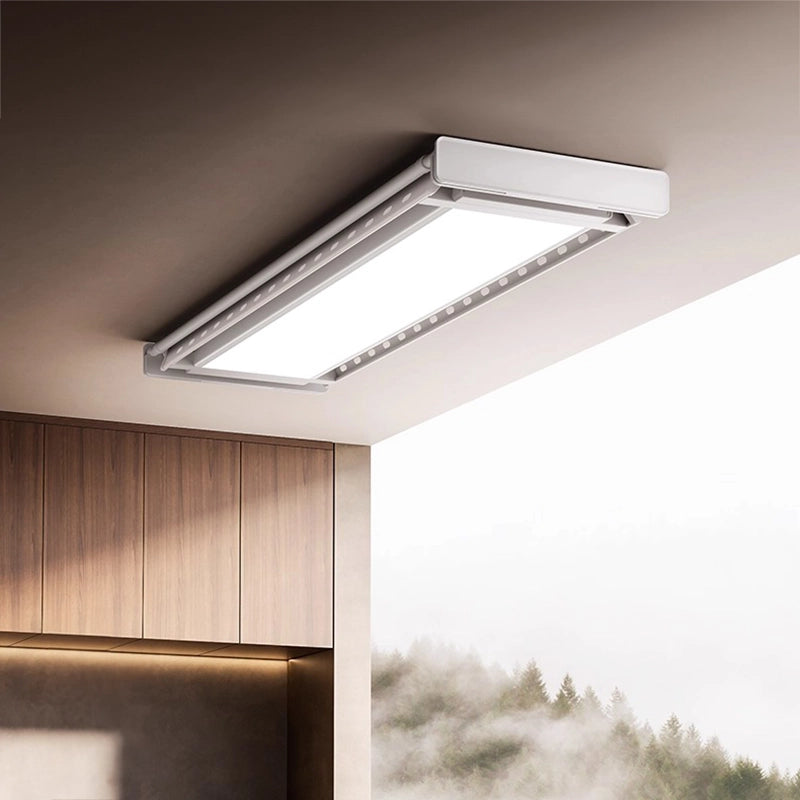
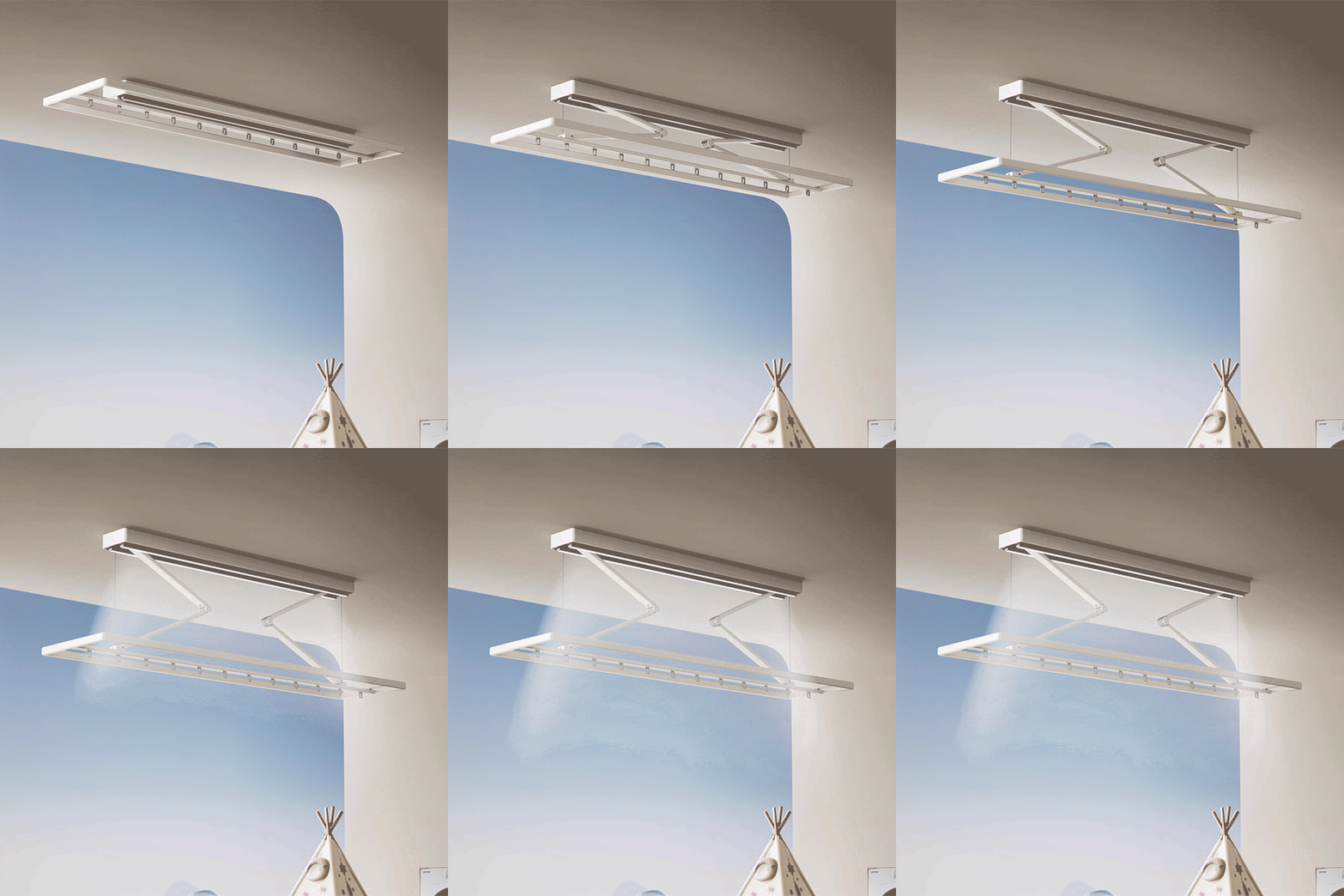
If floor space is the main problem, ceiling space can be worth considering. A ceiling clothes airer keeps laundry above the main floor area where suitable, which may help a small flat, utility corner or compact laundry area feel easier to use.
This does not mean a ceiling airer is always better than a floor airer. It simply changes where the drying space sits, which can be useful when the floor is the part of the flat you cannot spare.
When a Ceiling Clothes Airer May Suit a Flat
A ceiling airer may suit a flat if you dry laundry indoors regularly and have a suitable overhead area. It can be especially useful where a floor airer would block the living room, bedroom, hallway or washing machine area.
For example, a ceiling airer in a utility corner can create a fixed drying zone without leaving a rack standing in the middle of the room. In some homes, a covered balcony may also work as a drying zone if the model, structure and exposure are suitable.
You can explore EaseRack ceiling clothes airers if overhead drying space looks more practical than using the floor.
What to Check Before Installation
A ceiling airer is not suitable for every ceiling. Check the ceiling structure, fixing points, lowered height, raised position and access to the lifting controls before choosing a model.
Renters should also check lease terms and building rules before drilling. If you are unsure about the mounting surface, ask a qualified installer before fitting fixed hardware.
Load, Anchors and Even Weight Distribution
For fixed ceiling models, load capacity and safe use depend on correct installation, suitable anchors, the mounting surface and even weight distribution. Wet laundry can be heavier than expected, especially towels, bedding and thicker garments.
Plan how clothes will hang when the airer is full. A good flat-drying setup keeps laundry off the floor without creating a new obstruction overhead.
Use Wall Space for Narrow Areas
Wall space can help when the flat has no spare floor area but a usable wall or utility corner. This is not about filling every wall with storage. It is about choosing one drying position that does not interrupt daily movement.
Wall-Mounted Airers for Utility Corners
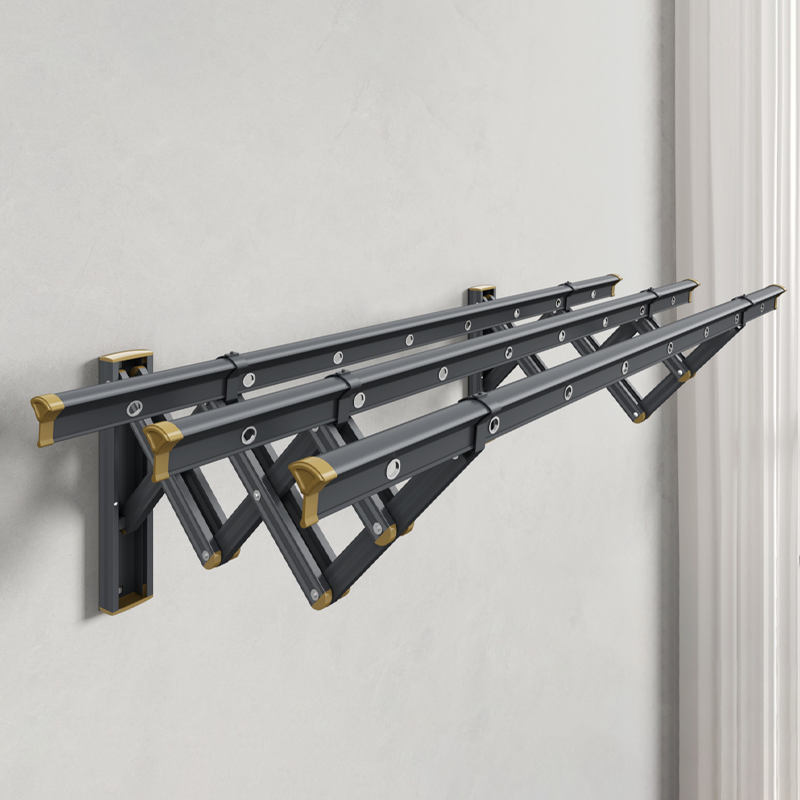
Wall-mounted clothes airers can suit narrow laundry areas, utility corners or selected flat layouts where the wall is strong enough and the open airer will not block cupboards, doors or appliances.
Measure the projection when the airer is open. A wall-mounted airer that folds neatly away still needs enough room when wet garments are hanging from it.
Retractable Racks for Occasional Drying
A retractable rack can be useful if you want a fixed drying position that appears only when needed. This may suit occasional indoor drying or a narrow zone where a permanent open rack would get in the way.
Before choosing one, check the extension path. The rack should not pull out across a doorway, hallway or main working area.
When Wall Space Is Better Than Floor Space
Wall space may be better than floor space if your flat has a clear side wall but little room for a freestanding airer. This can work well near a washing machine, in a utility nook or in a sheltered balcony area where the wall, exposure and building rules allow.
If the only available wall sits behind a door or above furniture you use every day, it may not be the right drying position.
When a Folding Floor Airer Still Makes Sense
A folding floor airer is not the wrong choice. It is often the simplest option for renters, temporary homes and occasional drying. It needs no drilling, can be moved between rooms and can be stored away after use.
It makes sense if you have enough open floor space while laundry is drying. A floor airer can also be useful if you need to move clothes nearer to a window, warmer room or better-ventilated area.
- You rent and cannot drill into walls or ceilings.
- You only dry laundry indoors occasionally.
- You need a no-drill option.
- You move the airer between rooms depending on light or airflow.
- You have enough space for the airer while it is fully loaded.
- You have somewhere sensible to store it when folded.
The problem starts when the floor airer takes over the same room every time it is used. If it blocks the sofa, bed, hallway or wardrobe for several hours, a fixed ceiling or wall drying zone may be worth considering where suitable.
Keep Air Moving Without Blocking the Room
Airflow matters, but this article is not a full damp or condensation guide. The key point for flat drying is simple: wet laundry needs air around it, and the drying setup should not block the room while providing that space.
Leave Space Between Garments
Do not pack every rail tightly just to save space. Shirts, towels and thicker fabrics need room between them. Better spacing can help air move around the laundry more easily.
Keep Wet Laundry Away from Airless Corners
A corner may seem convenient because it is out of the way, but it may not dry well if air cannot circulate. Avoid pushing wet laundry into closed-off spaces, behind doors or directly into tight gaps.
Avoid Drying Directly Against Walls or Furniture
Try not to place wet clothes directly against walls, wardrobes, sofas or curtains. Leave clearance around the airer so the laundry is not touching surfaces that need to stay dry and usable.
Use Ventilation or a Dehumidifier Where Suitable
Opening a window, using an extractor fan or using a dehumidifier may help in some flats, depending on the room, weather and humidity level. The right approach depends on your home and routine.
For a fuller indoor drying routine, read our guide on how to dry clothes indoors without a tumble dryer.
Small Flat Drying Checklist
Look at the airer when it is fully loaded with wet laundry. The best clothes airer for a flat is the one that lets the room stay usable while clothes are drying.
- Where will the airer sit when fully loaded?
- Will it block the sofa, bed, hallway, wardrobe, washing machine or balcony door?
- Can clothes hang with enough spacing?
- Can air move around the laundry?
- Do you need a no-drill option?
- Is ceiling or wall installation allowed?
- Is the mounting surface suitable for a fixed airer?
- Can heavier items be distributed evenly?
- Where will the airer store when not in use?
- Do you need a permanent or temporary drying zone?
Compare EaseRack drying racks for small spaces, including ceiling and wall-mounted options, or use our selector to find the right clothes airer for your home.
FAQ: Drying Clothes in a Flat Without Blocking Floor Space
What Is the Best Way to Dry Clothes in a Small Flat?
The best way is to choose a drying zone before choosing an airer. Keep the main walkway clear, avoid blocking doors or furniture, leave space between garments and use ceiling, wall, floor or covered balcony space depending on your layout and permissions.
How Can I Dry Clothes Indoors Without Using a Floor Airer?
You can consider a ceiling clothes airer, wall-mounted airer, retractable rack or covered balcony drying zone if the space is suitable. The right option depends on installation rules, available surfaces, airflow and how often you dry laundry indoors.
Is a Ceiling Clothes Airer Good for a Flat?
It can be useful if the ceiling structure, clearance and installation conditions are suitable. A ceiling clothes airer may help keep the floor clearer, especially in a flat where a folding airer blocks walkways or furniture.
Are Wall-Mounted Clothes Airers Suitable for Rented Flats?
Sometimes, but renters should check lease terms and building rules before drilling. If fixed installation is not allowed, a folding floor airer or other no-drill drying option may be more practical.
How Do I Stop Laundry Blocking the Living Room?
Avoid placing the airer in the main route through the room. Check the airer when fully loaded, not just when empty. If a floor airer keeps blocking the living room, consider moving drying to a ceiling, wall or covered balcony zone where suitable.
Can I Dry Clothes in a Flat Without a Tumble Dryer?
Yes. Choose a drying zone that does not block the room, leave space between garments and keep air moving around the laundry. For a fuller routine, see our guide on how to dry clothes indoors without a tumble dryer.
Conclusion
Drying clothes in a flat is not only about finding somewhere to hang laundry. It is about keeping usable floor space clear while wet clothes are hanging for several hours.
Ceiling and wall-mounted options can help where installation is suitable. A folding floor airer can still be the right choice for renters, occasional drying or homes where no-drill flexibility matters. A covered balcony may also work as a drying zone if it is sheltered, safe and suitable for the chosen airer.
Before choosing, look at the fully loaded airer, the room’s movement path and the airflow around the laundry. If the flat still works while clothes are drying, you have found a more practical setup.
Compare EaseRack drying racks for small spaces, including ceiling and wall-mounted options, or use our selector to find the right clothes airer for your home.

