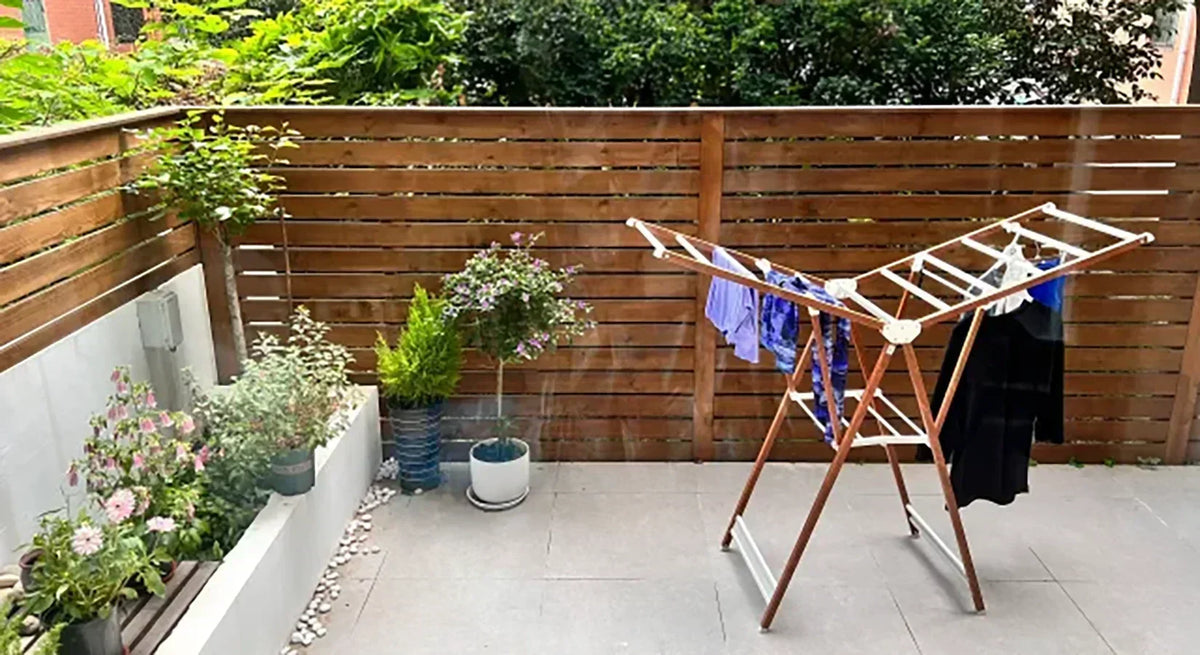



A covered balcony can be a useful place to dry laundry, especially when a floor airer would block the doorway, seating area or main walkway. However, choosing a clothes airer for a covered balcony involves more than finding a product that fits the available width.
The first question is where the airer can be installed. A ceiling-mounted model needs a suitable supporting structure and enough room below it. A wall-mounted model needs a suitable wall and sufficient opening depth. A railing-mounted or clamp-on airer needs a compatible, stable railing, grille or edge.
Start by ruling out formats that cannot be installed appropriately. You can then compare the remaining options by working space, laundry needs and preferred operation. For a broader overview of ceiling, wall-mounted and clamp-on formats, see our clothes airer guide for small spaces.
Ceiling, Wall or Railing: Which Should You Start With?
Use this table for quick orientation. It is designed to help you rule out unsuitable mounting formats before comparing individual models.
| Your balcony has… | Start by considering… | Rule it out if… |
|---|---|---|
| A suitable overhead supporting structure and clear lowering space | Ceiling-mounted airer | Secure structural fixing cannot be confirmed, or the lowered airer would obstruct doors and movement |
| A suitable wall with enough usable width and opening depth | Wall-mounted airer | The wall is unsuitable, the available width is insufficient, or the opened rack would block the balcony |
| A compatible, stable railing, grille or edge with adequate clamp clearance | Railing-mounted or clamp-on airer | The profile is incompatible, the structure is unstable, or the location is regularly exposed to conditions the product is not designed for |
| None of these conditions | Freestanding or removable alternative | Avoid forcing a fixed airer into an unsuitable mounting area |
Do not decide on the format from this table alone. Weather exposure, operating clearance and your typical laundry can still rule out an option that initially appears suitable.
Step 1: Check How Sheltered Your Balcony Really Is
A balcony roof reduces overhead exposure, but it may not protect an airer from side rain, wind or persistent moisture.
Stand in the intended drying position and consider where the weather enters. An airer near the outer edge may be more exposed than one installed closer to the building. Wind direction can also matter when you dry sheets, duvet covers or other items that catch the air.
Check:
- Whether side rain reaches the proposed position
- Which ceiling, wall or railing area stays most sheltered
- Whether wind can move laundry into windows, walls or nearby objects
- Whether the airer can be raised, folded, retracted or taken down during unsuitable weather
- Whether the selected model is recommended for the intended environment
A covered balcony should not automatically be treated as an all-weather outdoor area. Check the current product guidance before ordering. For an electric ceiling airer, the model, installation area and electrical connection must all be suitable for the location.
Step 2: Check the Available Mounting Surface
Mounting compatibility is a hard requirement. If the relevant ceiling, wall or railing is unsuitable, product size and preferred features cannot make that format appropriate.
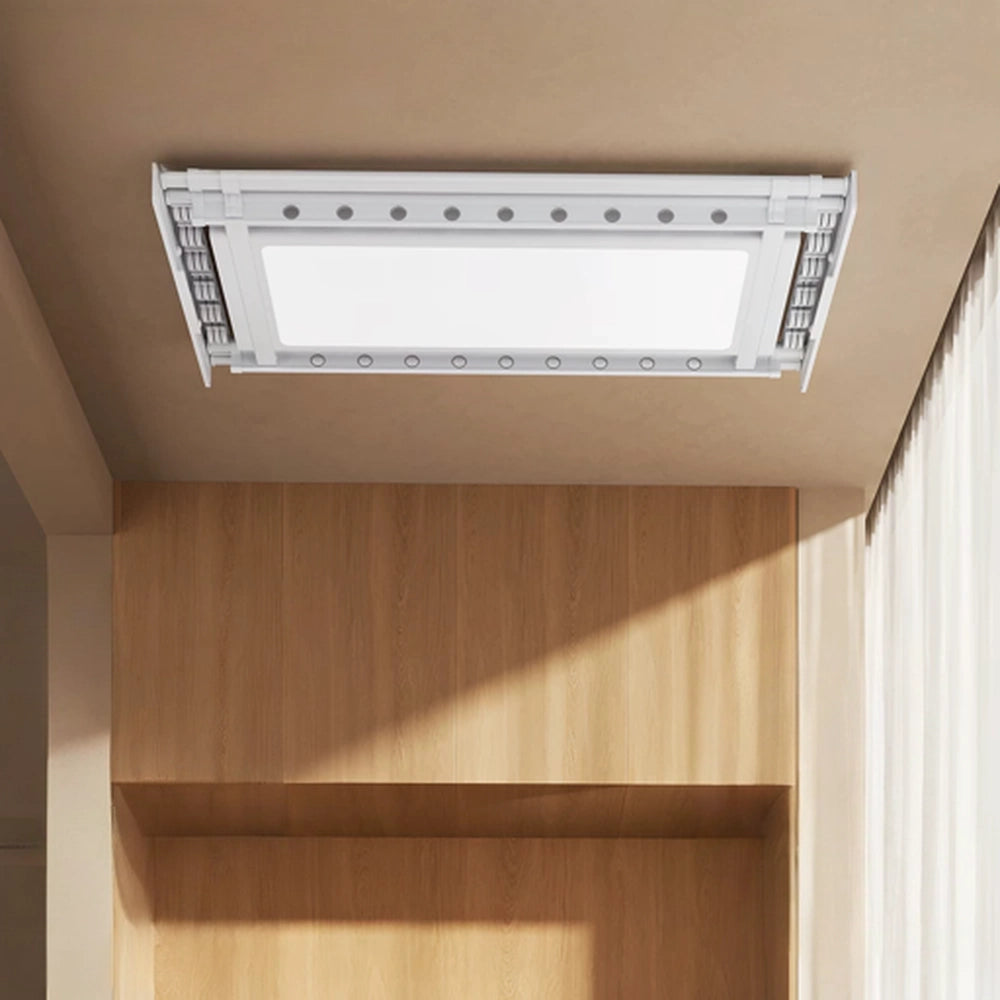
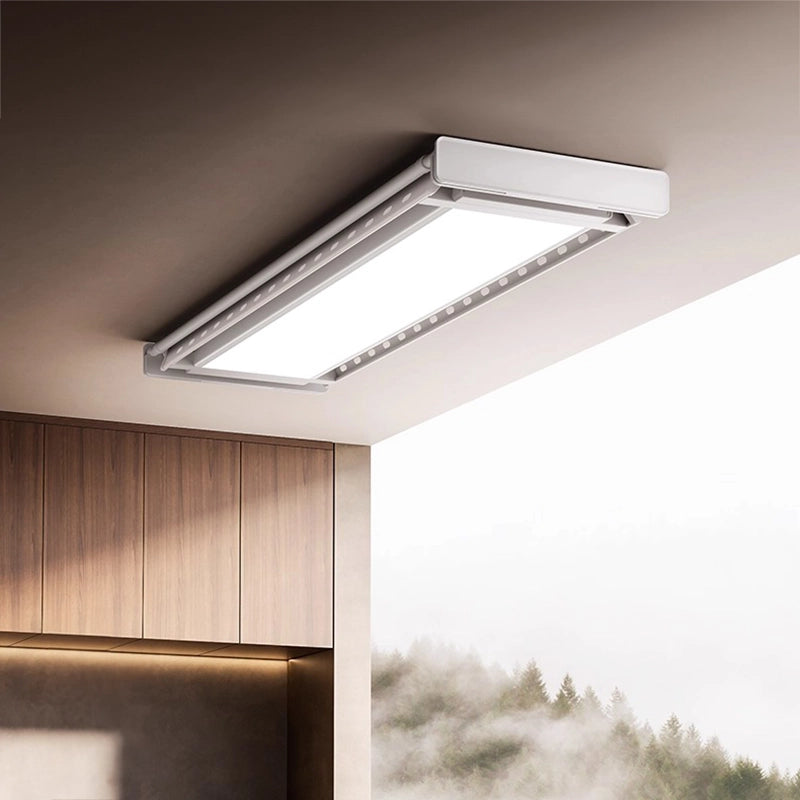
Ceiling-mounted clothes airer

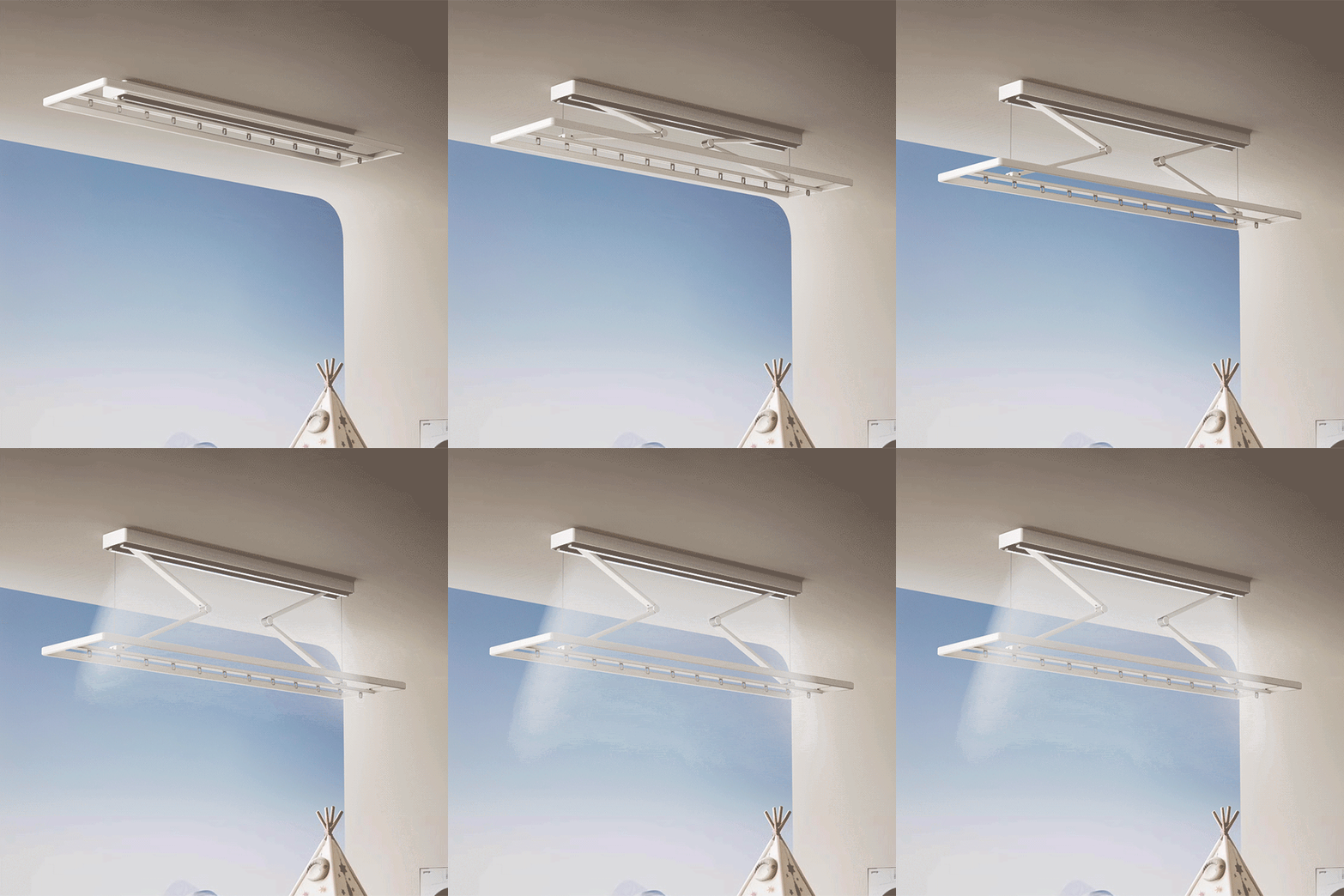
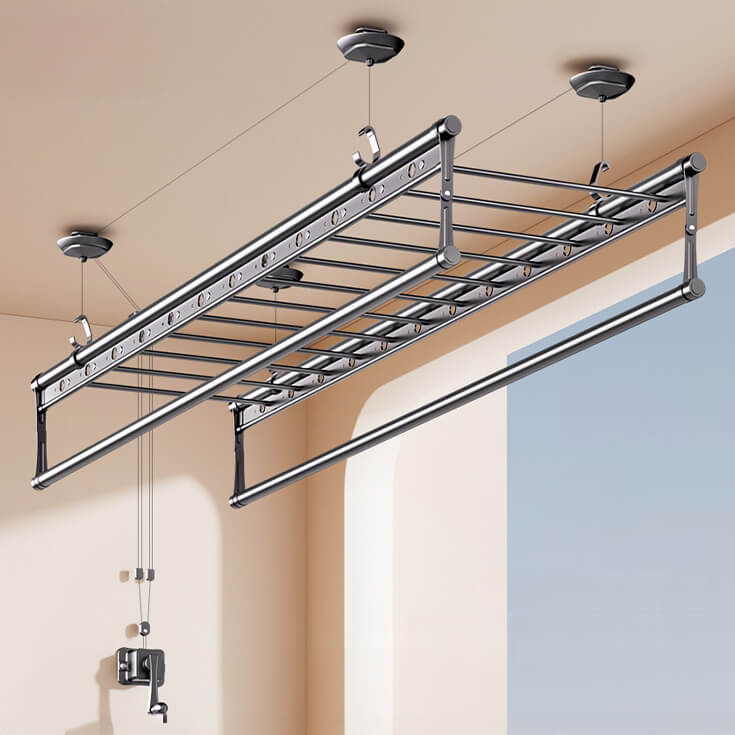
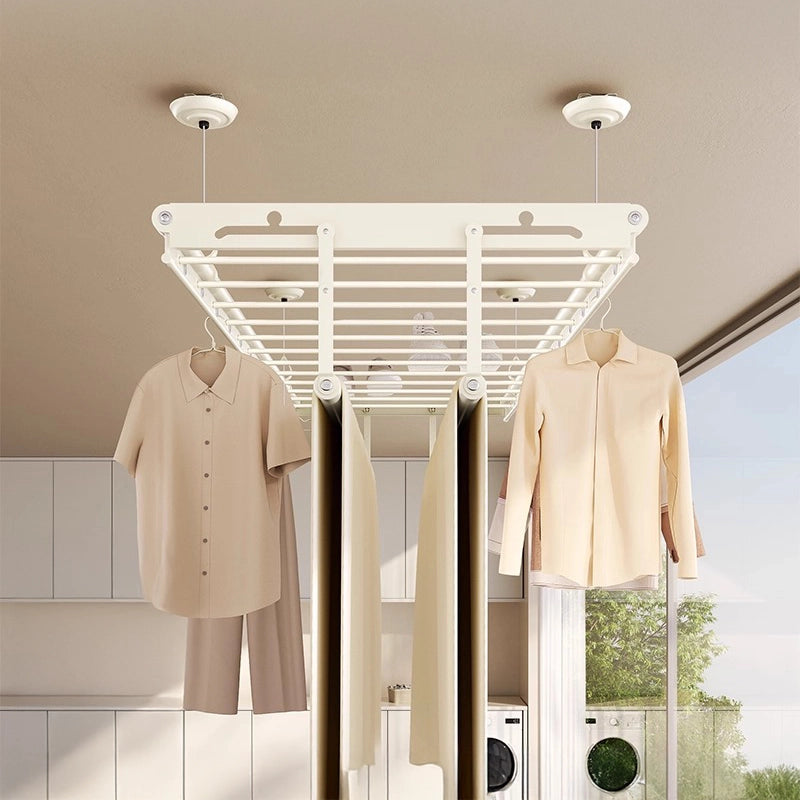
A ceiling clothes airer can keep the balcony floor clearer by moving laundry into the overhead zone. Before comparing models, ask whether the installation area provides the supporting structure, fixing positions, control location and routing space required by the selected system.
The visible ceiling finish does not establish whether a ceiling airer can be installed. Plasterboard, suspended ceilings and decorative panels may conceal a suitable structure, but the product must connect securely to that structure rather than relying on the surface finish alone.
You should also check where the airer will sit when lowered. The loading area must remain clear of doors, windows, lights, cabinets and normal movement through the balcony.
Do not choose a ceiling-mounted format if:
- A suitable supporting structure cannot be confirmed
- The required fixing or control positions are unavailable
- The lowered airer would block doors, windows or the main walkway
- The model’s operating or electrical requirements cannot be met
- The intended environment falls outside the product guidance
If the ceiling appears suitable, compare ceiling clothes airer layouts and lifting systems.
Wall-mounted clothes airer
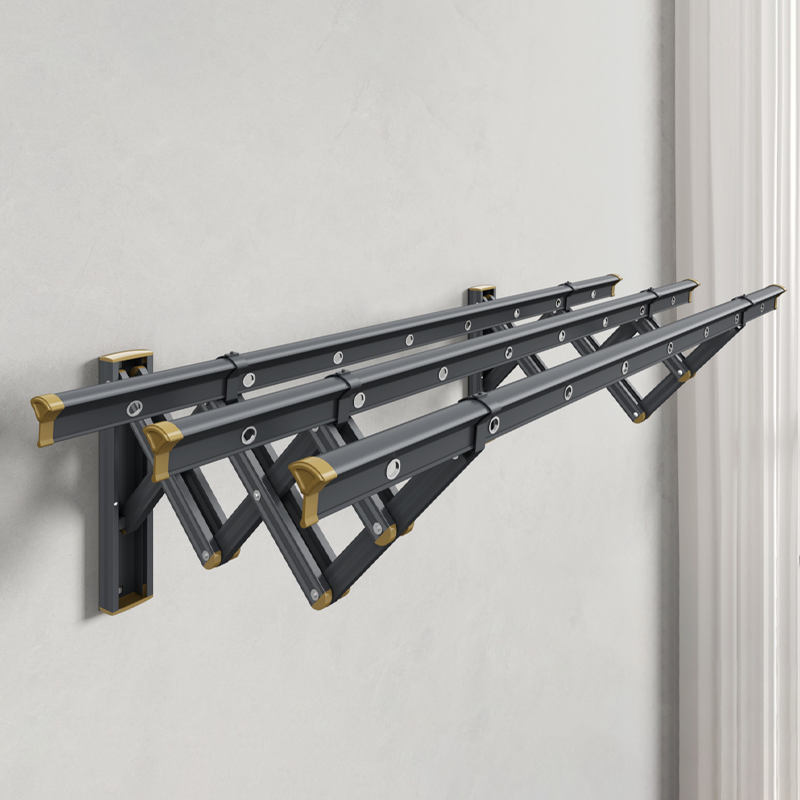
A wall-mounted clothes airer may suit a covered balcony with a clear, suitable wall. It can create a predictable drying area without leaving a freestanding rack on the floor.
Measure the continuous wall width rather than the room width. Pipes, switches, window frames and cupboards can reduce the mounting area. You also need to consider how far the airer extends from the wall while in use.
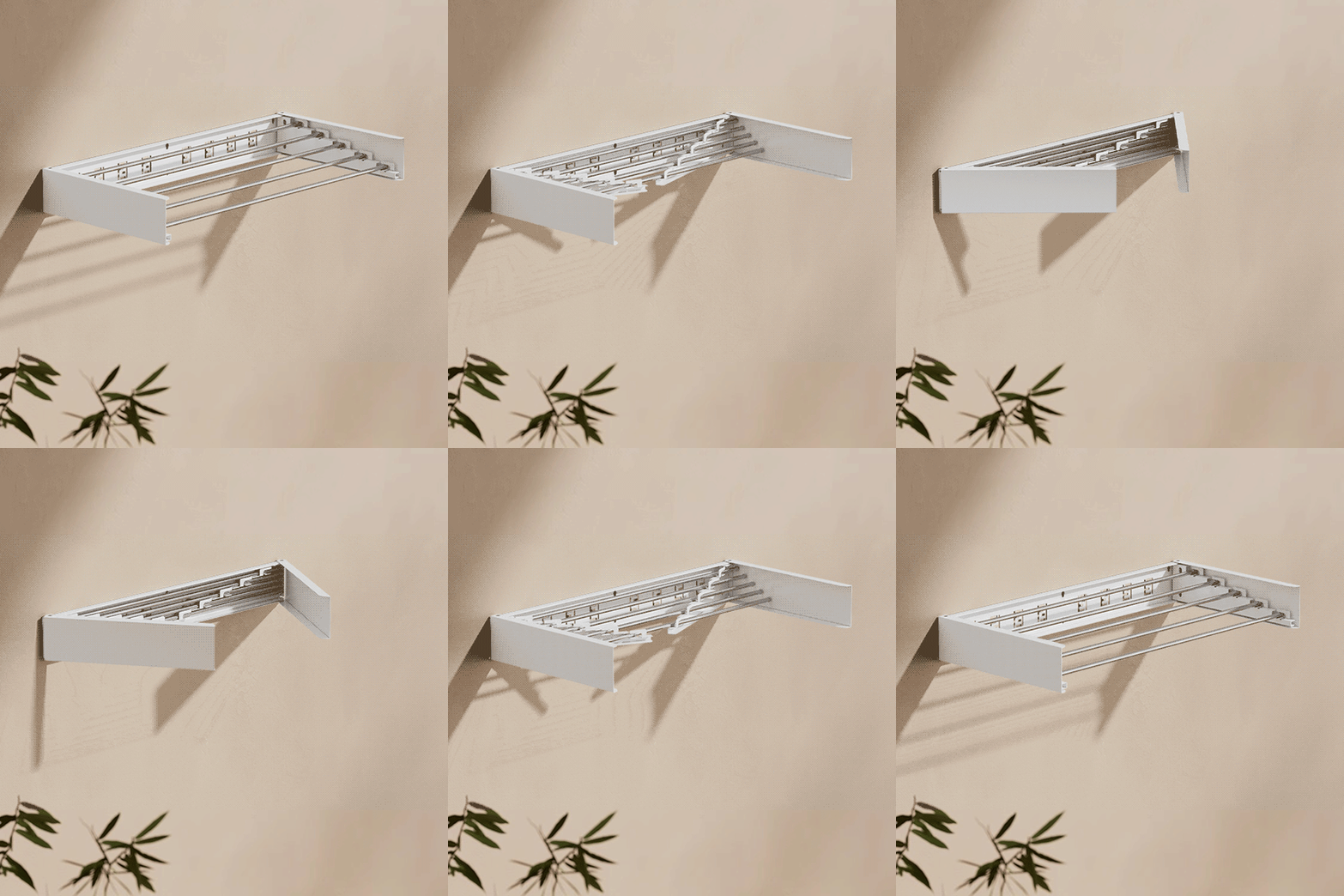
A folding model can sit close to the wall when stored, but its folded depth does not tell you how much room it needs when opened and loaded. A retractable design also requires a clear extension path.
Do not choose a wall-mounted format if:
- The wall or proposed fixing position is unsuitable
- There is not enough continuous wall width
- The opened airer would obstruct the balcony door or walkway
- Hanging clothes would press against the wall or nearby equipment
- The position does not meet the model’s recommended environmental conditions
You can compare wall-mounted clothes airers by folding or retractable operation.
Railing-mounted or clamp-on clothes airer
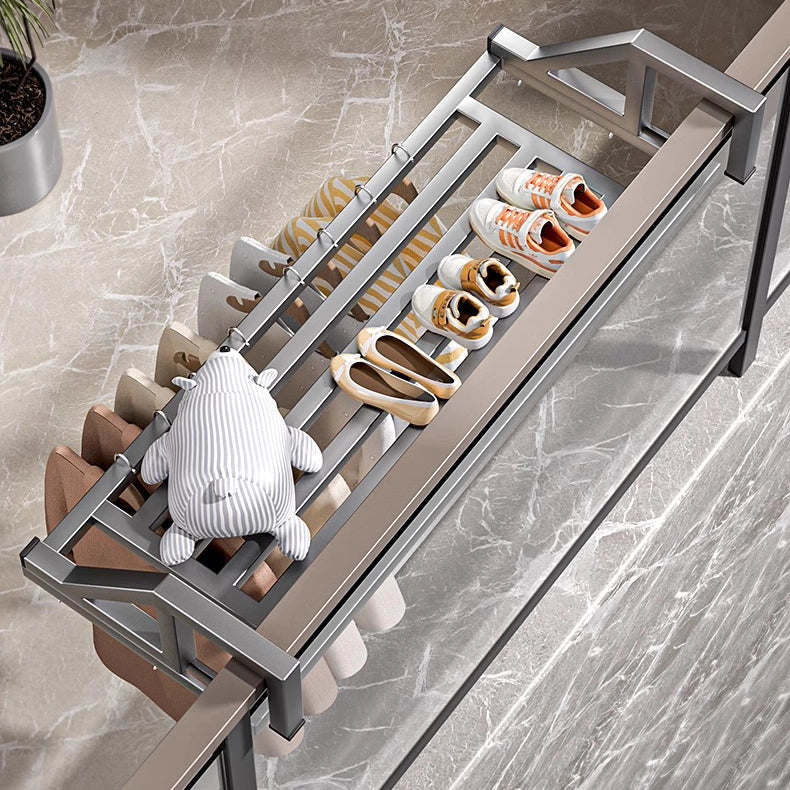
This category includes airers designed to attach to a compatible balcony railing, window edge, security grille or similar suitable structure, depending on the model.
Compatibility involves more than the overall thickness. The profile must allow the clamps to sit correctly, and there must be enough space above, below and behind the mounting point. The railing, grille or edge must also be stable and suitable for the intended use.
Measure how far the airer will project into or away from the balcony. Check whether the frame or hanging laundry could interfere with windows, doors, neighbours, shared areas or the building façade.
Do not choose a railing-mounted airer if:
- The profile or mounting thickness is incompatible
- The clamp cannot sit fully and securely
- The railing, grille or edge is unsuitable or unstable
- There is insufficient clearance around the clamp
- The installation position is regularly exposed to unsuitable weather
- Building rules do not allow the proposed placement
The EaseRack Duo balcony clothes airer is designed for compatible railings, security grilles and suitable edges. Check the model-specific measurements and installation conditions before choosing a size.
Step 3: Measure the Airer in Its Working Position
Stored Size Is Not the Same as Working Space
Measure working space, not just product size.
A wall airer needs its fully opened depth. A ceiling airer needs lowering space and laundry drop. A clamp-on airer needs projection and clamp clearance.
A compact stored size can be useful, but it does not determine whether an airer will work on your balcony.
A wall-mounted airer may fold neatly against the wall but extend across the walkway when opened. A ceiling airer may occupy little usable floor space when raised, yet require a clear lowering area and enough vertical drop for hanging garments.
Measure the airer when it is lowered, opened, projected and loaded, not only when it is stored.
Ceiling measuring card
Measure or check:
- Rod length
- Clear installation width
- Ceiling height
- Lowering clearance
- Expected laundry drop
- Clearance from doors, windows, lights and cupboards
- Required wall space for controls or a manual winch, where applicable
In this guide, clear installation width means the open space required across the airer, perpendicular to the main rod length.
Lower the proposed drying zone mentally or mark it with removable tape. This makes it easier to see whether shirts, trousers or bedding would interfere with daily movement.
Wall measuring card
Measure:
- Continuous usable wall width
- Proposed mounting height
- Fully opened or extended depth
- Side clearance
- Space occupied by hanging garments
- Clearance around doors, windows, appliances and walkways
Do not use the product frame as the only depth measurement. Add space for hangers and the natural width of the laundry.
Railing or clamp-on measuring card
Check:
- Railing, grille or edge profile
- Mounting thickness
- Clamp clearance
- Inward or outward projection
- Clearance from doors and windows
- Space for hanging garments
- Likely laundry movement in windy conditions
Taking several photographs with a tape measure visible can also help when asking EaseRack to check whether a model may fit the proposed position.
Step 4: Match the Remaining Options to Your Laundry
Mounting compatibility is a hard requirement. Laundry type should refine your choice only after incompatible formats have been removed.
| You usually dry… | What matters most |
|---|---|
| Everyday clothes | Accessible hanger positions, practical loading height and space between garments |
| Towels and heavier wet items | A suitable layout, model-specific rated load and even weight distribution |
| Sheets and lighter bedding | Usable width, vertical drop, separation and wind exposure |
| Mixed family laundry | More usable drying positions and separation between different items |
Rated load depends on the specific model, a suitable mounting surface, correct installation, appropriate fixings and even weight distribution. Wet laundry should not be concentrated on one part of the airer.
Drying conditions matter too. Airflow, humidity, temperature, fabric thickness and laundry spacing can all affect drying time. Choosing a larger layout may help you separate garments, but an airer does not remove moisture from the space by itself.
Ceiling vs Wall vs Railing: Final Comparison
Once unsuitable mounting formats have been removed, use this table to compare the remaining options.
| Factor | Ceiling | Wall | Railing or clamp-on |
|---|---|---|---|
| Space used | Overhead space | Wall space | Compatible edge or railing |
| Working-space issue | Lowering zone and laundry drop | Fully opened depth | Projection and clamp clearance |
| Operation | Manual or electric lifting, depending on the model | Folding or retractable | Clamp-on |
| Laundry consideration | Check layout, loading height and vertical drop | Check drying length, opened depth and garment clearance | Check available surface, projection and laundry movement |
| Storage position | Raised towards the ceiling | Folded or retracted towards the wall | Folded, left in position or taken down, depending on the model |
| Next step | Compare layouts and lifting systems | Compare folding and retractable formats | Confirm mounting compatibility |
A ceiling-mounted format may suit a balcony where the overhead structure and lowering area are suitable. Wall mounting may be the better option when a practical wall and sufficient opening depth are available. A railing-mounted or clamp-on airer may suit a compatible edge where ceiling or wall mounting is not appropriate.
From Mounting Type to EaseRack Model
Once you know which mounting formats remain possible, you can narrow the choice by layout and operation.
If ceiling mounting works
| Your space or preference | EaseRack layout to compare | Current clear installation width reference |
|---|---|---|
| Particularly narrow installation area | Single-Rod | Approximately 50 cm or more |
| More everyday hanging positions | Multi-Rod | Approximately 95 cm or more |
| Wider layout for clothing and bedding | Extra-Wide | Approximately 1.1 m or more |
| Powered lifting is preferred | Electric ceiling models | Check the individual model |
If ceiling mounting is suitable and the available installation area is particularly narrow, Single-Rod may be the first EaseRack layout to compare. The available rod length, ceiling structure, lowering space, control position and surrounding clearance must still be checked.
These measurements are model-specific buying references rather than general installation standards. Confirm the current product page and installation guidance before ordering.
An electric ceiling airer may be worth comparing if you prefer powered lifting. Check the dimensions, supporting structure, electrical requirements and covered-balcony suitability of the individual model.
If wall mounting works
Compare the two formats by structure and working space:
- A folding airer opens outwards from a fixed wall position and folds back towards the wall.
- A retractable airer extends to create additional drying length and retracts after use.
Your choice should depend on usable wall width, fully opened depth, extension path and drying layout.
If railing or clamp-on mounting works
Compare the available Duo sizes with the mounting profile, thickness, clamp clearance and intended laundry. The airer should fit the actual mounting structure rather than simply matching the overall balcony width.
Use the EaseRack model comparison to review installation types and space requirements. If several formats still seem possible, the EaseRack clothes airer selector can help narrow the options.
Covered Balcony Checklist
Before ordering, answer these seven questions:
- How exposed is the proposed position to side rain and wind?
- Which mounting surface is actually suitable?
- Have I measured the airer while open, lowered or projected?
- Will doors, windows, cupboards and walkways remain clear?
- What laundry do I dry most often?
- Is permanent fixing permitted?
- Does the selected model specifically suit this installation and environment?
If you are unsure, send EaseRack photographs and measurements of the proposed installation area before ordering. For fixed ceiling or wall systems, consult a suitable professional if the supporting structure cannot be identified confidently.
Frequently Asked Questions
Can I install a ceiling clothes airer on a covered balcony?
Possibly, if the supporting ceiling structure, fixing positions, lowering area and environmental conditions are suitable for the selected model. The presence of a ceiling is not enough on its own. Check what is behind the visible surface and confirm that doors, windows and walkways will remain clear when the airer is lowered and loaded.
Is a railing-mounted airer suitable for every railing?
No. Suitability depends on the railing or edge profile, thickness, stability and available clamp clearance. Some models may also attach to compatible window edges or security grilles. Measure the actual mounting area and compare it with the current product instructions.
Will a wall-mounted clothes airer fit a narrow balcony?
It may, but the important measurement is its working depth. Check the usable wall width and how far the airer projects when fully opened, including the space occupied by hanging clothes. A small folded depth does not necessarily mean the airer will fit comfortably while in use.
Which type uses the least floor space on a balcony?
Ceiling-mounted airers use overhead space, wall-mounted airers use wall space, and clamp-on models use a compatible balcony edge. All three can keep the floor clearer than a freestanding rack. The better option depends on your mounting conditions and the space each airer needs while in use.
What should I check on a windy or rain-exposed covered balcony?
Check whether side rain reaches the airer, how much the laundry can move in the wind and whether larger items could strike nearby surfaces. Choose the most sheltered suitable position and follow the model’s environmental guidance. Fold, retract, raise or take down the airer when conditions fall outside its intended use.
Choose the Format That Fits the Balcony
The right balcony clothes airer starts with the installation area, not a preferred product style. Use the quick orientation table to identify possible formats, then check exposure, mounting compatibility and the space required when the airer is working.
Once unsuitable formats have been removed, your typical laundry can help you compare layouts and EaseRack models. Ceiling airers use overhead space, wall-mounted designs create a fixed drying zone, and Duo provides a clamp-on option for compatible railings, grilles and suitable edges.
If two or more choices still appear suitable, compare EaseRack clothes airer models or use the product selector before ordering.