



Choosing the right clothes airer size is not only about product width. A clothes airer can look compact online, then feel too small when towels and bedding need space, or too large when it blocks a walkway, balcony door or washing machine.
If you are asking, “what size clothes airer do I need?”, start with your real laundry routine. Think about how often you wash, how many people are in the home, whether you dry towels or bedding indoors, and how much space the airer uses when it is fully loaded.
This clothes airer size guide will help you compare drying space, open footprint, stored size, ceiling height, wall space and laundry load before buying.
In practice, the right size is the one that gives your laundry enough hanging space without making the room harder to use.
Quick Answer: What Size Clothes Airer Do I Need?
One person or occasional indoor drying may only need a compact clothes airer. A couple may need medium drying space or more frequent smaller loads. A family usually needs more drying rail length, better spacing or a fixed drying zone. In a small flat, open footprint and stored footprint can matter as much as total drying capacity.
How Much Drying Space Do You Need?
Drying space is the amount of usable hanging space your laundry has while it dries. It is not the same as the outside width of the airer. Rail length, number of rods, garment length, spacing and fabric type all affect how useful the airer feels in daily life.
More rods are helpful only if there is still enough space between garments. If clothes are packed too tightly, airflow is reduced and drying may feel less practical. Drying performance may vary depending on airflow, humidity, temperature, fabric type, fabric thickness and laundry spacing.
| Laundry type | What it needs | Size consideration |
|---|---|---|
| Everyday shirts and tops | Regular rail space with room between items | A compact or medium airer may work if loads are frequent and not too heavy. |
| Socks and small items | Clips, smaller rails or accessory space | Look for layout efficiency, not only overall width. |
| Towels | More spacing and stronger support | Wet towels take more room and weight than lightweight clothing. |
| Jeans and thicker garments | Good airflow and even weight distribution | A crowded small airer may not be practical for regular heavy loads. |
| Bedding and sheets | Longer hanging space or a layout that avoids bunching | Check rail length and whether sheets can hang without blocking the room. |
| Mixed family laundry | Several types of clothing drying at once | More rail length or a fixed drying zone may be useful, depending on space. |
Clothes Airer Size Guide by Household
The number of people in the home is a useful starting point, but it is not the whole answer. A couple who wash towels, bedding and gym clothes several times a week may need more drying space than a small household that dries light clothing frequently.
| Household | Typical laundry pattern | What size to consider | What to avoid |
|---|---|---|---|
| One person | Smaller, more flexible loads | A compact airer may be enough if laundry is done regularly. | Buying a large airer that blocks the room when open. |
| Couple | Mixed weekly loads, towels and everyday clothing | A medium airer or a fixed drying zone may be useful. | Choosing too little rail space for towels and thicker garments. |
| Small family | Frequent loads with mixed garment sizes | More drying rail length and better spacing are usually helpful. | Overloading a compact airer every laundry day. |
| Larger family | Regular laundry, bedding, towels and heavier items | Consider a larger drying setup or more than one drying zone if space allows. | Relying on a small airer that forces garments too close together. |
| Occasional indoor drying | Indoor drying only in poor weather or winter | A compact or folding option may be enough. | Permanent installation if you rarely need indoor drying space. |
| Regular indoor drying without a tumble dryer | Clothes airer is part of the weekly routine | A practical fixed or larger drying setup may be worth considering. | Choosing only by stored size and ignoring the loaded footprint. |
Open Footprint vs Stored Footprint
Stored size is what you see when the laundry is done. Open footprint is what you live with while clothes are drying. For many homes, especially small flats, this is the more important measurement.
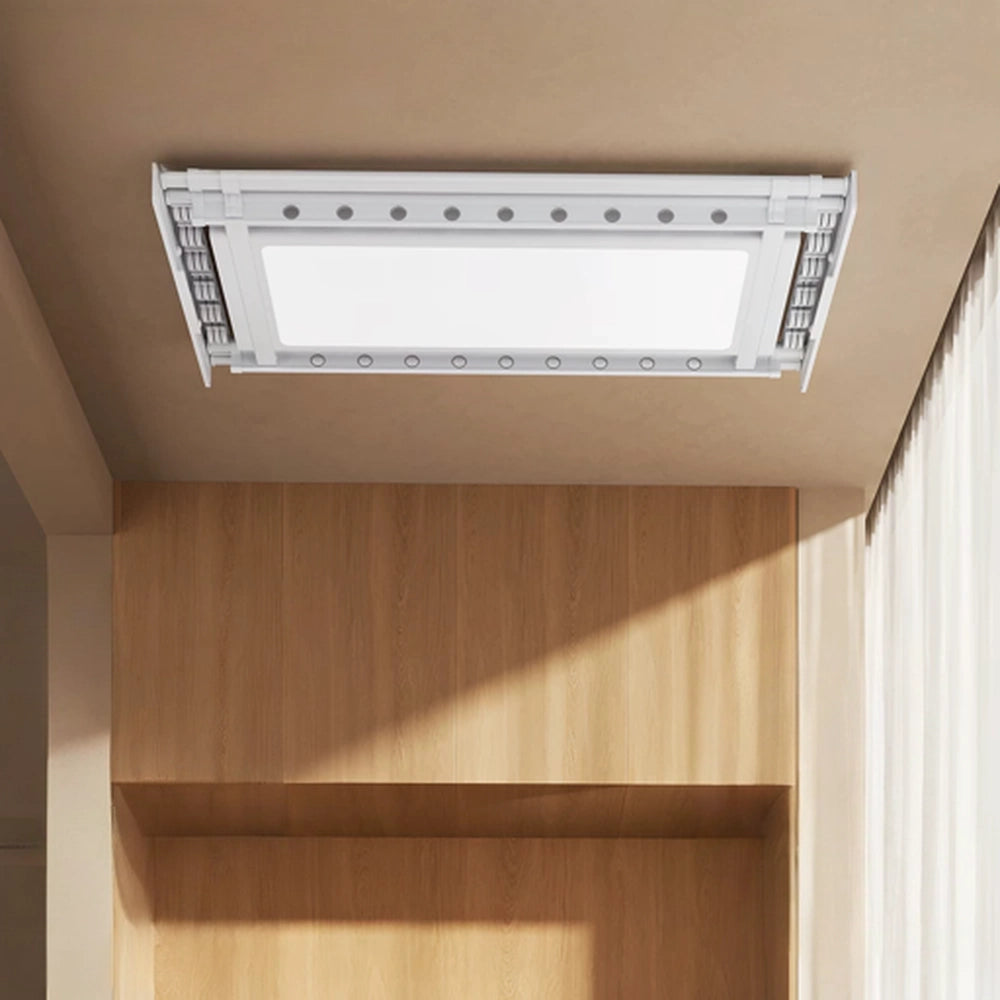
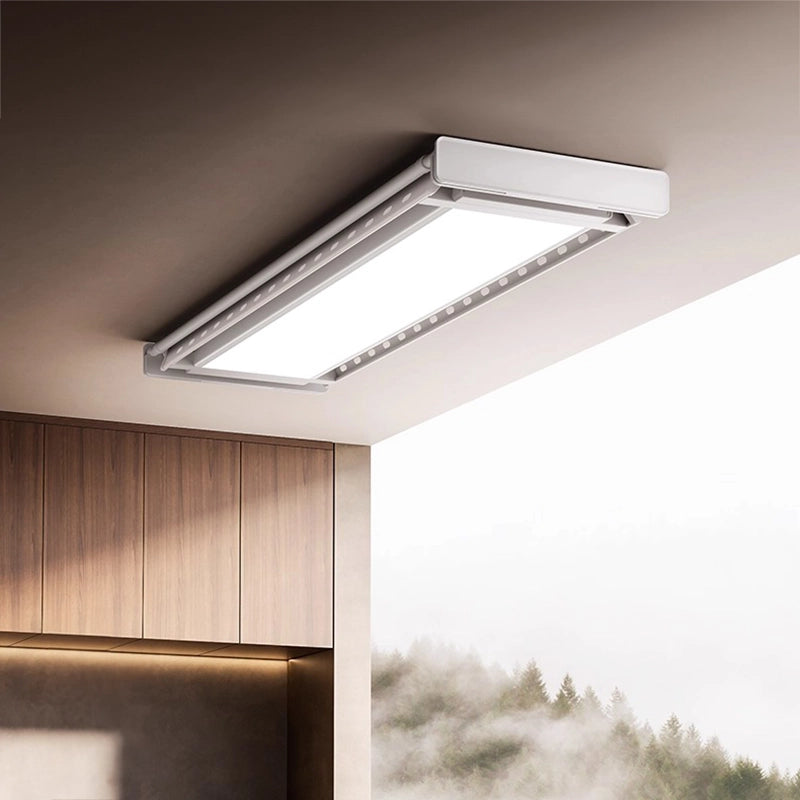
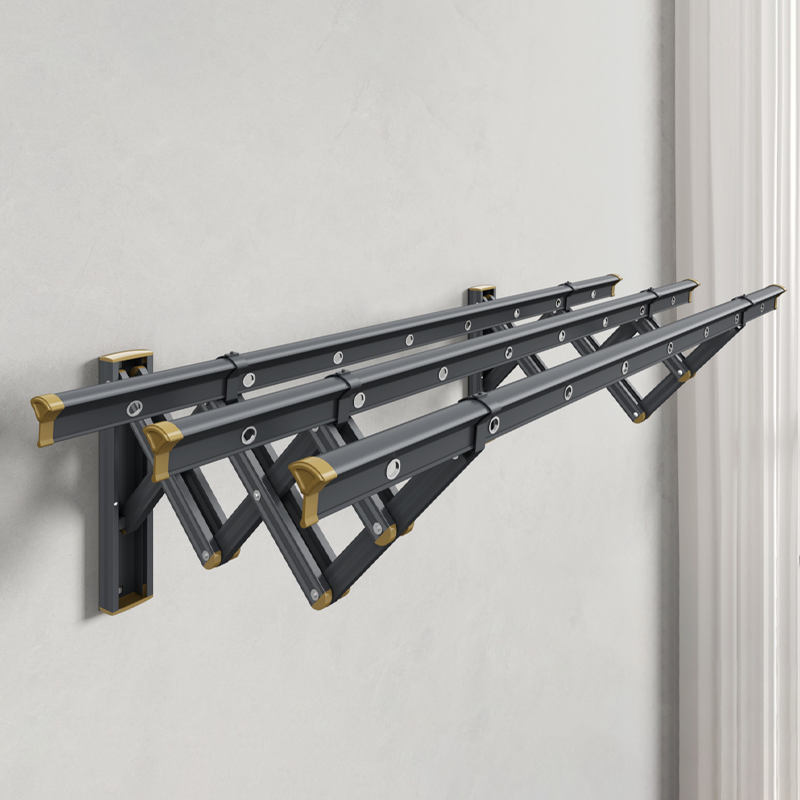
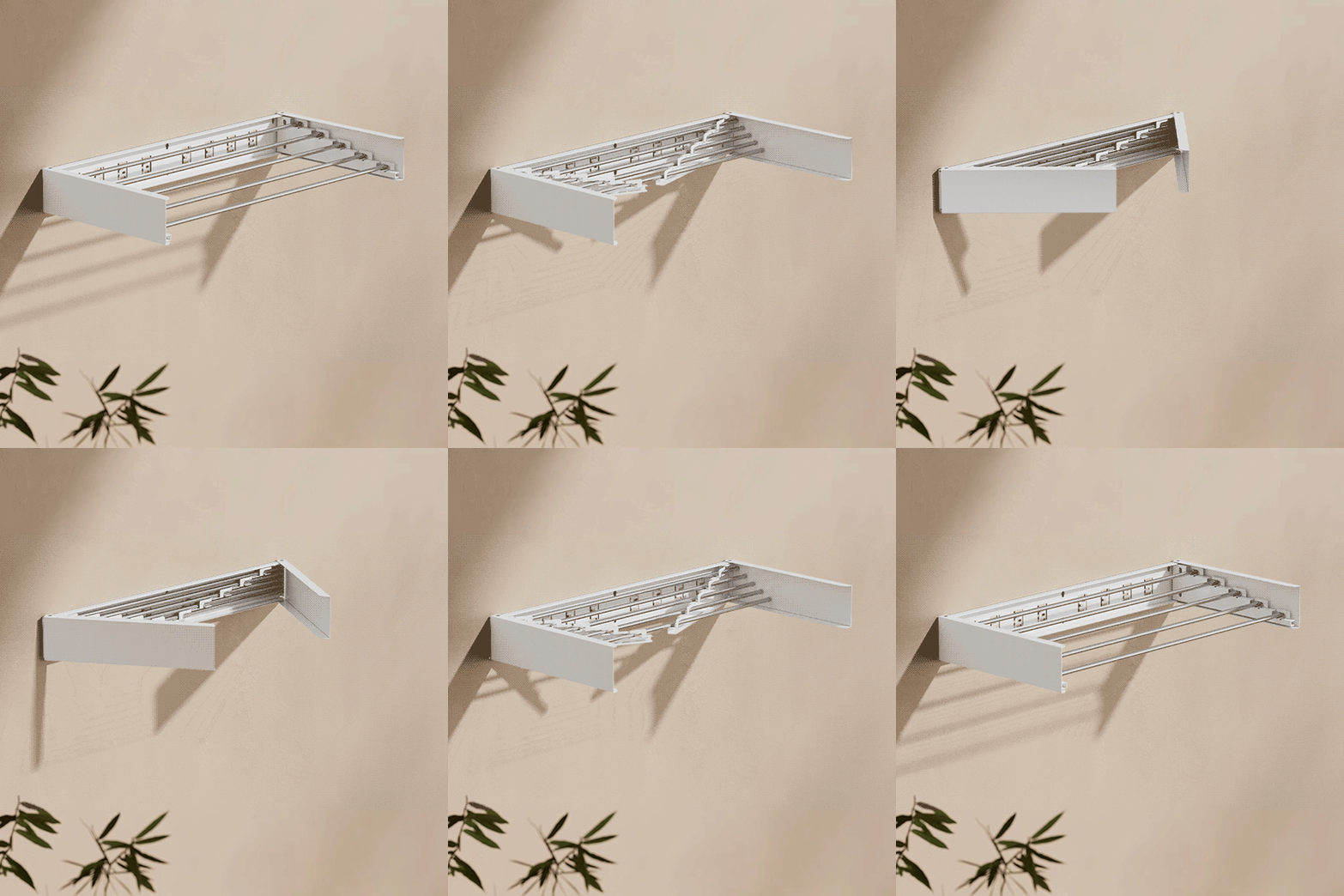
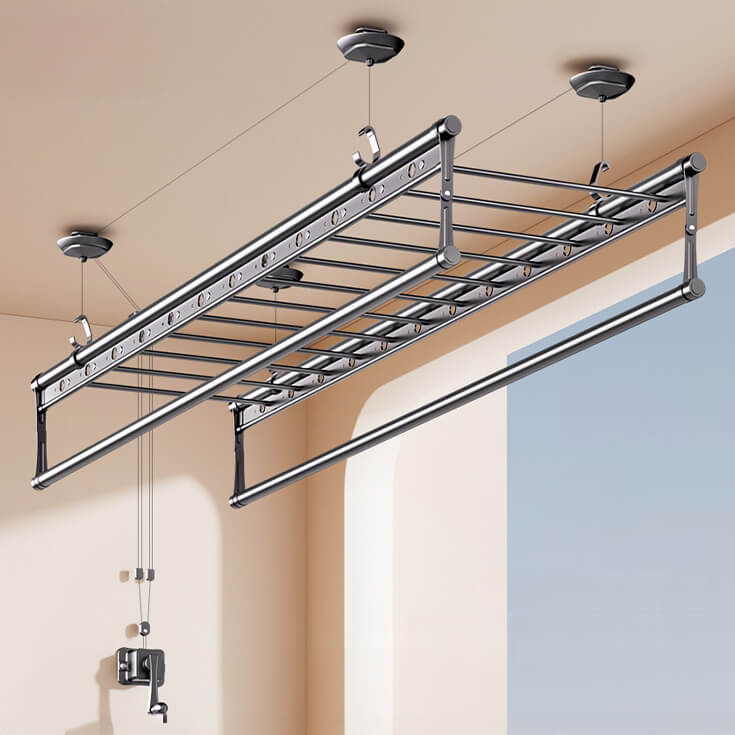
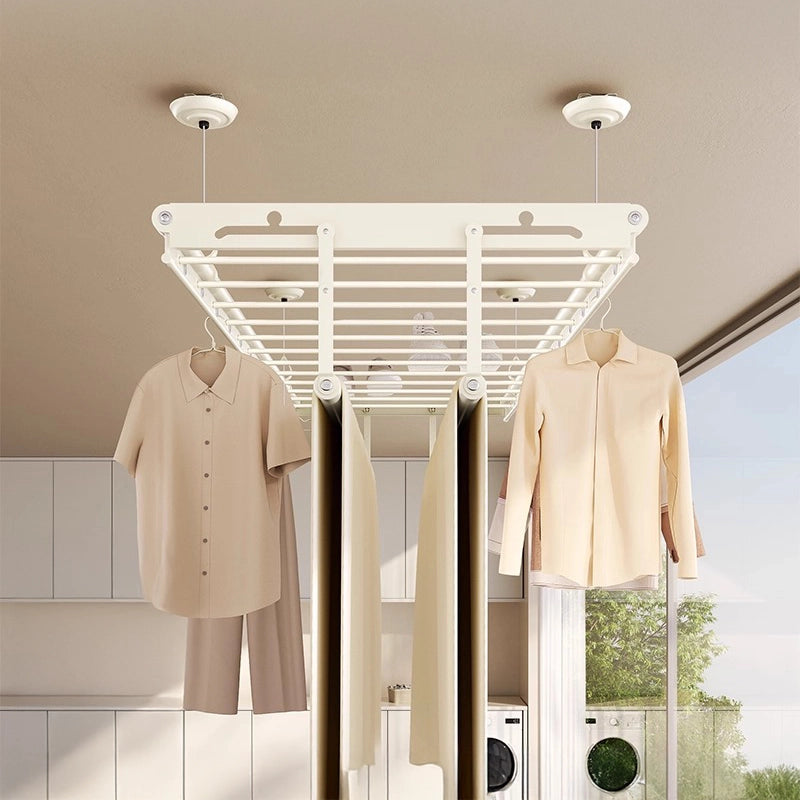
A folding floor airer may store flat behind a door, but it can block a room when open. A ceiling clothes airer may use little floor space, but it needs vertical clearance. A wall-mounted airer may sit neatly when folded, but it needs projection space when opened and loaded.
| Airer type | Open footprint | Stored footprint | Best measurement to check |
|---|---|---|---|
| Folding floor airer | Uses floor space while laundry dries | Can fold away for storage | Open width, depth and whether it blocks movement. |
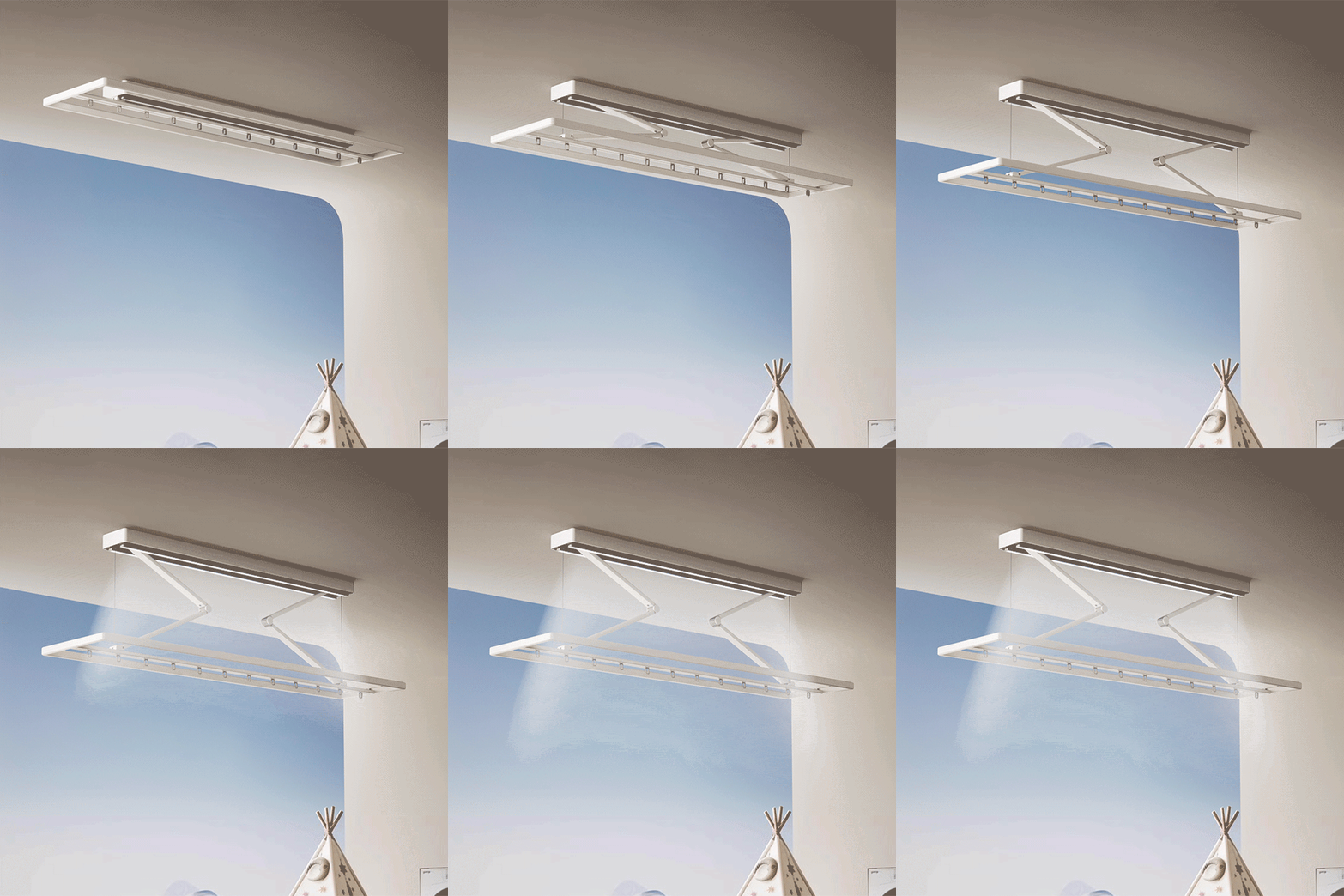
| Ceiling clothes airer | Uses overhead space when raised | Stores near the ceiling | Ceiling height, lowered position and raised clearance. |
| Wall-mounted airer | Projects from the wall when open | Folds or sits close to the wall | Wall width, open projection and nearby doors. |
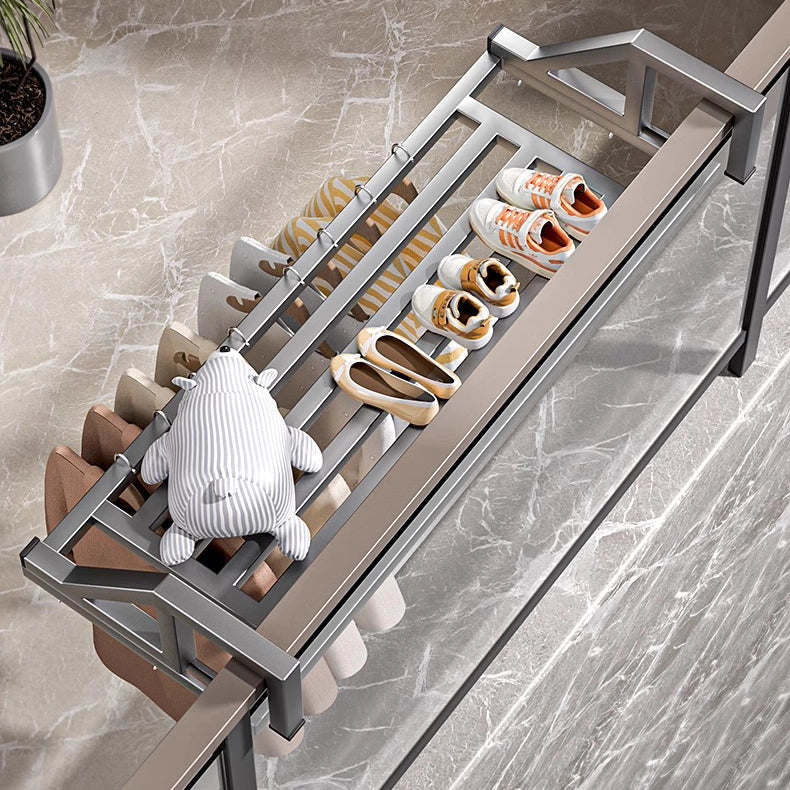
| Retractable airer | Extends only when needed | Stores compactly when retracted | Extension path and whether loaded clothes block the room. |
What Size Clothes Airer Works for a Small Flat?
In a small flat, the best clothes airer size is not always the largest. The airer needs to fit the room while it is fully loaded, not only when it is folded, raised or stored away.
Measure the route around the airer. Check whether it blocks a wardrobe, balcony door, washing machine, sofa, bed or main walkway. If floor space is limited, a ceiling or wall-mounted option may help, but only where installation conditions are suitable.
A folding floor airer can still work in a small flat if there is a clear temporary drying zone and a sensible storage place after use. For more layout guidance, see our guide on how to dry clothes in a flat without blocking floor space.
If you are comparing compact options, EaseRack drying racks for small spaces can help you see which formats suit smaller homes.
What Size Clothes Airer Works for Towels and Bedding?
Towels and bedding often need more space than everyday clothing. They are larger, thicker and heavier when wet. If you regularly dry towels indoors, look for enough spacing so they do not sit tightly against other garments.
For bedding and sheets, check whether the airer has longer hanging space or a layout that lets fabric hang without bunching. Bunched bedding can take up more room than expected and may reduce airflow.
Heavier wet items should also be distributed evenly. Do not assume that a larger airer automatically handles every load better. The layout, rail spacing, airflow and support all matter.
What to Measure for Ceiling and Wall-Mounted Clothes Airers
Ceiling and wall-mounted airers can be useful when floor space is limited, but the size checks are different from a folding floor airer. Before choosing one, measure how the airer will sit when lowered, raised, opened, folded and loaded.
Ceiling Height and Lowered Position
For a ceiling airer, measure the room height and the lowered position. You should be able to load laundry comfortably without the airer blocking doors, lights, cabinets, windows, walkways or busy routes through the room.
Raised Position and Headroom
When raised, the airer should leave practical headroom and not interfere with lighting, cupboards or daily movement. Remember to think about hanging laundry, not only the frame.
You can compare EaseRack ceiling clothes airers if you want a drying setup that uses overhead space.
Wall Width, Open Projection and Stored Depth
For wall-mounted airers, measure the usable wall width, how far the airer opens into the room, and how it sits when folded or retracted. Nearby doors, wardrobes, cupboards and appliances all matter.
Do not judge the airer only by its folded depth. The open projection is the measurement that affects how the room feels while laundry is drying.
EaseRack wall-mounted clothes airers may suit homes where wall space is more practical than floor space, provided the wall and clearance are suitable.
Load, Anchors and Even Weight Distribution
Longer rods can help with larger laundry, but load capacity depends on correct installation, suitable anchors, the mounting surface and even weight distribution.
If the wall or ceiling structure is unclear, ask a qualified installer before fitting a fixed airer. Do not treat a longer or larger airer as useful unless the installation area can support it properly.
Load Capacity Is Not the Same as Drying Space
Load capacity and drying space are related, but they are not the same thing. Load capacity is about supported weight. Drying space is about how much laundry can hang with enough room for airflow.
A higher load rating does not mean clothes should be crowded together. If garments are packed too tightly, the airer may hold the weight but still feel impractical for drying.
This matters most with towels, bedding, jeans and heavier wet fabrics. These items need both support and spacing. For fixed ceiling or wall-mounted airers, safe use depends on correct installation, suitable anchors, the mounting surface and even weight distribution.
Clothes Airer Size Checklist Before Buying
Measure the airer as it will be used, not only as it looks when stored. The right size should fit your laundry load and your room at the same time.
- How many people are in the household?
- How often do you dry laundry indoors?
- Do you dry towels or bedding regularly?
- How much rail length or hanging space do you need?
- What is the open footprint?
- What is the stored footprint?
- Will the airer block walkways, doors, wardrobes or appliances?
- Is ceiling height or wall width suitable?
- Is fixed installation allowed?
- Can heavier items be distributed evenly?
- Is there enough airflow around the laundry?
FAQ: Clothes Airer Size Guide
What Size Clothes Airer Do I Need for a Family?
A larger household usually needs more drying rail length, better spacing or a fixed drying zone. The right size depends on how often you wash, whether you dry towels or bedding indoors, and how much space is available while laundry is drying.
What Size Clothes Airer Do I Need for a Small Flat?
In a small flat, prioritise open footprint and stored footprint. A compact, ceiling or wall-mounted clothes airer may help if floor space is limited, but the right choice depends on clearance, installation rules and your laundry routine.
How Much Drying Space Do I Need for Laundry?
It depends on garment type, laundry volume and spacing. Everyday tops need less room than towels, jeans or bedding. Choose enough drying space to hang laundry without packing garments too tightly together.
Is Load Capacity the Same as Drying Capacity?
No. Load capacity is about supported weight. Drying capacity is about how much laundry can hang with enough space for airflow. A strong airer can still be the wrong size if the hanging space is too crowded.
Does a Bigger Clothes Airer Dry Clothes Faster?
Not automatically. Drying depends on airflow, humidity, temperature, fabric type, fabric thickness and spacing. A bigger airer only helps if it gives garments more room and suits the space where it is used.
What Should I Measure Before Buying a Clothes Airer?
Measure the open footprint, stored footprint, rail length, wall width, ceiling height, clearance, movement path and where heavier items will hang. For fixed airers, also check whether installation is allowed and the mounting surface is suitable.
Conclusion
The right clothes airer size depends on more than width. You need enough drying space for your laundry, but the airer also needs to fit the room while it is open, loaded and in use.
For small flats, open footprint and stored footprint may matter most. For families, drying rail length, spacing and heavier laundry loads become more important. For ceiling and wall-mounted airers, vertical clearance, wall projection and installation conditions also matter.
Bigger is not always better, and smaller is not always enough. Measure your space, think about the laundry you actually dry, and choose an airer that fits both your home and your routine.
Use the EaseRack selector to find the right clothes airer for your home, or compare our drying racks for small spaces.

